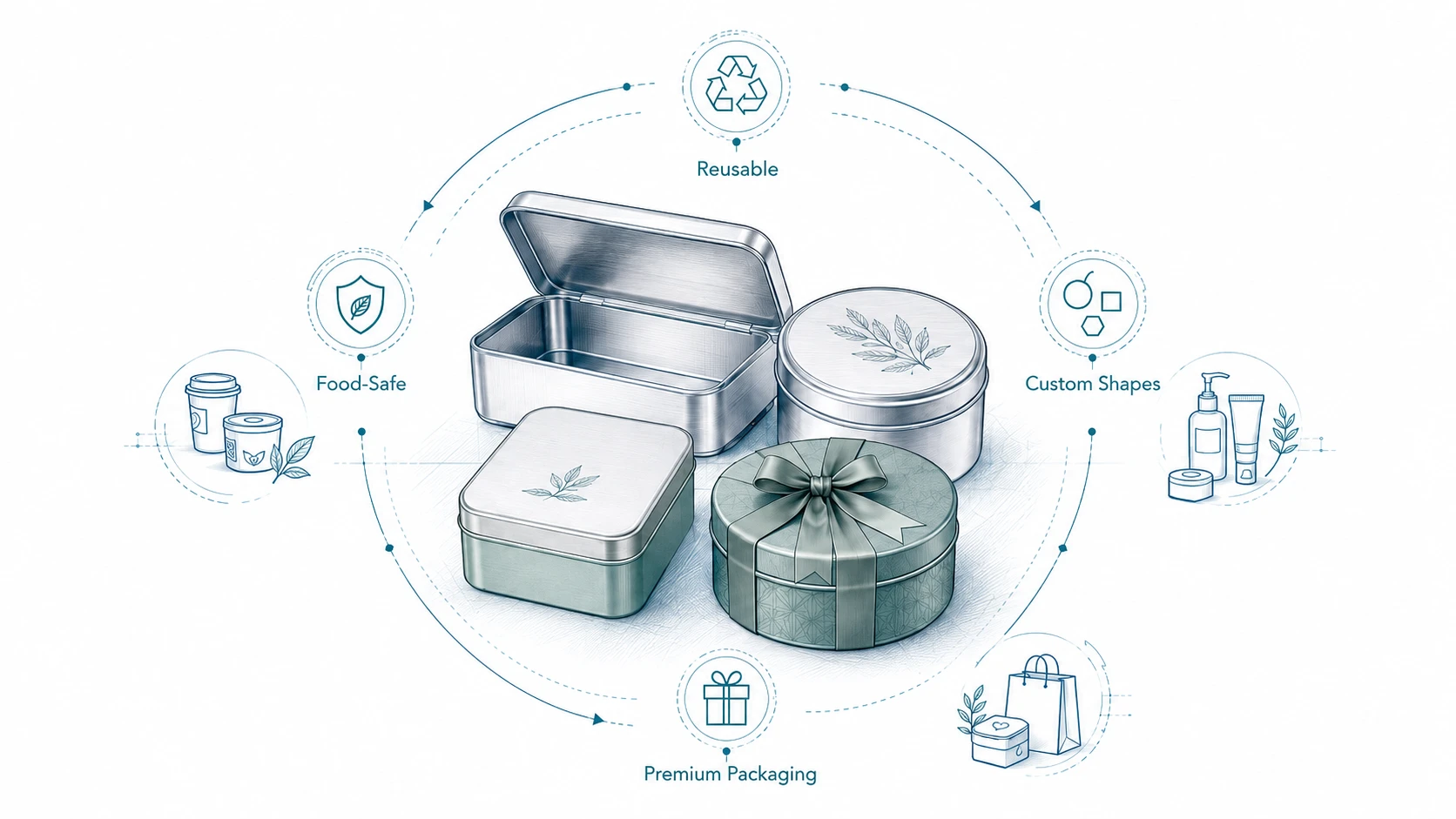
A custom tin container is no longer only a nostalgic container for cookies, tea, candy, or holiday gifts. For modern promotional and retail products, it has become a strategic packaging format that can help a brand protect the product, raise perceived value, improve shelf presence, support reuse, and create a more memorable customer experience. This is especially important in crowded retail environments where buyers compare products within seconds and where online customers judge brand quality from the first unboxing moment.
For a retail buyer, packaging must do more than look attractive. It must survive transport, support efficient packing, meet compliance requirements, fit the product accurately, communicate the brand clearly, and help the product sell. For a promotional buyer, packaging must also work as a branded object. A custom tin may remain on a desk, kitchen shelf, dressing table, workshop bench, or gift display area long after the original product is used. That extended use is one of the main reasons metal tins continue to appeal to marketing teams: the package can become a reusable reminder of the brand.
This article explains how custom metal tin packaging can be used for promotional and retail products across food, beverage, beauty, personal care, gift, holiday, specialty, and industrial applications. It is written for brand owners, sourcing managers, product developers, promotional campaign planners, and retail packaging teams that need practical guidance before requesting samples or quotations.
As a custom metal packaging supplier, Mr.Tin Box focuses on high-quality tin boxes for Food, Beauty, Gift, and Industrial applications. The company presents metal packaging as a combination of structure design, mold development, premium printing, stamping, surface finishing, quality inspection, and project consultation. For buyers who are comparing packaging options, this workflow matters because a successful tin project is not simply a printed box. It is a coordinated manufacturing program.
Table of Contents
Why custom tin container packaging matters for retail and promotional products
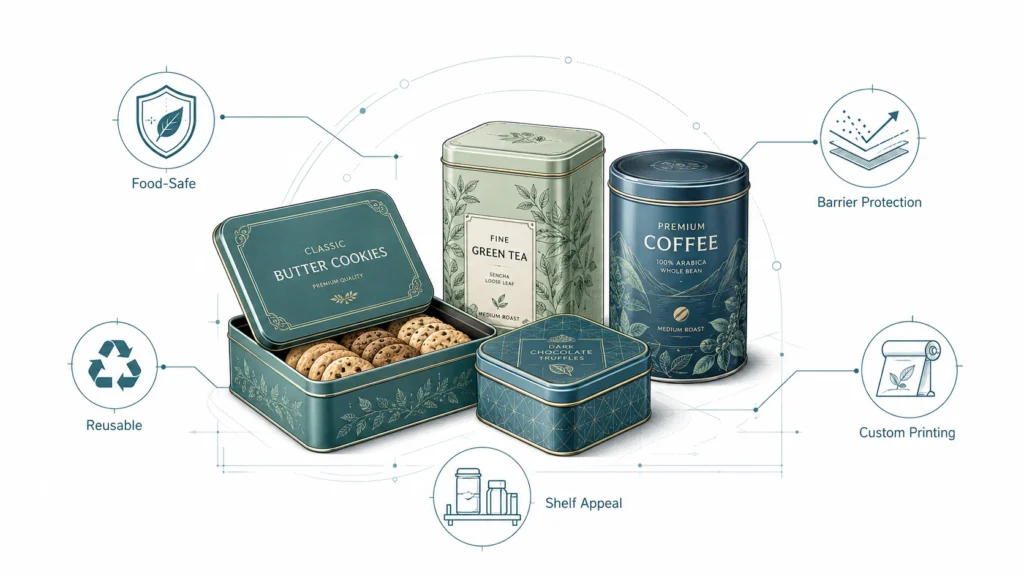
Retail packaging has two commercial jobs. First, it must help the product get noticed and understood. Second, it must protect the product until the customer opens it. Promotional packaging has an additional job: it must create a stronger memory than ordinary disposable packaging. Custom metal tin packaging is valuable because it addresses all three jobs at the same time.
Tinplate has strong rigidity compared with many paperboard or flexible packaging formats. It resists crushing, protects edges and corners, and gives the hand a feeling of durability. This physical impression can improve perceived product value before the customer even reads the label. When a package feels solid, the product often feels more premium.
The design flexibility is another major advantage. A tin can be round, square, rectangular, oval, heart-shaped, book-shaped, windowed, hinged, telescopic, shallow, tall, stackable, compartmentalized, or built with custom inserts. The surface can be printed with CMYK or spot colors, finished with matte or gloss varnish, embossed, debossed, textured, or combined with metallic details. These options help brands create limited editions, collector tins, retail gift sets, seasonal campaigns, and promotional merchandise that feels more intentional than a standard carton.
Custom metal tins also support product protection. Food and beverage tins can help block light and reduce exposure to external contamination when used with suitable liners, coatings, inner bags, or closures. Beauty tins can protect solid perfumes, balms, soap sets, skincare kits, and fragrance accessories from deformation during handling. Industrial tins can organize tools, accessories, hardware, electronics, or components with fitted trays and partitions. For a more detailed category view, Mr.Tin Box separates solutions into Food & Beverage Packaging, Beauty & Personal Care Packaging, Gift, Promotional & Holiday Packaging, and Specialty & Industrial Packaging.
The business case becomes stronger when packaging is planned early. A tin that is designed after the product is already finalized may become too large, too costly, too difficult to fill, or inefficient in shipping cartons. A tin that is engineered early can improve fit, reduce excess insert material, simplify packing, and make the product more retail-ready.
Market signals that support better metal packaging decisions
Packaging decisions are often subjective, but good sourcing teams should still look at market data. The data below does not mean that every product should use a metal tin. It does show why more brands are thinking carefully about durable, recyclable, reusable, and premium packaging formats.
| Business signal | Recent data point | Why it matters for custom metal tin packaging |
|---|---|---|
| Global metal packaging demand | The global metal packaging market was estimated at USD 148.13 billion in 2024 and projected to reach USD 184.21 billion by 2030, according to Grand View Research. | Metal packaging is not a niche material. It is a large global category supported by food, beverage, industrial, and consumer goods demand. |
| Food and beverage share | Grand View Research reported food and beverages as the largest end-use segment, with 57.36% revenue share in 2024. | Food, tea, coffee, confectionery, snacks, and beverage-adjacent products remain strong applications for metal containers. |
| U.S. promotional products market | U.S. distributor sales reached USD 26.8 billion in 2024, according to PPAI. | Promotional packaging is part of a large marketing economy. A reusable branded tin can function as both packaging and promotional media. |
| Sustainable promotional products | PPAI estimated sustainable promotional product sales at USD 3.69 billion in 2024, representing 13.8% of total industry sales. | Buyers increasingly ask whether promotional products and packaging align with sustainability expectations. |
| EU packaging waste pressure | The EU generated 83.4 million tonnes of packaging waste in 2022, equal to 186.5 kg per inhabitant, according to Eurostat. | Regulators and consumers are paying closer attention to packaging reduction, recyclability, and reuse. |
| EU circular packaging policy | The EU Packaging and Packaging Waste Regulation aims to make all packaging on the EU market recyclable in an economically viable way by 2030, according to the European Commission. | Export-oriented brands need packaging that can be explained clearly in terms of recyclability, material choice, and waste reduction. |
| U.S. containers and packaging waste | Containers and packaging accounted for 82.2 million tons, or 28.1% of U.S. municipal solid waste generation in 2018, according to the U.S. EPA. | Packaging is a major waste category, so material efficiency and recoverability affect brand reputation and compliance discussions. |
| Steel packaging recycling | Steel for Packaging Europe reported an 80.5% EU recycling rate for steel packaging in 2022, covered by Packaging Europe. | Tinplate and steel-based packaging benefit from established magnetic recovery and recycling systems in many markets. |
| Consumer willingness to pay | Trivium’s 2023 Buying Green Report stated that 82% of surveyed consumers were willing to pay more for sustainable packaging, based on more than 9,000 consumers across Europe, North America, and South America, as summarized by Trivium Packaging. | Sustainability claims must be honest, but the data shows that packaging values influence purchase behavior. |
The key lesson is not simply “metal is better.” The real lesson is that packaging is now judged across several dimensions: visual value, protection, cost, recyclability, reusability, logistics, and compliance. Custom metal tin packaging performs well when these factors are designed together rather than treated as separate decisions.
What custom metal tin packaging means in practical terms
A custom metal tin is a metal container, usually made from tinplate, designed and manufactured according to a brand’s product, artwork, structure, application, and commercial requirements. Tinplate is steel coated with a thin layer of tin. This gives the material a useful combination of formability, rigidity, printability, corrosion resistance, and magnetic recoverability.
In practical sourcing language, “custom” may refer to several different levels of customization. A buyer may choose a standard mold and customize only the printing. Another buyer may use an existing shape but request a special lid, insert, hinge, window, or closure. A more advanced project may require a new mold for a unique shape or a precise fit around the product. The deeper the customization, the more important engineering review becomes.
| Customization level | Typical scope | Best fit | Commercial impact |
|---|---|---|---|
| Standard shape with custom printing | Existing round, square, or rectangular tin with brand artwork | Fast promotional campaigns, seasonal SKUs, trial orders | Lower tooling risk and faster sampling |
| Existing structure with custom finish | Standard mold plus matte, gloss, embossing, debossing, metallic ink, or spot effects | Premium retail products, gift sets, collector editions | Stronger shelf impact without full structural tooling |
| Semi-custom structure | Existing base size with customized insert, lid, window, hinge, or divider | Beauty kits, chocolate sets, sample collections, electronic accessories | Better product fit and unboxing experience |
| Fully custom mold | Unique dimensions, shape, closure, or structural identity | Flagship products, long-term retail programs, major brand launches | Higher tooling investment but stronger differentiation |
| Multi-component packaging system | Tin plus inner tray, sleeve, label, carton, shipper, and retail display | Global retail programs and promotional campaigns | Requires more coordination but improves supply-chain control |
For promotional and retail products, the right level of customization depends on the campaign objective. A short seasonal promotion may not justify a fully custom mold if a standard structure can be made distinctive through artwork and finishing. A permanent retail product line may justify deeper engineering because tooling cost can be amortized across repeat orders.
Mr.Tin Box’s article on Custom Metal Tin Box Solutions for Global OEM Projects discusses this project logic from an OEM perspective, including design parameters, structure choices, compliance, and production workflow. For a promotional or retail buyer, the same principle applies: a tin project should begin with the product and market requirements, not only the visual concept.
Promotional products: packaging as reusable brand media
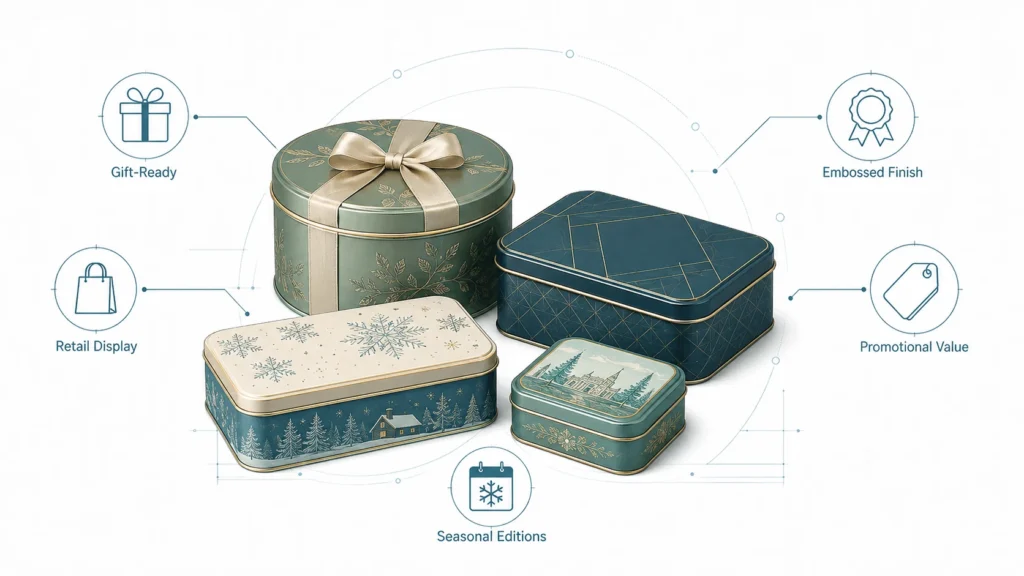
Promotional products are designed to keep a brand visible. A printed pen, drinkware item, notebook, sample kit, or branded gift works because it remains near the customer. Custom metal tin packaging can extend that same logic to the package itself.
A cardboard sleeve may be discarded quickly. A flexible pouch may be useful for product protection but rarely becomes part of the customer’s daily environment. A well-designed tin, however, may be reused to store stationery, tea bags, sewing tools, candy, cosmetics, chargers, small hardware, collectibles, or travel items. Each reuse gives the brand another moment of exposure.
This is why promotional tins work well for corporate gifts, trade show giveaways, product launch kits, holiday gift sets, influencer boxes, membership gifts, loyalty program items, and co-branded campaigns. The tin can carry brand colors, logos, campaign slogans, QR codes, product stories, regional artwork, or limited-edition graphics. When the design is tasteful rather than overly promotional, customers are more likely to keep it.
Promotional buyers should think carefully about the relationship between product value and package value. If the product inside is inexpensive but the tin feels premium, the package can elevate the whole gift. If the product is already premium, the tin must match that quality or it will weaken the unboxing experience. A poorly fitted insert, loose product movement, weak hinge, sharp edge, or low-quality print can make the promotion feel cheap even if the tin material is strong.
For promotional projects, the most practical questions are:
- Will the recipient understand the brand message within three seconds?
- Can the tin be reused without looking like disposable advertising?
- Does the insert hold the product securely during transport?
- Is the artwork aligned with the brand’s long-term visual identity?
- Can the structure be produced reliably within the campaign timeline?
- Does the tin fit shipping cartons, gift bags, retail displays, or event distribution methods?
These questions keep the project commercial. A promotional tin should not be custom for the sake of being custom. It should support retention, recall, sharing, and perceived value.
Retail products: packaging as shelf architecture
Retail packaging must compete in a physical or digital shelf environment. In a store, the package sits beside competing products. Online, the package appears in thumbnails, product galleries, unboxing videos, and customer reviews. Custom metal tin packaging can help a product stand out because it has shape, shine, rigidity, and tactile value.
For food and beverage brands, metal tins are often used for tea, coffee, biscuits, chocolates, cookies, candies, nuts, spices, and premium snack assortments. For beauty and personal care brands, tins are common for balm, soap, skincare sets, solid fragrance, candles, shaving kits, wellness gifts, and sample collections. For specialty retail, tins can hold small electronics, tools, accessories, collectible cards, hobby products, stationery, and limited-edition merchandise.
The best retail tins do three things well. They communicate the product category clearly, create enough distinction to attract attention, and protect the product through the full supply chain. Packaging that looks beautiful in a design render but dents easily, wastes shelf space, or cannot be packed efficiently will not succeed at scale.
Retail buyers should also consider how the tin will be merchandised. A tall round tin may create strong vertical shelf presence for tea or coffee. A flat rectangular hinged tin may work better for chocolate assortments or gift sets. A square tin may stack efficiently on shelves and in cartons. A window tin may help customers see the product but may also create additional compliance, assembly, and scratch-resistance considerations. A sleeve or belly band may allow localized labeling without changing the printed tin body.
| Retail objective | Tin design strategy | Common application |
|---|---|---|
| Improve shelf visibility | Use distinctive shape, strong color blocking, embossing, and clear front-panel hierarchy | Tea, coffee, confectionery, holiday snacks |
| Increase perceived value | Use matte varnish, metallic accents, clean typography, and fitted inserts | Beauty sets, premium chocolate, luxury gifts |
| Support seasonal sales | Keep base structure stable and refresh artwork for holidays or regional campaigns | Christmas tins, Lunar New Year gifts, Valentine’s Day sets |
| Reduce damage claims | Use stronger wall design, proper lid fit, internal trays, and tested carton packing | E-commerce products, fragile sets, multi-item kits |
| Encourage reuse | Avoid overly disposable campaign language; design the tin as a storage object | Corporate gifts, collectible packaging, refillable concepts |
| Improve supply-chain efficiency | Optimize dimensions for case pack, pallet layout, and retail display | Large retail programs and club-store packs |
Mr.Tin Box’s page on Gift, Promotional & Holiday Packaging emphasizes presentation, durable protection, memorable unboxing, and personalized structures for holiday gifting, corporate promotions, limited editions, and collector series. Those are exactly the commercial goals retail and promotional teams should translate into a practical packaging brief.
Application planning by industry
Custom metal tin packaging works differently in each industry. A chocolate brand, a skincare company, and an industrial tool supplier may all ask for “a custom tin,” but their real requirements are not the same. The table below gives a practical comparison.
| Industry | Typical products | Key packaging requirements | Recommended tin features |
|---|---|---|---|
| Food & beverage | Tea, coffee, biscuits, candy, chocolate, cookies, spices, snacks | Food-contact suitability, aroma protection, light barrier, shelf appeal, clean interior | Food-safe lacquer, inner bag or liner, tight lid, clear labeling area, stackable structure |
| Beauty & personal care | Balm, soap, solid perfume, skincare kits, candles, fragrance accessories | Premium appearance, corrosion control, formula compatibility, insert fit, gift value | Matte or satin finish, embossing, EVA/cardboard insert, optional protective lining |
| Gift and promotional | Holiday sets, corporate gifts, event kits, limited editions, collector items | Strong visual impact, reusability, campaign identity, safe transport | Hinged lid, decorative printing, custom compartments, QR code, limited-edition numbering |
| Specialty retail | Stationery, collectibles, hobby kits, small electronics, accessories | Product organization, tamper awareness, retail display, user experience | Window options, partitions, inner trays, printed instructions, sleeve labels |
| Industrial packaging | Tools, hardware, components, repair kits, measuring accessories | Impact resistance, corrosion resistance, organization, long-term storage | Reinforced walls, foam insert, anti-scratch lining, moisture-resistant layer, durable closure |
For food and beverage projects, buyers can begin with Mr.Tin Box’s Food & Beverage Packaging page, which describes food-grade tin boxes for tea, coffee, snacks, confectionery, and specialty foods, along with barrier properties against light, moisture, oxygen, and contamination. For beauty projects, the Beauty & Personal Care Packaging page explains how metal packaging supports cosmetics, skincare, fragrance, and wellness applications with impact resistance and decorative finishing.
For industrial and specialty products, the Specialty & Industrial Packaging page highlights reinforced structures, protective coatings, anti-corrosion layers, fitted trays, and impact resistance. These details matter because industrial packaging is judged less by shelf emotion and more by whether the contents arrive organized, undamaged, and ready to use.
Material selection: tinplate, coatings, and inserts
Most custom metal tins are made from tinplate because it balances forming performance, cost, printability, and durability. However, the material specification should never be separated from product use. The tin body, internal coating, ink system, varnish, insert material, window material, adhesive, and label must work together.
For dry food products such as tea, coffee, biscuits, and candy, many brands use a printed tin with a food-safe internal coating and an inner bag or liner. The tin provides structure, light barrier, retail presentation, and reuse value, while the inner package provides the primary seal when needed. For fatty, acidic, salty, or aromatic products, compatibility review becomes more important. Buyers should not assume that one coating works for every food.
For beauty and personal care, the main questions are formula compatibility and surface protection. A solid balm, scented candle, soap bar, or essential oil accessory may interact differently with coatings, inks, adhesives, or inserts. A packaging supplier should know the product type, expected contact conditions, temperature exposure, filling method, and storage duration before recommending materials.
For industrial packaging, material strength and insert design often matter more than decorative complexity. Foam, EVA, cardboard, molded pulp, plastic trays, or tin partitions may be used to prevent movement and abrasion. The insert should be sampled with the real product, not only with approximate dimensions.
| Component | Decision factors | Buyer should provide |
|---|---|---|
| Tinplate body | Thickness, rigidity, forming complexity, stacking load, corrosion resistance | Product weight, expected handling, carton stacking, target shape |
| Internal coating | Food/contact compatibility, corrosion resistance, odor neutrality | Product chemistry, contact time, temperature, market requirements |
| Exterior coating | Gloss, matte, scratch resistance, brand appearance, scuff resistance | Artwork, retail environment, shipping method, finish preference |
| Printing system | CMYK, spot color, metallic ink, color tolerance, proofing method | Brand color standards, design files, Pantone references, sample expectations |
| Insert | Product fit, shock absorption, presentation, recyclability, assembly labor | Product samples, layout preference, unboxing sequence, drop risk |
| Window | Visibility, scratch resistance, material compatibility, assembly method | Display requirement, regulatory market, cleaning/handling expectation |
| Closure | Slip lid, hinged lid, plug lid, clasp, telescopic fit | Opening experience, child-safety concern, sealing expectation, reuse goal |
A reliable project brief should include product dimensions, weight, material, contact sensitivity, filling method, target markets, artwork files, annual volume, launch date, transportation route, and retail channel. Without this information, a supplier can still quote a basic tin, but the risk of later redesign increases.
Food-contact and regulatory considerations
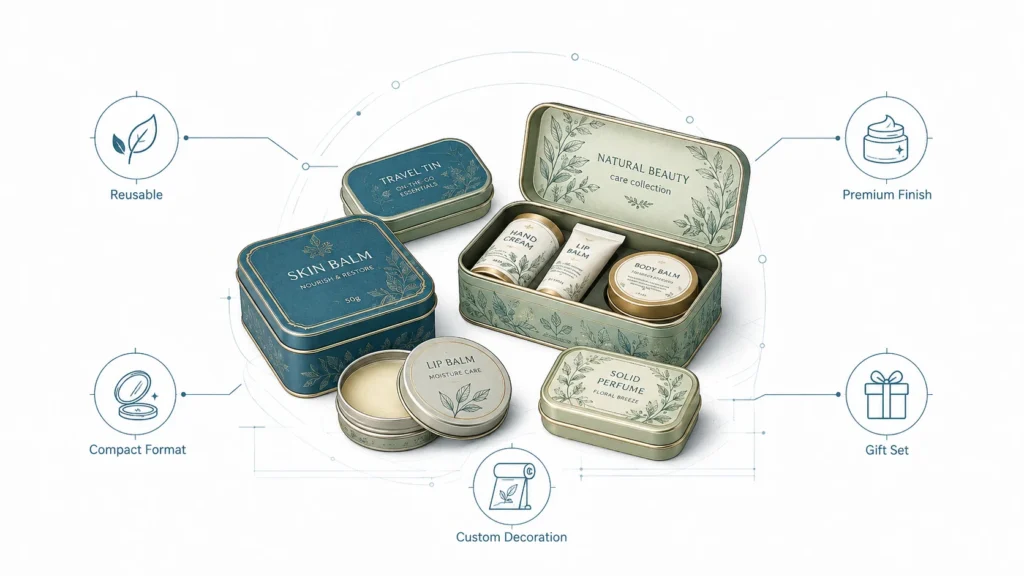
Food-contact packaging requires more discipline than ordinary promotional packaging. The phrase “food-grade” should not be treated as a universal label. A material that is suitable for one type of dry food may not automatically be suitable for oily, acidic, salty, alcoholic, hot-filled, or long-contact products. Buyers should ask what part of the package contacts the food, what coating is used, what testing is available, and what market rules apply.
In the United States, the FDA explains that a food contact substance is a substance that comes into contact with food and is not intended to have a technical effect in the food. Food packaging and packaging components can fall under this concept, as described on the FDA page for food packaging and other substances that come into contact with food. The FDA also explains that food contact substances that are food additives must be authorized through an appropriate pathway, as outlined in its guide to how the FDA regulates substances that come into contact with food.
In the European Union, food contact materials are governed by framework rules intended to protect human health and the functioning of the internal market. The European Parliament’s briefing on Regulation (EC) No 1935/2004 explains that food contact materials must not transfer constituents to food in amounts that could endanger human health or change the food in an unacceptable way. The European Commission’s food contact materials legislation page also lists specific EU rules, including recent rules related to BPA and other bisphenols.
BPA is especially relevant to metal packaging because some historical can coatings used epoxy systems associated with BPA. In December 2024, the European Commission announced a ban on BPA in food contact materials, including coatings on metal cans, with phase-out provisions for most products. Buyers supplying food-related tins to the EU should review this development through the Commission’s announcement on the ban of Bisphenol A in food contact materials.
| Compliance topic | Why it matters | Practical action for buyers |
|---|---|---|
| Food-contact status | Food packaging components may be regulated differently from decorative packaging | Identify all parts that may directly or indirectly contact food |
| Coating chemistry | Internal lacquer must match product chemistry and target market | Request coating information, migration test reports, and market-specific documentation |
| BPA and bisphenols | EU rules are moving away from BPA in food contact applications | Ask for BPA-free or compliant alternatives when targeting EU food markets |
| Product conditions | Heat, fat, acidity, alcohol, storage time, and contact area affect migration risk | Share realistic product and storage conditions with supplier and test lab |
| Documentation | Retailers and importers may require evidence, not only verbal claims | Keep test reports, declarations, material data, and sample records organized |
| Labeling and claims | Claims such as “food-grade,” “recyclable,” or “BPA-free” must be supportable | Avoid unsupported marketing claims and confirm local requirements |
For non-food promotional tins, food-contact documentation may not be required. However, if the tin might be reused by consumers for snacks or household storage, brands should be careful about how they describe the package. A decorative promotional tin should not be marketed as food-contact storage unless the materials and coatings support that claim.
Sustainability: recyclability, reuse, and honest claims
Sustainability is one of the strongest arguments for metal packaging, but it must be communicated accurately. Metal is recyclable, and steel packaging has strong recovery advantages because magnetic separation can help sorting facilities collect it from waste streams. However, sustainability is not only a material property. It also depends on package weight, production energy, transport efficiency, local recycling systems, consumer behavior, and whether the package is actually reused or recycled.
The sustainability advantage of a custom tin is strongest when the design encourages long-term reuse or efficient recycling. A decorative tin that customers keep for storage can replace some short-life packaging or household containers. A tin that is designed with a single material body, removable paper label, and minimal mixed-material components may be easier to explain from a recyclability standpoint. A tin with too many glued components, unnecessary plastic windows, complex mixed inserts, or oversized dimensions may weaken the sustainability story.
Regulatory pressure also matters. The European Commission states that the Packaging and Packaging Waste Regulation covers all packaging and packaging waste, regardless of material or origin, and sets requirements for manufacturing, composition, and reusable or recoverable nature of packaging placed on the EU market. The regulation generally applies from August 12, 2026, and aims to make all packaging on the EU market recyclable in an economically viable way by 2030, as summarized by the European Commission packaging waste page.
In the United States, the EPA reports that containers and packaging made up 82.2 million tons of municipal solid waste generation in 2018 and that the recycling rate of generated containers and packaging was 53.9%. The same EPA data estimates steel containers and packaging recycling at 73.8% of generation in 2018, while plastic containers and packaging had a much lower overall recycling rate. These figures show why packaging material choice and recovery systems are central to sustainability discussions.
For consumer demand, Trivium’s 2023 Buying Green Report found that 82% of respondents were willing to pay more for sustainable packaging and 71% had chosen a product in the previous six months based on sustainability credentials. This does not mean every customer will pay a premium for a tin, but it does suggest that packaging sustainability can influence buying behavior when claims are clear and credible.
| Sustainability design choice | Better practice | Risky practice |
|---|---|---|
| Reuse potential | Design the tin as an attractive storage object with durable graphics | Use campaign-only graphics that make the package feel disposable |
| Material simplicity | Keep components separable where possible | Permanently bond multiple materials without a clear need |
| Insert design | Use only the insert material needed for protection and presentation | Add thick foam or plastic inserts for visual drama without functional value |
| Size optimization | Fit product closely and improve carton utilization | Oversize the tin to look premium but increase freight and void fill |
| Claims | Say “reusable” or “recyclable where facilities exist” when supportable | Use vague claims such as “eco-friendly” without evidence |
| Documentation | Keep material and supplier documentation ready for retailers | Rely only on verbal supplier assurances |
A strong sustainability message for custom metal tin packaging should be specific. Instead of saying “green packaging,” a brand can say the tin is reusable, designed for long-term storage, made from recyclable metal, optimized to reduce excess insert material, or designed with fewer mixed-material components. Specific claims are easier to trust and easier to defend.
Design strategy: structure before decoration
Many packaging projects begin with artwork, but successful custom metal tin packaging should begin with structure. The structure determines product fit, opening experience, tooling feasibility, cost, packing efficiency, and user satisfaction. Decoration makes the structure visible and desirable, but it cannot solve a poor fit or weak closure.
The first structural question is shape. Round tins are classic for tea, coffee, candy, candles, and certain cosmetic products. Rectangular tins are efficient for biscuits, chocolate bars, stationery, tools, and gift sets. Square tins often balance shelf presence and packing efficiency. Irregular tins can be powerful for limited editions but need careful review because they may increase tooling cost, reduce carton efficiency, and create more forming risk.
The second question is opening style. A slip lid can be simple and cost-effective. A hinged lid improves the gift experience and keeps lid and base together. A plug lid may improve closure feel for certain food products. A window lid can show the product but adds assembly steps and may introduce scratching or material compatibility questions. A clasp may improve perceived security but adds cost and complexity.
The third question is internal layout. Inserts are often where premium packaging succeeds or fails. A beautiful exterior tin can still feel cheap if the products rattle inside, sit unevenly, or are difficult to remove. Inserts should be designed around the actual product, not only around artwork. For beauty and promotional sets, the insert is part of the unboxing story. For industrial tins, it is part of product protection and organization.
| Structural feature | Advantages | Watch-outs |
|---|---|---|
| Slip lid | Simple, familiar, efficient for many products | Fit must be controlled to avoid loose or overly tight opening |
| Hinged lid | Premium unboxing, lid stays attached, good for gift sets | Hinge quality and alignment must be consistent |
| Telescopic body | Clean appearance, good surface area for artwork | Height tolerance and friction fit need careful sampling |
| Window lid | Shows product before opening | Adds plastic or transparent material; may scratch or complicate recycling story |
| Embossed/debossed body | Tactile branding, premium feel, strong shelf impact | Tooling and registration must be well controlled |
| Internal tray | Organizes products and improves presentation | Material choice affects cost, recyclability, and assembly labor |
| Reinforced ribs/beads | Adds rigidity and stacking strength | May affect artwork layout and visual style |
Mr.Tin Box’s article on 10 Creative Custom Metal Tin Packaging Design Ideas discusses design approaches such as embossed surfaces, multi-purpose tins, and custom compartments. For commercial projects, the most important idea is to connect creativity with production reality. A creative tin must still be manufacturable, packable, and repeatable.
Printing and finishing options for higher perceived value
The surface of a custom tin is where brand identity becomes physical. Metal accepts high-quality lithographic printing, and the final look can be adjusted through varnish, texture, embossing, debossing, metallic effects, and other finishes. The right finish should match the brand position and the retail environment.
Gloss finishes create shine and color brightness. They are useful for candy, holiday gifts, children’s products, and high-energy promotional campaigns. Matte finishes create a calmer, more premium look. They are common in beauty, specialty foods, tea, coffee, wellness, and luxury gift packaging. Satin finishes sit between gloss and matte. Embossing and debossing add tactile depth to logos, patterns, borders, or product illustrations. Metallic inks or foil-like effects can support festive, premium, or limited-edition designs.
However, more finishing is not always better. A tin with matte varnish, embossed logo, spot gloss pattern, metallic ink, window, and complex insert may become expensive and risky without improving conversion. The best premium tins often use fewer effects with better hierarchy. A clean matte body with a sharp embossed logo may feel more premium than a crowded design with too many decorative processes.
Color management is also important. Metal is not paper. Ink behavior, reflectivity, varnish, and substrate tone can affect the final appearance. Brand teams should approve printed metal proofs when color accuracy matters. Digital mockups are helpful for concept review, but physical samples are necessary before mass production.
| Finish | Commercial effect | Best use |
|---|---|---|
| Gloss varnish | Bright, energetic, retail-visible | Candy, snacks, holiday campaigns, youth products |
| Matte varnish | Premium, soft, refined | Beauty, tea, coffee, wellness, luxury gifts |
| Satin varnish | Balanced, smooth, versatile | General retail products and corporate gifts |
| Embossing | Tactile logo or pattern, stronger memory | Premium branding, collector tins, gift sets |
| Debossing | Subtle depth, understated luxury | Minimalist beauty or specialty products |
| Metallic ink | Festive or premium visual accent | Holiday tins, confectionery, limited editions |
| Spot gloss | Contrast and detail without full shine | Premium retail packaging and brand patterns |
| Textured finish | Distinct hand feel | Specialty gifts and collector series |
For promotional products, the artwork should not only display a logo. It should tell the recipient why the product matters. This can be done through short product stories, campaign icons, QR codes, product origin details, collectible graphics, or regional artwork. For retail products, the front panel should prioritize brand, product type, flavor or variant, key benefit, net content, and regulatory information. Decoration should help the customer decide, not make the package harder to understand.
Cost, MOQ, tooling, and lead-time planning
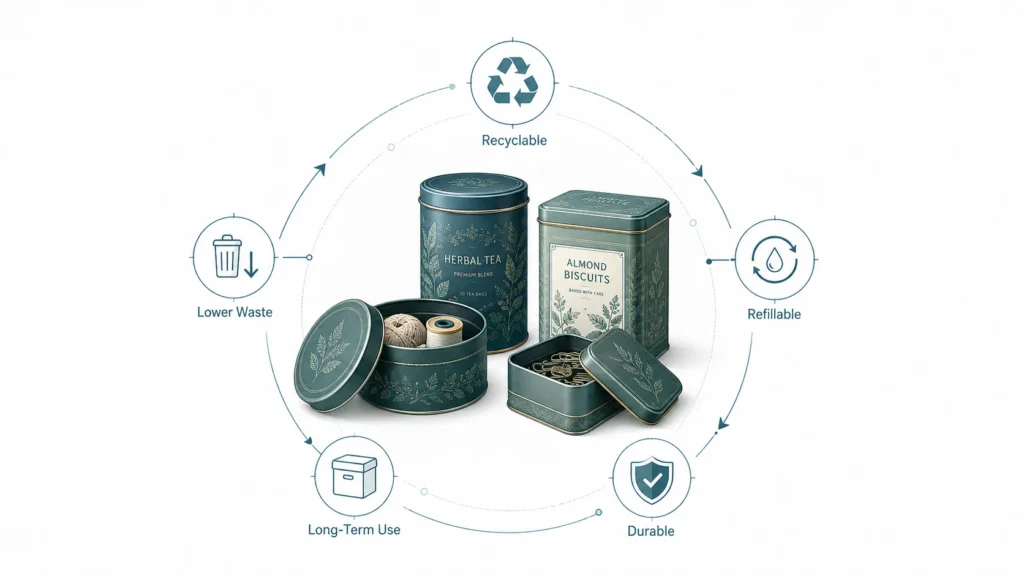
The cost of custom metal tin packaging depends on structure, material thickness, size, tooling, printing, finish complexity, insert design, order quantity, inspection requirements, and packing method. Buyers often ask for a quick unit price, but a useful quotation needs a clear specification.
Tooling is one of the main cost variables. If a project can use an existing mold, the buyer may save time and tooling cost. If the brand needs a unique shape, a new mold may be justified. The business question is whether the unique structure will create enough value across the product lifecycle. For a one-time promotion, standard tooling with excellent artwork may be more practical. For a long-term flagship product, custom tooling can be a smart investment.
MOQ is also connected to process economics. Printing metal sheets, setting up stamping lines, preparing inserts, and organizing finishing processes all have setup costs. Very small orders may carry high unit costs because setup work is spread across fewer pieces. Larger orders usually improve unit economics, but they also require stronger forecasting and inventory planning.
Lead time should include more than mass production. A realistic schedule may include requirement review, structure design, artwork adjustment, proofing, mold development, sampling, internal testing, buyer approval, printing, forming, finishing, assembly, inspection, export packing, and shipping. Mr.Tin Box states that its workflow includes consultation, 3D drawing and structure design, mold development or sample making, printing and surface finishing, stamping and assembly, and quality inspection. The homepage also highlights rapid sampling within 7-10 days for prototypes.
| Cost driver | What increases cost | How to optimize without weakening quality |
|---|---|---|
| Size | Larger tin uses more metal and increases freight volume | Fit the product closely and test carton layout early |
| Shape | Irregular forms may require special tooling and reduce packing efficiency | Use distinctive artwork or finish on a standard shape when possible |
| Thickness | Thicker tinplate improves rigidity but increases material cost | Match thickness to product weight, stacking load, and handling risk |
| Printing | More colors and strict color matching can add proofing work | Provide accurate artwork and Pantone references early |
| Finish | Embossing, debossing, metallic effects, and special coatings add steps | Use one or two high-impact effects instead of many minor effects |
| Insert | Complex molded inserts increase tooling, material, and assembly time | Choose the simplest insert that protects and presents the product well |
| Quantity | Low volume spreads setup costs across fewer units | Plan annual or seasonal volumes where possible |
| Inspection | Retailer-specific AQL or compliance checks may add cost | Define acceptance criteria before production begins |
For sourcing teams, the best way to control cost is not to force the lowest unit price after the design is complete. The better method is to design the tin around cost-sensitive variables from the beginning. Small changes in height, lid style, insert material, or finish stack can significantly affect total landed cost.
Quality control and testing for commercial reliability
A custom tin must look good and function correctly across thousands or millions of units. Quality control should cover appearance, dimensions, fit, printing, coating, edges, hinges, inserts, packing, and carton protection. A visually attractive sample is only the first step. The real test is whether mass production remains consistent.
For retail packaging, quality failures can create visible brand damage. Dents, scratches, color shifts, loose lids, sharp edges, misaligned embossing, poor hinge movement, and rattling products can all lead to customer complaints. For food-contact tins, coating defects or documentation gaps can create more serious risks. For promotional campaigns, late delivery can make the entire campaign fail, even if the tin quality is acceptable.
Testing should be matched to product use. A lightweight candy tin may need appearance, lid fit, coating, and carton drop review. A beauty gift set may need insert fit, fragrance or formula compatibility review, scuff resistance, and unboxing testing. An industrial kit may need repeated opening, load, vibration, and impact checks. E-commerce tins may need stronger outer-carton testing because parcel shipping is less controlled than palletized retail distribution.
| QC area | What to check | Why it matters |
|---|---|---|
| Dimensions | Length, width, height, lid fit, internal clearance | Ensures product fit and packing consistency |
| Appearance | Dents, scratches, stains, print defects, varnish marks | Protects retail and gift presentation |
| Edge safety | Curling, seams, burrs, sharp edges | Reduces user injury and complaint risk |
| Closure performance | Opening force, tightness, hinge alignment, clasp function | Affects user experience and product protection |
| Coating quality | Interior coverage, corrosion resistance, product compatibility | Important for food, beauty, and humid environments |
| Print registration | Alignment between artwork, embossing, and cutting/forming | Critical for premium branding |
| Insert fit | Product movement, removal experience, material cleanliness | Protects contents and improves unboxing |
| Carton packing | Case quantity, dividers, compression, drop resistance | Reduces shipping damage and warehouse problems |
| Documentation | Material reports, test reports, declarations, inspection records | Supports retailer, importer, and regulatory review |
Mr.Tin Box’s website highlights strict quality control and final checks for appearance, sealing, alignment, and durability. Buyers should translate that promise into a project-specific inspection standard. A good supplier can help, but the buyer should still define what defects are critical, major, and minor for their brand.
How to brief a supplier for a custom metal tin packaging project
A clear brief saves time, reduces quotation errors, and improves sample quality. Many project delays happen because the buyer sends only a product photo and asks for “a custom tin price.” A supplier can make assumptions, but those assumptions may not match the product, market, or budget.
A practical brief should include the following information:
- Product name and category
- Product dimensions and weight
- Whether the product directly contacts the tin
- Target market or countries
- Expected retail channel, such as supermarket, specialty store, e-commerce, promotional event, or distributor sales
- Target quantity for first order and estimated annual volume
- Preferred tin shape, size, or reference image
- Required opening style, such as slip lid, hinged lid, window lid, or telescopic box
- Insert requirement, including product layout and unboxing preference
- Artwork files, brand guidelines, Pantone colors, and logo files
- Required finish, such as matte, gloss, embossing, debossing, or metallic effects
- Compliance expectations, such as food-contact, BPA-free, LFGB, FDA-related documentation, or retailer testing
- Packing requirements, including inner bag, master carton, pallet, barcode, label, or retail display
- Target launch date and required sample approval date
- Budget range or target unit cost, if available
A good brief does not need to be perfect. It only needs to give the supplier enough information to propose the right structure and identify risks early. If the product is still in development, a simple drawing, sketch, or 3D file can still help.
Mr.Tin Box project workflow for custom tin packaging
Mr.Tin Box describes a six-step workflow for custom metal packaging: consultation and requirements, 3D drawing and structure design, mold development or sample making, printing and surface finishing, stamping and assembly, and quality inspection. This workflow is useful because it mirrors how a professional custom tin project should move from idea to mass production.
In the consultation stage, the supplier should understand the product, brand, market, budget, and schedule. For promotional and retail products, this should include the campaign purpose or shelf strategy. A holiday gift tin may need emotional impact and fast seasonal delivery. A permanent retail tin may need stronger cost optimization and repeatability. A food tin may need coating and documentation review. An industrial tin may need insert engineering and durability.
In the 3D design stage, the team translates product requirements into dimensions, structure, lid style, internal layout, and manufacturing feasibility. This is the stage where small changes can save large costs. For example, adjusting height by a few millimeters may improve carton utilization or reduce product movement. Changing a custom irregular shape to a standard rectangular shape with premium printing may reduce tooling cost while keeping strong shelf appeal.
In mold development or sample making, the buyer can evaluate the real object. This stage should not be rushed. The sample should be checked with real product, real insert, real opening behavior, real artwork expectations, and realistic packing. If the sample is only reviewed visually, hidden problems may appear later.
In printing and finishing, artwork becomes metal. This stage requires color proofing, registration control, coating selection, and finish approval. In stamping and assembly, the printed sheets are formed into bodies, lids, bases, hinges, windows, or other components. In final inspection, the supplier checks appearance, sealing, alignment, durability, and packing quality before shipment.
| Workflow stage | Buyer responsibility | Supplier responsibility | Output |
|---|---|---|---|
| Consultation | Share product, market, quantity, budget, and launch timing | Ask technical questions and identify risks | Clear project direction |
| 3D design | Approve structure direction and product layout | Create dimensions, drawings, and structure proposal | Technical drawing or rendering |
| Sample making | Test with real product and confirm changes | Produce prototype or pre-production sample | Physical approval sample |
| Printing and finishing | Approve artwork, colors, and effects | Control proofing, varnish, embossing, and surface process | Printed metal sheets or parts |
| Stamping and assembly | Confirm production standard and inspection criteria | Form, assemble, and control process consistency | Finished tins |
| Quality inspection and packing | Review inspection report and shipping plan | Inspect, pack, label, and prepare shipment | Ready-to-ship order |
This workflow also gives buyers a practical way to compare suppliers. A supplier that asks detailed questions early may seem slower at first, but that discipline often prevents expensive mistakes later. Mr.Tin Box’s guide on how to select the right factory for metal packaging is especially relevant for buyers evaluating factory capability, quality systems, and project support.
Use cases for promotional and retail products
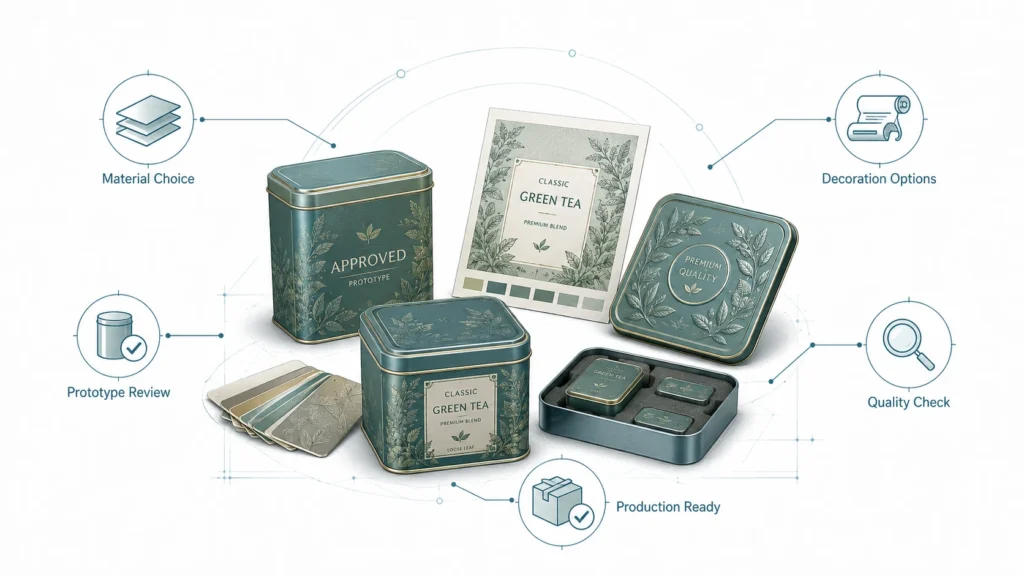
Custom metal tin packaging can support many commercial scenarios. The best use case is one where durability, visual value, and reuse potential are meaningful to the buyer or recipient.
Premium tea and coffee tins
Tea and coffee brands often use metal tins because the material suggests freshness, tradition, and quality. A tall round tin or square tin can create strong shelf presence and protect the product from light when used with appropriate inner packaging. For premium tea, the tin can carry origin information, brewing guidance, and a reusable storage function. For coffee, matte finishes, metallic accents, and aroma-focused storytelling can support a higher perceived value.
Confectionery and biscuit gift tins
Confectionery is one of the classic markets for metal tins. Chocolate, cookies, biscuits, candy, and seasonal sweets all benefit from giftable packaging. A holiday tin can become a collectible object. A brand can keep the same basic tin structure and refresh artwork for Christmas, Easter, Valentine’s Day, Mother’s Day, Lunar New Year, or regional campaigns. This approach controls tooling cost while keeping the product fresh.
Beauty and wellness kits
Beauty brands can use tins for solid perfume, balm, soap sets, skincare accessories, travel kits, candles, and wellness gift sets. The tin body gives a premium and protective feel, while the insert controls product presentation. Matte varnish, soft-touch effects, embossing, and minimalist artwork often work well in this sector. Buyers should review formula compatibility carefully if the cosmetic product may touch the tin or lining.
Corporate promotional kits
A corporate gift tin can hold branded stationery, snacks, USB drives, small tools, product samples, membership cards, or launch materials. The tin can include a QR code leading to a campaign page, product video, registration form, or digital catalog. For trade shows, a reusable tin can help the brand remain visible after the event.
Retail sample collections
Brands that sell variety packs can use compartment tins to organize flavors, colors, scents, or product types. This is useful for tea samplers, chocolate assortments, cosmetic mini sets, fragrance discovery kits, art supplies, craft products, and hobby items. The internal tray should support both protection and selection.
Industrial and repair kits
Industrial brands can use metal tins for small tools, spare parts, calibration accessories, fasteners, repair kits, measuring items, and electronic components. In this context, the tin is less about luxury and more about protection, organization, and long-term storage. Fitted foam or EVA inserts can reduce missing-part issues and improve professional presentation.
Common mistakes when choosing custom metal tin packaging
The first mistake is choosing a shape before defining product requirements. A special shape may look attractive, but it can increase tooling cost, reduce packing efficiency, complicate forming, or make the lid less stable. Shape should support the product and brand, not distract from practical performance.
The second mistake is treating “food-grade” as a simple universal claim. Food-contact suitability depends on material, coating, product chemistry, contact conditions, market regulations, and documentation. Buyers should ask for relevant evidence rather than assuming every tin is suitable for every food.
The third mistake is ignoring the insert. Many premium tins fail because the outer box looks beautiful but the inside feels loose, noisy, cheap, or difficult to use. Inserts are part of the packaging experience and should be sampled with real products.
The fourth mistake is overdecorating the tin. Too many effects can increase cost and production risk without improving sales. A clean matte finish with one well-placed embossed logo may be stronger than a crowded design with multiple special processes.
The fifth mistake is underestimating lead time. Custom metal tin packaging includes consultation, design, tooling, sampling, artwork proofing, printing, forming, assembly, inspection, packing, and shipping. Buyers should plan backward from the retail launch date, not only from the desired delivery date.
The sixth mistake is forgetting logistics. A beautiful tin that wastes carton space, dents easily in parcel shipping, or requires too much manual packing can become expensive after production. Packaging should be tested as a full system, including master cartons and shipping method.
Procurement checklist for buyers
Before approving a custom metal tin project, buyers can use the checklist below to reduce risk.
| Checklist item | Yes/No | Notes |
|---|---|---|
| Product dimensions and weight are confirmed | ||
| Product samples have been sent or accurately modeled | ||
| Direct or indirect food/contact requirements are identified | ||
| Target countries and retailer requirements are known | ||
| Tin shape and opening style are selected based on product use | ||
| Insert material and layout are tested with real products | ||
| Artwork files are print-ready and color references are supplied | ||
| Finish effects are limited to commercially useful processes | ||
| Tooling requirements and ownership expectations are clarified | ||
| MOQ, unit price, sample cost, tooling cost, and payment terms are clear | ||
| Sampling timeline and mass production timeline are realistic | ||
| Inspection standard and defect classification are agreed | ||
| Carton packing and shipping method are tested | ||
| Sustainability claims are specific and supportable | ||
| Compliance documentation is collected before shipment |
This checklist is not a substitute for professional testing or legal review. It is a practical project management tool. For export-oriented brands, documentation should be reviewed with importers, retailers, compliance consultants, or testing laboratories when required.
How custom metal tin packaging supports brand value
The commercial value of custom metal tin packaging comes from several sources. The first is perceived value. Metal feels more durable than many disposable packaging formats, so it can help the product feel more premium. The second is differentiation. A shaped, printed, embossed, or reusable tin can stand out in a retail set where many products use similar cartons or pouches. The third is protection. A rigid tin can reduce crushing and help organize multi-item sets. The fourth is reuse. A tin that customers keep can continue to display the brand.
This value is strongest when the packaging matches the product’s price point and sales channel. A low-cost commodity product may not support a complex metal tin unless the promotion requires it. A premium chocolate, specialty tea, luxury candle, skincare gift set, or limited-edition collectible can often justify the added cost because the tin helps tell the product story and supports gifting.
For e-commerce, custom tins can also improve unboxing content. Customers are more likely to photograph or review packaging that feels special. However, parcel shipping increases damage risk, so the outer shipping carton and protective packing must be designed carefully. A tin that looks perfect at the factory but arrives dented will not help the brand.
For retail, metal tins can support seasonal merchandising. Holiday tins, gift towers, limited-edition art tins, regional souvenir tins, and co-branded promotional tins can create urgency. If the brand keeps the same base structure and refreshes artwork, it may reduce tooling costs while maintaining novelty.
Why work with Mr.Tin Box for custom metal tin packaging
A strong custom tin supplier should combine design support, tooling capability, printing knowledge, forming experience, finishing control, inspection discipline, and export communication. Mr.Tin Box positions itself around these requirements. The website presents a fully equipped production facility, advanced tooling workshop, automated stamping lines, professional finishing systems, in-house mold development, premium printing and finishing, strict quality inspection, food-grade material options, and prototype support.
For promotional and retail buyers, this integrated capability is important. A project may begin as a visual idea, but it must become a manufacturable structure, a reliable sample, a printable surface, a repeatable stamping process, and a shippable product. If these steps are handled separately without coordination, the risk of delays and quality problems increases.
Mr.Tin Box also organizes its services by business application. Food and beverage buyers can review food and beverage metal packaging solutions. Beauty brands can review beauty and personal care packaging. Seasonal and campaign buyers can review gift, promotional, and holiday packaging. Industrial buyers can review specialty and industrial packaging. This category structure helps buyers think beyond a generic tin box and consider the real application.
The company’s related articles also support buyer education. For example, Why Custom Metal Tin Packaging Is Ideal for Premium Product Packaging explains the premium packaging logic, while Custom Metal Tin Packaging for Food, Beauty, and Gift Brands connects metal tins to major consumer categories. Buyers planning more complex sourcing programs can also use the OEM-focused guide on custom metal tin box solutions.
Practical example: building a retail-ready promotional tin program
Imagine a brand wants to launch a premium holiday gift set containing tea sachets, a small honey jar, a spoon, and a printed greeting card. The brand wants the package to feel reusable, giftable, and suitable for retail shelves.
A poor approach would be to request a “nice tin box” with approximate dimensions and leave the insert for later. This may lead to product movement, poor carton efficiency, and late-stage redesign.
A better approach starts with the product layout. The tea sachets, jar, spoon, and card are measured. The desired unboxing sequence is defined. The brand decides whether the tin should be opened like a book, stacked vertically, or displayed front-facing on shelf. The supplier proposes a rectangular hinged tin with a paperboard or EVA insert, depending on the desired sustainability and protection balance. The artwork uses a seasonal pattern but avoids a date-specific design so customers can reuse the tin after the holiday.
The supplier then creates a 3D drawing and sample. The buyer tests whether the jar moves during shaking, whether the spoon scratches the tin, whether the greeting card is easy to remove, whether the lid closes smoothly, and whether the tin fits the planned retail carton. The brand approves matte varnish with an embossed logo instead of multiple expensive effects. The final package feels premium, protects the products, and remains reusable.
This example shows why custom metal tin packaging is a system. The tin body, insert, artwork, finish, carton, and product all affect the final commercial result.
FAQ
What is custom metal tin packaging?
Custom metal tin packaging is a metal packaging solution, usually made from tinplate, designed around a specific product, brand, and market requirement. It can include custom size, shape, printing, surface finishing, lid style, insert, window, hinge, or other structural details.
Is custom metal tin packaging suitable for food products?
Yes, it can be suitable for many food products, especially tea, coffee, biscuits, candy, chocolate, snacks, and specialty foods. However, food-contact suitability depends on coatings, contact conditions, product chemistry, target market, and testing documentation. Buyers should not rely only on the phrase “food-grade.”
What products are best for promotional tins?
Promotional tins work well for corporate gifts, trade show kits, sample packs, holiday gifts, loyalty items, limited editions, product launch kits, confectionery, tea, coffee, beauty sets, stationery, small tools, and collectible merchandise. The best products are those where reuse, protection, and presentation add clear value.
Are metal tins recyclable?
Steel and tinplate packaging are widely recyclable in many markets, and magnetic properties can help recovery in sorting systems. However, actual recycling depends on local collection rules, package design, consumer behavior, and whether mixed materials are easy to separate. Brands should use accurate, market-appropriate recycling claims.
What is the difference between a standard tin and a fully custom tin?
A standard tin uses an existing mold and is usually customized with artwork or finish. A fully custom tin may require a new mold for unique dimensions, shape, closure, or structure. Standard tins are usually faster and more economical, while fully custom tins offer stronger differentiation for long-term programs.
How can I reduce the cost of a custom tin project?
Use an existing mold where possible, optimize dimensions for product fit and carton packing, avoid unnecessary oversized structures, select one or two high-impact finishes instead of many processes, and plan sufficient order quantity. Cost should be optimized during design, not only negotiated after the design is fixed.
What files should I prepare before requesting a quote?
Prepare product dimensions, product weight, target quantity, target market, preferred tin style, artwork files, brand colors, insert requirements, compliance expectations, packing requirements, and launch timeline. Product samples or 3D files are especially helpful.
How long does custom tin sampling take?
Sampling time depends on whether the project uses an existing mold or requires new tooling. Mr.Tin Box states that rapid sampling can be available within 7-10 days for prototypes, but full project timing depends on structure complexity, artwork approval, tooling, testing, and production schedule.
Can a custom tin be used for e-commerce shipping?
Yes, but the tin should be tested with the full shipping system. E-commerce parcels face drops, compression, vibration, and less predictable handling. The outer carton, dividers, padding, and tin structure must work together to prevent dents and product movement.
Why choose Mr.Tin Box for custom metal tin packaging?
Mr.Tin Box combines custom structure design, mold development, printing and finishing, stamping, assembly, inspection, and application-specific packaging support for food, beauty, gift, promotional, holiday, specialty, and industrial products. This makes it suitable for buyers who need more than a generic container and want a commercially reliable custom tin packaging program.
Conclusion
Custom metal tin packaging is a powerful option for promotional and retail products when it is planned as a complete commercial system. It can improve shelf appeal, protect products, increase perceived value, support reuse, and create lasting brand exposure. It also gives brands many ways to customize shape, printing, finish, opening style, and internal presentation.
The best results come from early planning. Buyers should define the product requirements, retail channel, target market, compliance needs, sustainability goals, budget, quantity, and launch timeline before choosing the final structure. They should also test samples with real products and review the full packing system before mass production.
For food, beauty, gift, promotional, holiday, specialty, and industrial applications, Mr.Tin Box provides a practical path from concept to finished custom tin packaging. Whether the project is a seasonal promotional campaign, a premium retail gift set, a reusable brand container, or a long-term OEM packaging program, the right custom metal tin can make the product easier to notice, easier to protect, and easier to remember.
Brands ready to develop a custom project can begin by reviewing Mr.Tin Box’s application pages, comparing structural options, preparing a detailed brief, and requesting professional guidance through the Mr.Tin Box contact page.