
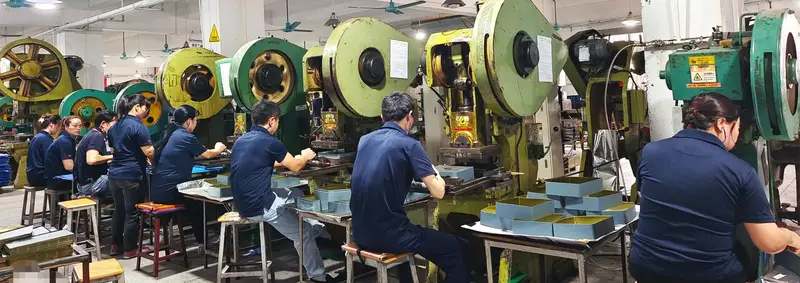
When sourcing custom metal packaging from overseas, most buyers search for suppliers online. However, relying solely on a supplier’s polished website and sophisticated marketing tactics is far from sufficient to identify a genuine manufacturing plant, as trading companies can easily masquerade as direct manufacturers.
Working with a middleman disguised as a factory is a big problem. It often leads to higher costs. It leads to slow communication. It also leads to poor quality control. You might think you are talking to the people making your packaging. Instead, you are talking to a broker sitting in a city office.
To protect your business and your supply chain, you must learn how to do proper factory verification. You need to know who you are actually paying. This guide will help you. We will walk you through exactly how to tell a genuine tin box manufacturer from a trading company. We will use simple steps that anyone can follow.
Table of Contents
Understanding the Landscape: Factory vs. Trading Company
Before we look at how to verify a supplier, we need to understand the difference between the two main types of businesses.
What is a Direct Tin Box Manufacturer?
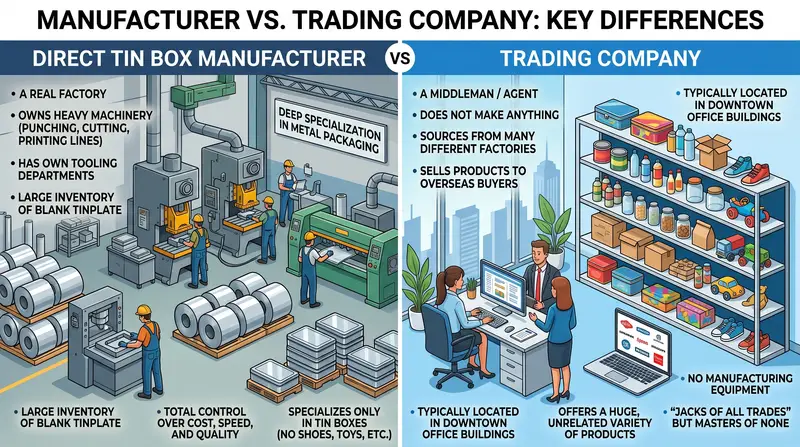
A genuine tin box manufacturer is a real factory. This means they actually make the products themselves. They own or rent a large industrial building. They own heavy machinery. This includes punching machines, metal cutting machines, and sometimes even printing lines. They have their own tooling departments to make metal molds. They also keep a large inventory of raw materials, like blank tin plates.
Most importantly, a real factory has a core focus. They specialize deeply in metal packaging. They do not sell shoes, plastic toys, or electronics. They only make tin boxes. Because they make the product, they have total control over the cost, the speed, and the quality.
What is a Trading Company?
A trading company is a middleman. They do not make anything. They are a bridge between you and the real factory. A trading company sources products from many different factories. Then, they sell those products to overseas buyers like you.
Trading companies usually have a very different setup from a factory. They are typically located in downtown office buildings in big cities. They do not have any manufacturing equipment. They do not have warehouses full of raw materials. Very often, they offer a huge, unrelated variety of products. You might see a trading company selling tin boxes, but also selling plastic bags, glass bottles, and paper boxes. They are “jacks of all trades” but masters of none.
Why Working Directly with a Tin Box Manufacturer Matters
You might wonder why it matters who you buy from. If the trading company can get you the product, why should you care? The truth is, working directly with a real factory gives you massive advantages. Here is why you should always try to find a direct tin box manufacturer.
1. Cost Efficiency and Transparent Pricing
The primary consideration when working directly with a factory is cost; trading companies derive their profit by adding a markup to the factory’s quoted price. This middleman markup is usually between 10% and 30%. Sometimes it is even higher.
When you buy from a middleman, you are paying for their city office rent and their sales staff. If you cut out the middleman, you lower your unit costs. A direct tin box manufacturer gives you the real, bottom-line price.
Also, a real factory can help you save money on materials. They know exactly how to adjust a box design to waste less tinplate. A trader does not have this technical knowledge. They just pass the high price on to you.
2. Superior Quality Control (QC)
Quality is everything in packaging. If your tin boxes arrive scratched or dented, you cannot sell your products.
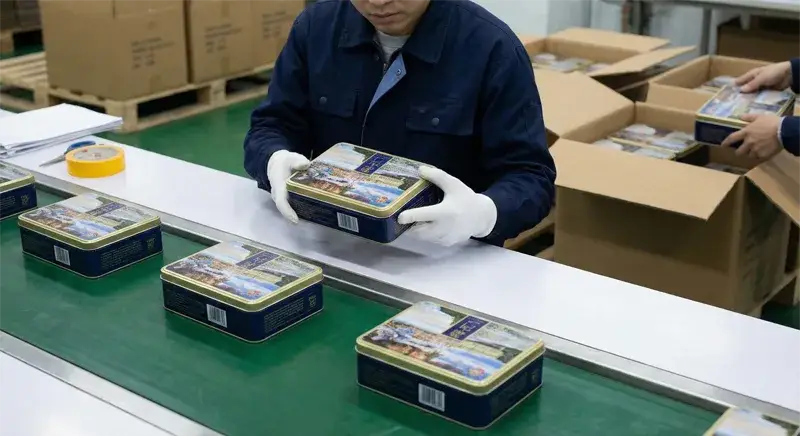
A real factory has an in-house Quality Control (QC) process. They check everything step by step. First, they check the raw tinplate when it arrives. They make sure it is not rusted. Second, they check the printing to make sure the colors are correct. Third, they have workers check the metal on the pressing line. Finally, they do a strict final inspection before packing the boxes into cartons.
A trading company loses control over this process. The trading sales rep is sitting in an office miles away. They cannot see the production line. If the factory makes a mistake, the trader will not know until it is too late. Working directly with the factory means the people you talk to are the same people watching your goods being made.
3. Faster Lead Times and Direct Communication
When working with a trader, your requirements are relayed to the manufacturing plant through them; inevitably, the trader’s understanding of your needs and the information they pass on to the factory cannot convey your specifications with 100% accuracy. The resulting discrepancies in information often lead to issues regarding product quality, delivery schedules, transportation, and other aspects.
You tell the trader you want a specific red color and a raised logo on the lid. The trader writes this down. Then, the trader calls the factory. Sometimes, inaccurate communication from traders can lead to discrepancies in the color or style of the tin cans produced by the factory, resulting in a waste of time.
Direct communication fixes this. When you speak to a tin box manufacturer, you are speaking to the source. There is no middleman to confuse the details. You can talk directly about your design specs, your specific Pantone colors, and your embossing needs. This saves a lot of time. Your boxes get made much faster.
4. In-House Tooling and Customization
Making custom metal shapes is hard. To make a new shape, you need a new metal mold. This is called “tooling.”
A genuine factory has its own mold-making department. They have engineers who build these molds from scratch. If you want a tin box shaped like a star, a car, or a tree, the factory can build the mold for you quickly. They can also adjust the mold if the sample is not perfect.
Traders do not make molds. They have to pay a factory to do it. This adds extra time and extra costs to your project. If the sample needs a small change, the trader has to negotiate with the factory again. It is a very slow process.
Core Guide: How to Distinguish Them via Factory Verification
Now you know why you need a real factory. But how do you find one? How do you prove they are who they say they are?
This is the most important part of the process. You must act like a detective. Here is a clear, step-by-step guide to factory verification.
Step 1: Conduct an Initial Digital Footprint Audit
You can learn a lot before you even talk to the supplier. You just need to check their digital footprint.
Check Google Maps or Baidu Maps: Look at the registered address on their website. Type it into a map service. Use the “Street View” feature if you can. Does the address point to a tall commercial office building in the middle of a big city? If yes, they are probably a trading company. Does the address point to a large, flat building in a suburban industrial park? If yes, that is a good sign they are a factory.
Analyze Their Website Catalog: Look closely at the products they sell. Does the supplier sell only tin boxes and metal packaging? That is what a real tin box manufacturer does. Or do they sell tin boxes, plus plastic toys, USB drives, and paper bags? A real factory cannot make all of these different things. If they sell many unrelated items, they are definitely a trader.
Step 2: Verify Legal Documents and Business Licenses
Every legal business has a business license. You should always ask the supplier to send you a copy of theirs.
Do not worry if the license is in Chinese or another foreign language. You can use an app like Google Translate to read it. Use the camera feature to translate the text.
You need to look for one specific section: the Business Scope. This section lists what the government legally allows the company to do.
If the business scope says “Manufacturing,” “Production,” or “Processing,” this is great. It means they are a real factory.
If the business scope only says “Sales,” “Trading,” “Wholesale,” or “Technology Development,” you need to be careful. They are legally registered as a middleman, not a maker.
Step 3: Scrutinize Factory Certifications and Audit Reports
Good factories are proud of their work. They pay for professional certifications to prove their quality. You should ask to see these papers.
A genuine tin box manufacturer will often have factory-specific audits. Examples include:
ISO9001: This proves they have a good quality management system.
SEDEX or BSCI: This proves they treat their workers well and have safe working conditions.
BRC or HACCP: These are very important if you are putting food inside the tins. It proves the factory is clean and safe for food packaging.
Disney FAMA: This proves they are allowed to make products with Disney characters.
Step 4: Request a Live Virtual Factory Tour
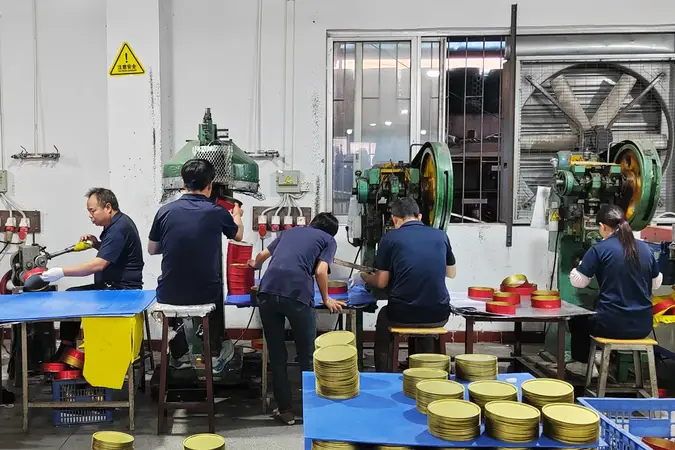
This is the most powerful tool you have. A live video call will expose a fake factory immediately.
Do not accept pre-recorded videos. A trading company can easily visit a factory, take a nice video, and put it on its website. They can even steal videos from other companies. A recorded video proves nothing.
Instead, ask for a live video call. You can use WhatsApp, WeChat, or Zoom. Tell the sales rep exactly what you want to see. Say: “Please start the video call at your desk. Then, walk with the camera out of your office and directly onto the production floor. Show me the punching machines running. Then, walk to the tooling room and show me the molds. Finally, show me the raw material warehouse.”
The Factory Reaction: A real factory sales rep will say, “No problem! Let’s do it tomorrow morning.” They will gladly walk you through the factory.
The Trader Reaction: A trading company rep will panic. They cannot do this because they are in an office building. They will give you excuses. They will say, “The factory is two hours away,” or “It is too loud in the factory for a call,” or “Factory management does not allow cameras.” These are all lies. It is a huge red flag.
Step 5: Ask Technical “Trap” Questions
Trading sales reps are salespeople. They are not engineers. They often lack deep technical knowledge about metal packaging. You can use this to your advantage by asking technical “trap” questions.
A real tin box manufacturer works with metal every day. They will answer these questions easily. A trader will be confused, or they will tell you they need to check with their “engineering team” (which really means calling the factory).
Here are some good trap questions to ask:
“What is the standard thickness of the tinplate you will use for a box this size? Will you use 0.23mm or 0.28mm?” (A real factory will give you a firm, quick answer based on the box size).
“How do you handle the CMYK printing registration when doing 3D embossing on the lid?” (This is a complex issue. The printing must match the raised metal perfectly. A real factory will explain their careful alignment process. A trader will just say, “Don’t worry, we can do it.”)
“What kind of food-grade varnish do you apply to the inside of the tin?” (A factory will name specific types, like gold epoxy or clear food lacquer. A trader will not know the terms).
Step 6: Hire a Third-Party Inspection Agency
If you are placing a large order, you should never trust your money to luck. The best way to verify a factory is to send someone there in person. If you cannot fly overseas yourself, you can hire a professional.
There are many third-party inspection agencies. Famous ones include SGS, TUV, and Intertek. You pay them a fee, usually a few hundred dollars. They will send a trained inspector to the factory address.
You should hire them to perform an on-site Factory Audit (FA). Do this before you pay any deposit. The inspector will go to the address. They will count the machines. They will check the legal papers. They will take photos of the building. They will send you a long, detailed report.
If the supplier is a trading company, they will often refuse to let the inspector visit. They know they will be caught. If they refuse the inspection, walk away immediately.
The Cheat Sheet: Red Flags vs. Green Flags
To make things simple, we have created a quick cheat sheet. Use this list when you are talking to a new supplier. It will help you spot the good guys and avoid the bad guys quickly.
Red Flags of a Disguised Trading Company
If you see these signs, you are likely dealing with a middleman. Proceed with extreme caution.
Refusal of Video Calls: They offer continuous delays or excuses when you ask for a live video tour. They say it is too far or too noisy.
Mismatched Bank Details: When it is time to pay, their bank account name is completely different from the company name on their website. Sometimes, they ask you to pay an offshore holding company in another country.
Stolen Photos: The product photos on their website have watermarks that belong to other brands. Or, the photos are clearly taken in many different, completely different-looking showrooms.
Vague Tooling Answers: They give vague answers regarding mold development costs and lead times. They cannot explain how the mold will be made.
Everything is “Yes”: They say yes to every single request immediately, without checking the technical details first. Real factories often push back if a design is impossible to manufacture.
Huge Product Range: They sell tin boxes alongside completely unrelated items like clothing, plastic cups, or electronic cables.
Green Flags of a Genuine Tin Box Manufacturer
If you see these signs, you have likely found a real, direct factory.
Open Doors: They have a willingness to welcome you at any time. They are happy to host you for a live video call or an in-person visit. They also welcome your third-party auditor.
In-House Experts: They clearly tell you they have a dedicated R&D (Research and Development) team and their own mold-making department.
Technical Proof: They can quickly provide extensive video samples of complex structural tins. If you ask to see a tin with multi-level embossing, they can show it to you in seconds on a video call.
Consistent Naming: The name on their website, their business license, their ISO certificates, and their bank account all match perfectly.
Helpful Advice: They offer technical advice. If your design will waste too much metal, they will tell you and suggest a better, cheaper size.
Why Choose MRTinbox as Your Direct Packaging Partner?
MRTinbox is a fully certified, transparently operated direct manufacturer of tinplate boxes. You can order custom tin cans from them in a wide variety of shapes and for diverse applications. Whether you need tins for long-term food storage or to elevate your product’s premium appeal, MRTinbox delivers high-quality products to meet your needs.
Conclusion
Sourcing packaging is not just buying a box. It is an investment in your brand. If your packaging is bad, your customers will not buy your product. Taking the time to verify that you are working with a real factory is vital. It protects your brand’s reputation. It also protects your bottom line by saving you money and time. Do the research, ask the hard questions, and demand transparency.
Are you looking for a reliable, direct tin box manufacturer for your next packaging project? Stop dealing with middlemen and start talking to the makers. Contact the MRTinbox team today to schedule a live virtual tour of our production facility and get a direct-from-factory quote.
FAQ
Is it really cheaper to buy directly from a tin box manufacturer?
Buying directly from a factory cuts out the middleman. Trading companies usually add a 10% to 30% markup to the factory price to make their profit. When you work with a direct manufacturer, you get the real bottom-line price. A factory can also help you design your box to use less metal, which saves you even more money.
What is the normal Minimum Order Quantity (MOQ) for a direct tin box factory?
For most direct factories, the MOQ for custom printed tin boxes is usually between 3,000 and 5,000 pieces. This is because setting up the large printing machines and metal presses takes a lot of time and requires a lot of raw materials. If a supplier offers an MOQ of only 100 or 500 pieces, they might be selling leftover stock or be a trading company.
How long does it take a factory to make a custom tin box mold?
If you work with a real factory that has its own in-house tooling department, making a new metal mold usually takes about 15 to 20 days. A trading company will take much longer because they have to send the work to an outside factory and wait in line.
How can I safely pay an overseas tin box supplier?
If you work with a real factory that has its own in-house tooling department, making a new metal mold usually takes about 15 to 20 days. A trading company will take much longer because they have to send the work to an outside factory and wait in line.