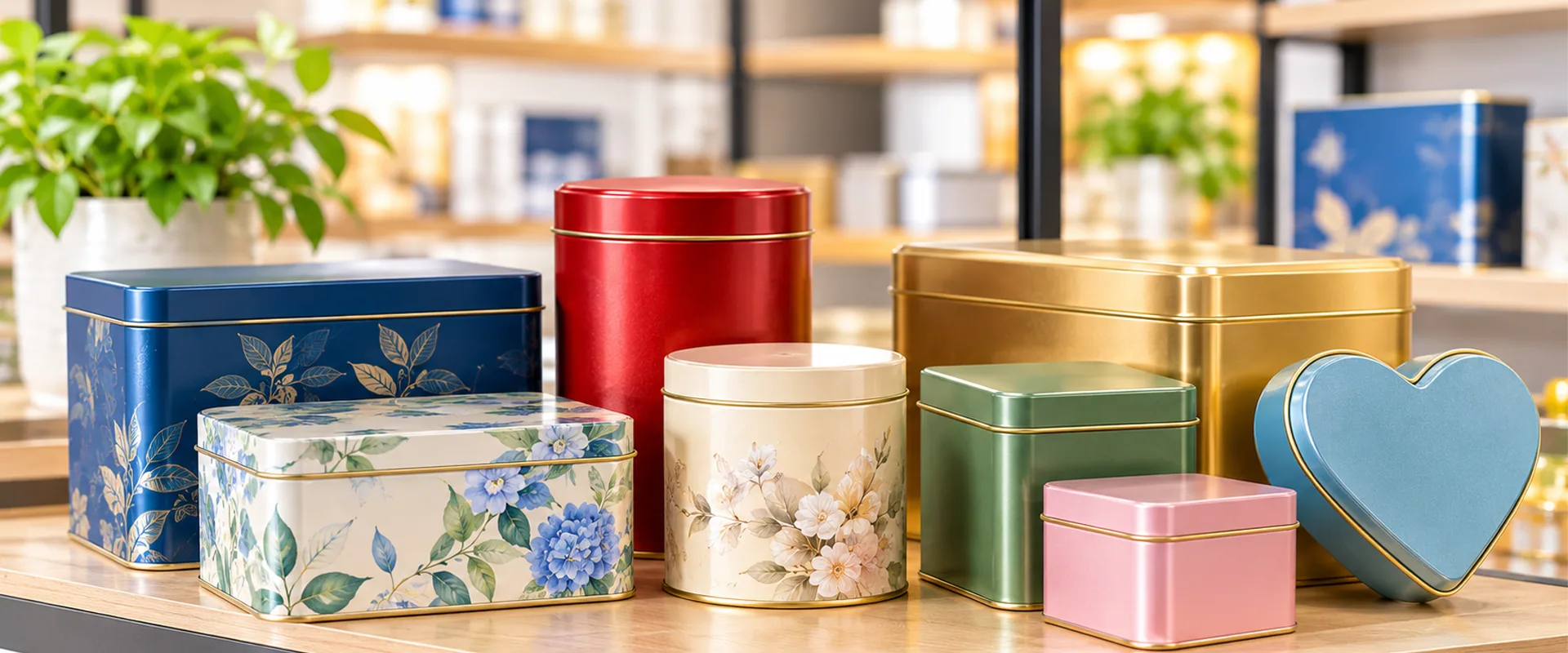
Tin box retail display requirements should be considered when developing metal packaging for products sold through physical retail channels. The shape, dimensions, printed surfaces, opening structure, and arrangement of tin boxes affect how products are presented on shelves and how much product information is visible to customers.
For brands selling tea, confectionery, cosmetics, stationery, gifts, and household products, tin packaging may serve both as a product container and as part of the retail display. The packaging structure should therefore account for shelf dimensions, product visibility, display orientation, and the arrangement of different product sizes.
A tin box designed for individual product protection may not necessarily be suitable for retail shelf presentation. Its height, footprint, lid structure, and printed panels can affect how it is positioned and displayed.
This article explains how to develop tin box retail display packaging, including shelf space, container shapes, printed surfaces, product visibility, display arrangements, and packaging specifications.
Table of Contents
Tin Box Packaging for Retail Shelf Display
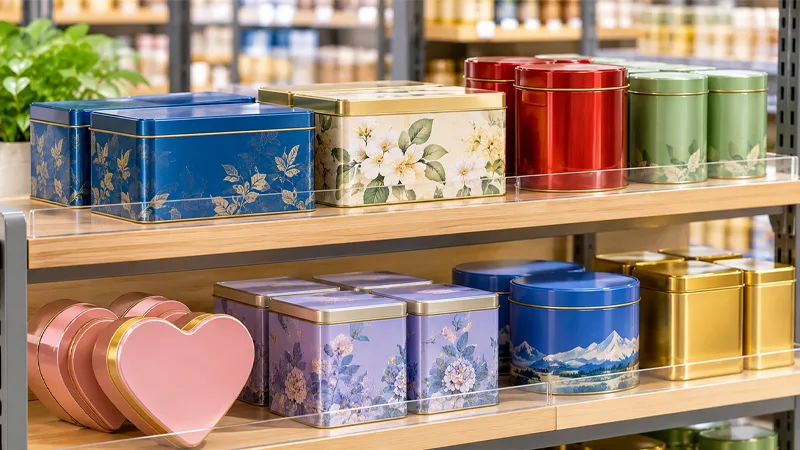
Retail shelf display refers to the arrangement of packaged products in a retail environment. The packaging must fit the available shelf space while allowing the product name, design, and relevant information to remain visible.
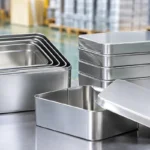
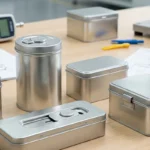
Tin boxes are available in different shapes and structures, including rectangular, square, round, oval, and irregularly shaped containers.
Each shape creates a different display footprint and affects how the products can be arranged.
Shelf Space and Tin Box Dimensions
The external dimensions of a tin box determine how much shelf space it occupies.
For retail packaging, three dimensions should be considered:
- External length
- External width
- External height
The length and width determine the shelf footprint, while the height affects the vertical space required.
For example, a rectangular tin box may occupy less shelf space when arranged in rows than several round containers with similar internal volumes.
However, the actual arrangement depends on the shelf depth, product quantity, and required spacing between packages.
The packaging dimensions should be reviewed against the retailer’s shelf specifications before the container structure is finalized.
Front-Facing Display Area
The front-facing display area is the surface visible when a tin box is positioned on a retail shelf.
For rectangular tin boxes, this may be the front side panel or the top panel, depending on the display orientation.
The available surface should accommodate the product name, brand identification, product information, and printed graphics where required.
The design should account for the formed edges, seams, corners, and other areas that cannot be used as uninterrupted printing surfaces.
A larger panel does not automatically provide a larger usable printing area. The final printable area depends on the tin box structure and printing layout.
Tin Box Shapes for Retail Product Display
The shape of a tin box affects its shelf footprint, product arrangement, and visible surfaces.
Different container shapes may be suitable for different product categories.
Rectangular Tin Boxes
Rectangular tin boxes are commonly used for tea, confectionery, biscuits, stationery, and gift products.
Their flat sides allow several containers to be arranged in rows.
The rectangular footprint can also simplify carton arrangement and shelf space planning.
For retail display, the length, width, and height should be selected according to the product and available shelf dimensions.
The front panel should provide enough space for the required printed information.
Round Tin Boxes
Round tin boxes are used for products such as mints, sweets, tea, cosmetics, and small accessories.
Their circular footprint creates a different shelf arrangement from rectangular containers.
When several round tins are displayed together, the spaces between containers may reduce the number of units that can be placed within a given shelf width.
The lid and sidewall printing areas should be considered separately because they provide different viewing surfaces.
Square Tin Boxes
Square tin boxes have similar length and width dimensions.
They can be arranged in rows or grouped into display blocks.
The flat side panels provide space for printed information, while the top panel can carry product graphics or identification.
The corner radius and lid construction should be considered when defining the printable area.
Special-Shaped Tin Boxes
Special-shaped tin boxes may use custom outlines to match the product or packaging concept.
Examples include heart-shaped, oval, house-shaped, and other formed metal containers.
These structures may require additional consideration during shelf planning.
Their external profiles can affect how the containers are positioned next to each other, how many units fit on a shelf, and whether the products remain stable during display.
Printed Tin Box Packaging and Product Visibility
Printed tinplate packaging provides several surfaces for presenting product information and graphic elements.
The visible surfaces depend on the container shape and the way the tin box is displayed.
For retail packaging, the artwork should be prepared according to the intended shelf orientation.
Front Panel Printing
The front panel is often the main viewing surface when a tin box is placed on a shelf.
It may contain:
- Brand name
- Product name
- Product category
- Net weight
- Product information
- Graphic elements
The layout should account for the actual printable area.
The printed content should not be placed too close to seams, curled edges, or formed corners.
Lid Printing
The lid is another visible surface, particularly when tin boxes are displayed in stacks or viewed from above.
For some retail arrangements, the lid may be the primary surface visible to customers.
The artwork should therefore be developed according to the intended display position.
A design intended for front-facing display may require a different layout from one intended for top-facing display.
Side Panel Printing
Side panel printing can provide additional product information when several tin boxes are arranged next to each other.
However, the available panel width may be limited by the container dimensions and corner geometry.
The artwork should be reviewed after the structural drawing has been approved.
Printed Surface and Formed Areas
During tin box production, printed tinplate is cut and formed into the required container structure.
The forming process may create contact or deformation around edges, corners, and other formed areas.
Artwork placement should account for these structural features.
Important graphic elements should be positioned within the intended printable surfaces rather than across areas where forming or assembly may affect their appearance.
Tin Box Retail Display for Multiple Product SKUs
A product range may contain several versions with different flavors, colors, quantities, or product specifications.
For example, a tea brand may sell several varieties using the same general tin box structure.
The packaging should maintain a consistent arrangement while allowing each product version to be identified.
Consistent Tin Box Dimensions
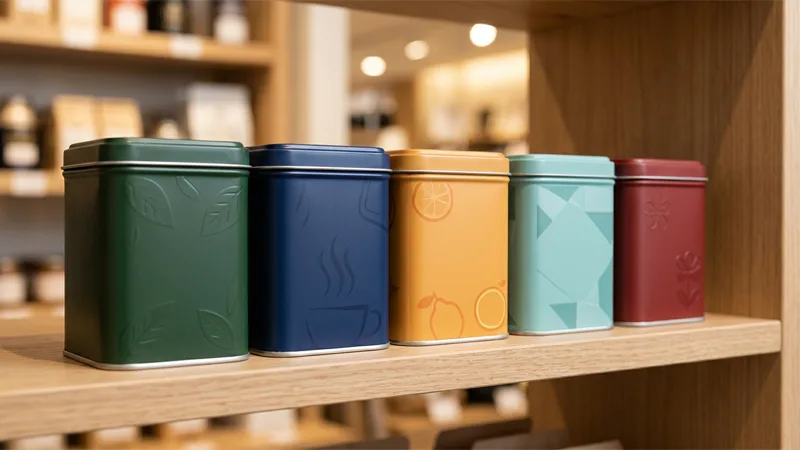
Using common external dimensions across a product range can simplify shelf arrangement.
Products with the same footprint can be arranged in rows or grouped into display blocks.
However, common dimensions should only be used when the product requirements allow it.
A product with a different volume or internal arrangement may require a different container size.
Product Identification
Different SKUs may use separate artwork while retaining the same basic tin box structure.
The product name, flavor, variety, or other identifying information should be placed in a consistent area.
This makes the different versions easier to distinguish when displayed together.
The artwork specification should identify which elements remain unchanged and which are updated for each SKU.
Mixed-Size Product Displays
Some product ranges contain small, medium, and large tin boxes.
These containers may be displayed together in a size-based arrangement.
The display layout should consider the height and footprint of each size.
For example, smaller tins may be positioned in front of larger containers when the shelf arrangement requires different viewing heights.
The final arrangement depends on the retail shelf dimensions and the number of products displayed.
Tin Box Packaging for Countertop Displays
Countertop displays are used in retail stores where products are positioned near checkout areas, service counters, or promotional spaces.
Tin boxes used in these locations may require a different arrangement from products placed on standard shelves.
The available space is often limited, so the container dimensions and display quantity should be defined in advance.
Individual Tin Box Display
Individual tins may be displayed directly on the counter.
In this arrangement, the top panel and side panels should provide sufficient product identification.
The container should also remain stable when placed on a flat surface.
Grouped Tin Box Display
Several tin boxes may be arranged together to form a product group.
The packaging dimensions should allow the containers to fit within the available counter space.
The arrangement should also provide access to individual units without requiring the entire display to be moved.
Display Trays and Secondary Packaging
Some retail packaging uses a separate display tray or carton to hold several tin boxes.
The tray dimensions should match the external dimensions of the finished containers.
The arrangement should account for the number of units, spacing, removal direction, and tray wall height.
The display tray and tin box should be developed as a combined packaging system when both are required.
Tin Box Packaging for Gift and Seasonal Displays
Gift and seasonal products may use tin boxes with different shapes, artwork, or packaging configurations.
These products are often displayed in groups or as part of a coordinated product range.
The tin box structure should account for both the individual package and the display arrangement.
Gift Set Tin Boxes
Gift set tin boxes may contain several products in one container.
The external dimensions should accommodate the complete product arrangement and any required insert.
The lid and body structure should also allow the package to be opened without interfering with the contents.
For retail display, the top and front panels should be reviewed according to the intended orientation.
Seasonal Artwork
Seasonal packaging may use different printed designs while retaining the same tin box structure.
For example, the same rectangular tin box may be used for several seasonal product versions.
The artwork can change while the external dimensions and basic tooling remain unchanged, provided the structure and specifications are the same.
The production specification should identify the artwork version for each SKU.
Tin Box Stability and Shelf Arrangement
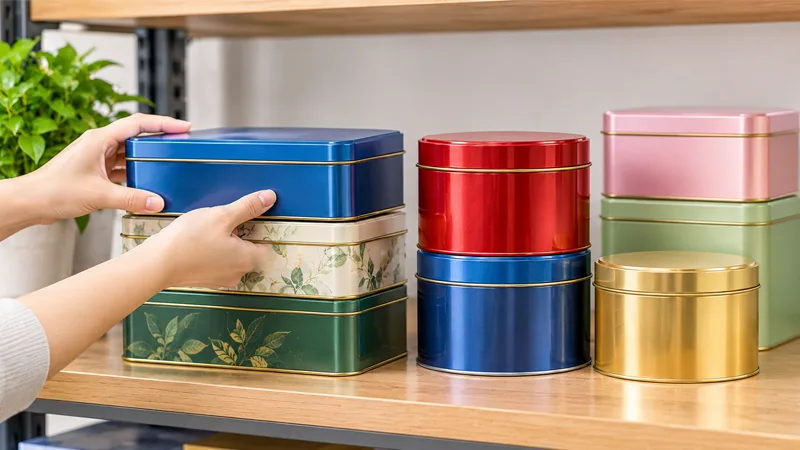
The stability of a tin box affects how it sits on a shelf and how it behaves when arranged with other containers.
The base structure, external dimensions, weight distribution, and container geometry all contribute to its positioning.
Base Structure
The base should provide a stable contact surface.
A raised base, formed edge, or uneven bottom may affect how the container sits on a shelf.
The base construction should be considered when the tin box is intended for vertical stacking or grouped display.
Stacking Arrangement
Some tin boxes are designed to be stacked.
The lid and body structures should be compatible with the intended stacking arrangement.
The contact surfaces between containers should be considered so that the upper tin does not rest on an unstable or unsuitable area.
Stacking requirements should be defined separately from ordinary single-unit shelf display.
Product Weight Distribution
The product weight and its position inside the container may affect the stability of the package.
For products with uneven weight distribution, the internal arrangement should be considered during packaging development.
The container should be able to remain in its intended position during normal retail handling.
Information Required for Retail Tin Box Development
When developing tin box packaging for retail display, the packaging specification should include both the product requirements and the display conditions.
| Requirement | Information to provide |
|---|---|
| Product category | Tea, confectionery, cosmetics, stationery, gifts, or other products |
| Product dimensions | Length, width, height, or product drawing |
| Tin box shape | Rectangular, square, round, oval, or custom shape |
| External dimensions | Length, width, and height |
| Display orientation | Front-facing, top-facing, or other arrangement |
| Shelf dimensions | Available shelf width, depth, and height |
| Product SKUs | Number of product versions |
| Artwork | Printing files and product information |
| Display quantity | Number of tins displayed together |
| Display accessories | Tray, carton, divider, or other components |
| Stacking requirements | Single-unit display or multiple-layer arrangement |
These details help define the tin box structure and artwork according to the intended retail environment.
Common Problems with Tin Box Retail Display
Several packaging issues may affect how tin boxes are presented in retail environments.
Product Information Is Not Visible
The product name or identifying information may be hidden when the tin box is placed in its intended display position.
This can occur when the artwork is designed without considering the front-facing or top-facing orientation.
The visible panels should be identified before artwork preparation.
Tin Boxes Do Not Fit the Shelf Layout
The external dimensions may exceed the available shelf space.
This can affect the number of units that can be displayed together.
The shelf dimensions and required display quantity should be confirmed before finalizing the tin box size.
Different SKUs Have Inconsistent Display Dimensions
A product range may contain several tin box sizes with different footprints.
This can make it difficult to arrange the products in consistent rows or display groups.
The external dimensions should be reviewed across the complete product range.
Containers Do Not Sit Evenly
An uneven base or unsuitable contact surface may affect the position of a tin box on the shelf.
The base structure should be included in the packaging specification, particularly for products intended for stacking or grouped display.
Conclusion
Tin box retail display requirements involve more than the external dimensions of the container. The shape, shelf footprint, visible panels, printed artwork, base structure, and arrangement of different product versions all affect how the packaging is presented.
For product ranges with several SKUs, the packaging specification should identify the common dimensions and the differences between individual products.
By defining the retail display conditions before tooling and artwork development, the tin box structure can be developed according to the actual shelf arrangement and product presentation requirements.
FAQ
What tin box shape is suitable for retail display?
Rectangular, square, and round tin boxes are commonly used for retail products. The appropriate shape depends on the product dimensions, available shelf space, display orientation, and packaging structure.
How do I design tin box packaging for retail shelves?
Start with the available shelf dimensions and the required display quantity. Then define the tin box footprint, height, display orientation, and visible printed surfaces. The artwork should be developed according to the approved structure.
Can different product SKUs use the same tin box size?
Yes, when the products can fit within the same internal dimensions and use a compatible container structure. Different artwork or inserts may be used for separate product versions.
Can tin boxes be used for countertop displays?
Yes. Tin boxes can be arranged individually or grouped in display trays. The dimensions, base structure, display quantity, and removal direction should be considered during packaging development.
What information is needed to develop custom tin boxes for retail display?
The main information includes product dimensions, tin box shape, external dimensions, shelf size, display orientation, product SKUs, artwork, display quantity, and any secondary packaging requirements.