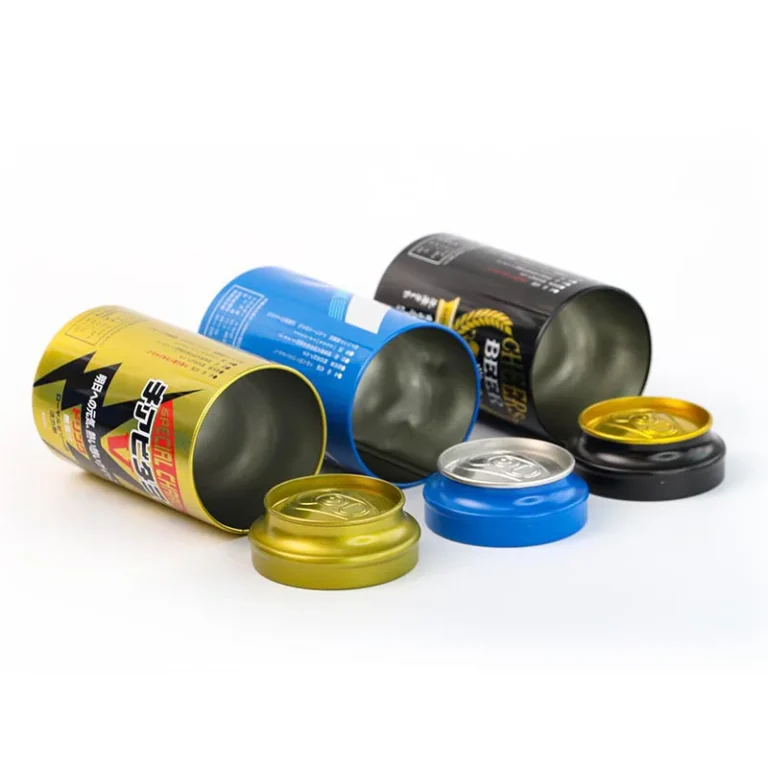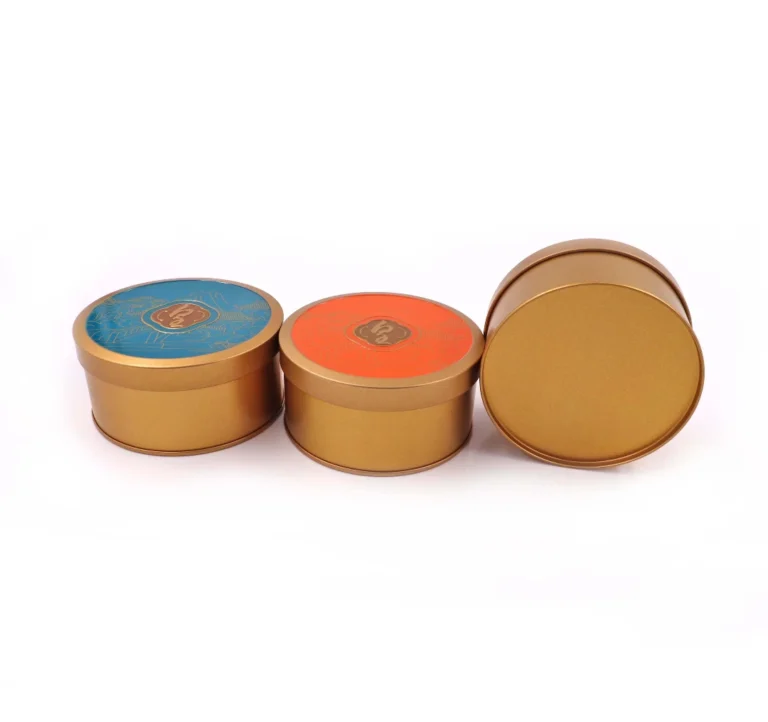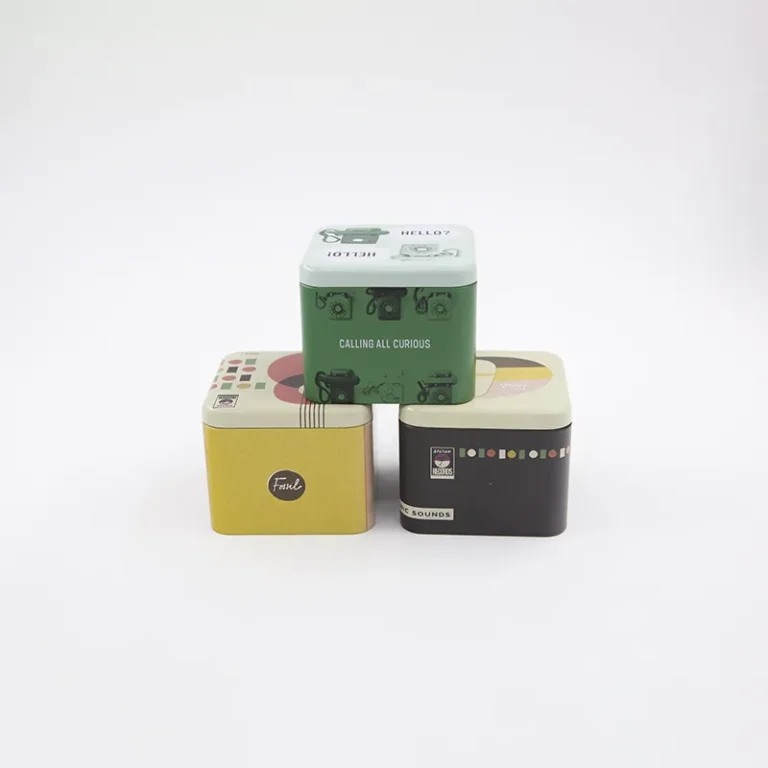

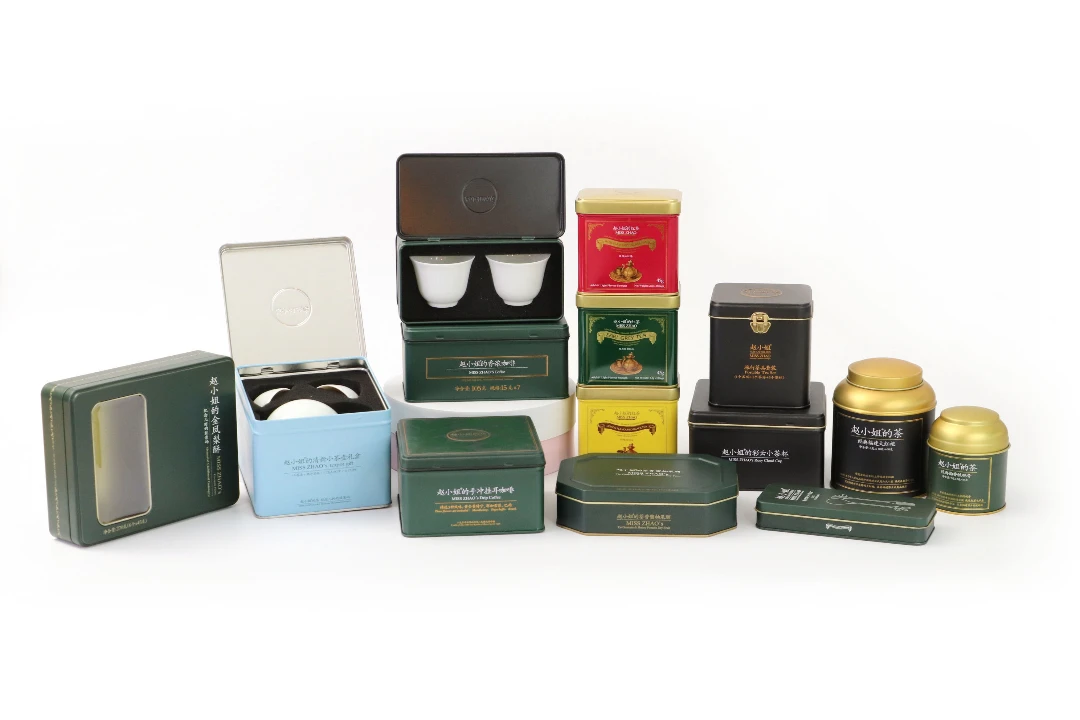

Metal packaging has quietly become one of the most strategic levers a brand can pull to improve product protection, elevate shelf presence, and strengthen sustainability claims—without compromising operational practicality. For food, beverage, and cosmetic brands competing in crowded aisles and fast-moving e-commerce channels, the right metal pack format can reduce damage, preserve quality, and create a “premium signal” the moment a customer touches the product.
At MrTinBox (www.mrtinbox.com), we focus on custom metal packaging that is engineered for real-world selling: reliable sealing, consistent production quality, high-impact decoration, and specifications that procurement teams can confidently scale. This guide explains how modern metal packaging works across three major categories—food, beverage, and cosmetics—and how to choose designs that sell and perform.
Table of Contents
Why Metal Packaging Works for Food, Beverage, and Cosmetics

Protection that directly supports repeat purchases
The first job of packaging is protection, and metal excels at it in ways that matter to brand owners: barrier performance, toughness, and consistency. Unlike many flexible materials, metal can provide strong protection against external damage while also supporting coatings and closures designed for specific products. A peer-reviewed review of metal food packaging highlights metal’s excellent barrier performance and why it remains widely used across food applications. PMC
That performance matters because “good enough” packaging often becomes expensive in hidden ways—returns, negative reviews, product discoloration, leakage, aroma loss, and shelf-life variability. Metal packaging reduces those risks, especially for products that are oxygen-, moisture-, or light-sensitive.
Brand value you can see and feel
Metal packaging signals value in a way consumers intuitively understand. The tactile weight, crisp edges, tight seams, and the ability to add embossing or premium finishes help brands charge more (and justify it) without needing excessive secondary packaging.
For premium gifting and subscription boxes, metal tins also act as a “keepsake container,” which extends brand exposure long after the product is consumed. That reuse behavior is not just a nice story; it is an experience differentiator that low-cost packs struggle to match.
Sustainability narratives backed by recycling performance
Sustainability claims must stand up to scrutiny, and metal has a strong foundation: recycling and material recovery infrastructure. For example, steel packaging in Europe has been reported around 82% “really recycled” (entering actual recycling operations) using harmonized methodologies. RECYCLING magazine
For aluminium beverage cans, multiple sources report strong recycling performance globally and regionally. The International Aluminium Institute reports an aluminium can recycling rate around the mid-70% range in 2023. International Aluminium Institute
Metal Packaging Formats Brands Commonly Use
Tinplate tins and custom metal boxes
For many food and cosmetic brands, tinplate (steel with a tin coating) is the most flexible starting point for custom packaging. It supports a wide range of shapes—round, rectangular, window-lid, hinge-lid, stackable, shallow, deep—while maintaining excellent rigidity for shipping and merchandising.
Tinplate packaging is also decoration-friendly, enabling high-resolution printing, spot color branding, and specialty finishes. When you want a gift-ready pack without needing a separate rigid box, a custom tin can replace multiple layers of packaging and simplify assembly.
Aluminium cans, bottles, and closures
Aluminium is common where weight and corrosion resistance are key, and where high-speed filling lines demand tight tolerances. Beverage cans are the obvious example, but aluminium also appears in cosmetic bottles, caps, and specialty containers.
The sustainability argument for aluminium often focuses on recycling efficiency and energy savings. The International Aluminium Institute reports that recycling aluminium can save about 95% of the energy compared with primary production (mine to cast house vs. recycled processing). International Aluminium Institute
Specialty metal packaging: aerosols and hybrid assemblies
For cosmetics and personal care, aerosol containers and specialty metal components can be essential. These formats require stricter specification control (valves, seams, internal coatings) and robust quality assurance, but they also offer performance benefits like consistent dispensing and good protection from light and oxygen.
Hybrid assemblies—such as metal tins with inserts, trays, or partitions—are common in cosmetic gift sets, confectionery assortments, and premium beverage collections. The key is designing the internal structure to avoid rattle, breakage, and scuffing in transport.
Metal Packaging for Food Brands
Barrier performance that protects flavor, aroma, and appearance
Food brands usually care about a few non-negotiables: taste stability, aroma retention, and preventing moisture pickup or oxidation. Barrier performance is central to those outcomes, and metal packaging is often chosen precisely because it supports long shelf life by limiting exposure to oxygen and light. Terinex Flexibles+1
In practical terms, this is why metal packaging is so common for tea, coffee, cocoa, spices, biscuits, confectionery, and powdered products. When designed correctly, a metal tin can keep products “retail-ready” for longer while also protecting them during global shipping cycles.
Food-contact compliance and coatings
Any material intended for food contact must be selected and manufactured with compliance in mind. In the United States, FDA resources outline the framework around food contact substances and regulatory pathways for packaging components. U.S. Food and Drug Administration
In Europe, the Council of Europe/EDQM has issued technical guidance on metals and alloys used in food contact materials and articles, reflecting safety and quality principles and providing a structured approach to compliance. edqm.eu+1
A modern compliance discussion also includes can coatings. EFSA notes that the European Commission adopted a ban on BPA in food contact materials in December 2024, reflecting evolving risk assessments and regulatory expectations. European Food Safety Authority+1
For brands, the takeaway is straightforward: metal packaging is highly compatible with food, but the internal coating and process controls must match the product’s acidity, salt content, oil content, and thermal conditions. A qualified supplier should be able to guide coating selection and provide documentation suitable for your target market.
Where metal packaging fits best in food
Metal packaging is especially effective for:
- Dry foods (tea, coffee, spices, snacks, powders) where moisture control and aroma retention drive quality perception. These categories benefit from rigid protection and high-end decoration at the same time.
- Gift foods and seasonal assortments (cookies, chocolate, candy) where shelf impact and “premium unboxing” are closely tied to conversion. A tin can become part of the gifting value, not just a container.
- Premium private label where differentiation must be achieved through packaging as much as formulation. Metal packaging provides a way to look and feel upscale while staying operationally scalable.
Metal Packaging for Beverage Brands
Product performance: carbonation, light protection, and shipping efficiency
Beverage packaging succeeds when it protects the product and supports efficient distribution. Metal packaging—especially cans—remains popular because it is lightweight, stackable, and protective against light exposure, which matters for many beverages sensitive to flavor change.
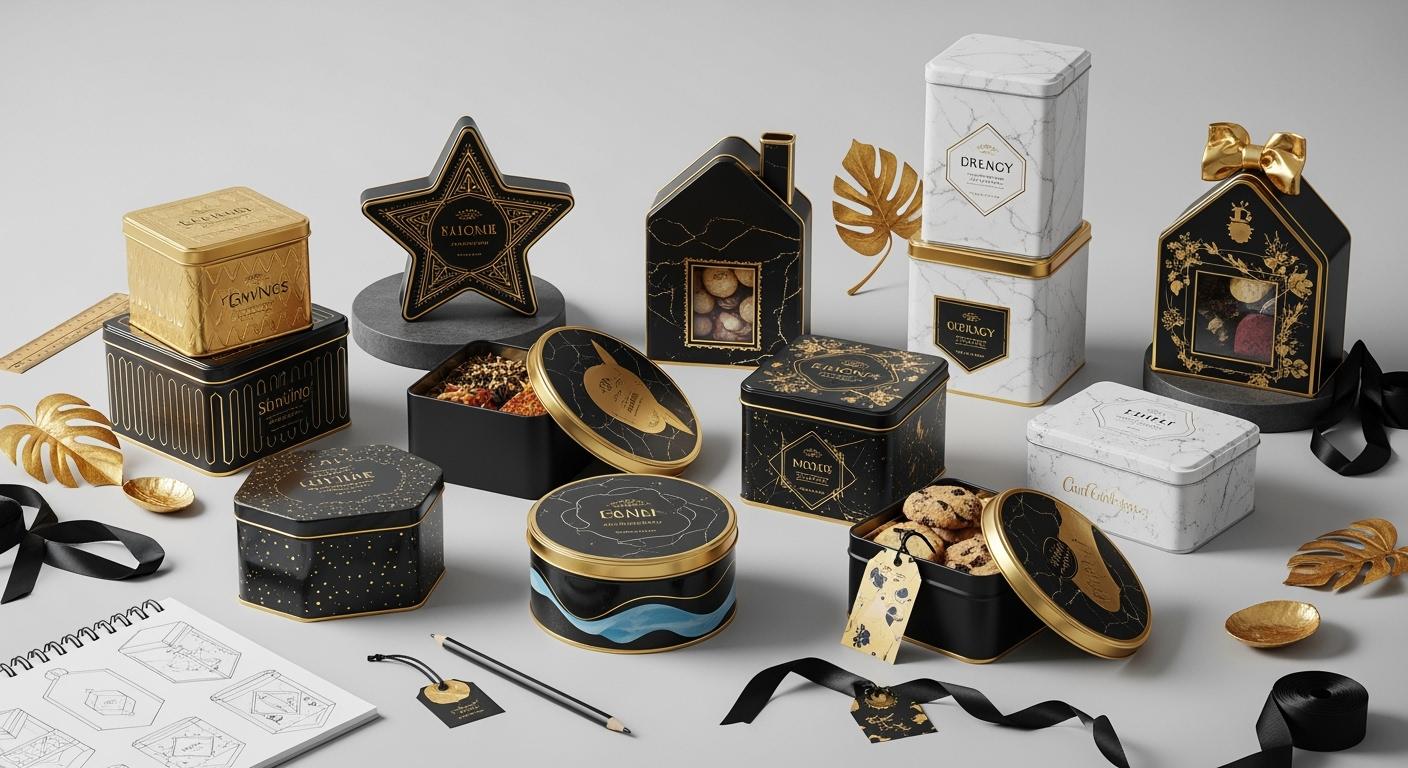
For premium beverage sets (craft beverages, limited editions, holiday packs), custom tins are often used as secondary packs that improve perceived value while also providing better protection during shipping. The same concept applies to sampler packs, gift packs, and influencer bundles.
Sustainability: what recycling metrics really mean for beverage cans
Recycling rates are frequently used in brand sustainability communications, but it is important to use credible, recent sources. In the United States, the Aluminum Association reported that 43% of aluminium cans shipped in 2023 were ultimately recycled, and compared that to recycling rates for other beverage packaging formats. aluminum.org
At a global level, the International Aluminium Institute reports aluminium beverage can recycling rates in the mid-70% range (2023), and provides comparative context against glass and PET in the same dataset. International Aluminium Institute
For brands, these differences matter because they shape buyer conversations with retailers and consumers. A sustainability claim that is rooted in credible recycling data is easier to defend, easier to communicate, and less likely to trigger pushback.
Deposit return systems and brand implications
Deposit return systems (DRS) are becoming more visible in sustainability and collection performance discussions. For example, reporting on Romania’s DRS described collection rates reaching very high levels in some months after rollout, illustrating how policy and infrastructure can materially change collection outcomes. The Guardian
Brands selling beverages across multiple regions should plan for a “mixed environment” where recycling outcomes depend not only on material choice, but also on local collection systems. Metal packaging performs best when it is paired with a realistic, region-specific sustainability narrative.
Metal Packaging for Cosmetic and Personal Care Brands
Formula compatibility and protection of sensitive actives
Cosmetic formulations can be sensitive to light, air, and moisture, and packaging is part of the product stability strategy. Industry commentary commonly notes aluminium’s barrier strengths for cosmetics when paired with appropriate linings and coatings. beautypackaging.com+1
For tins (lip balms, solid perfumes, balms, creams), the right internal lacquer can reduce interaction risks while also supporting premium aesthetics. The critical point is not “metal is always safe,” but “metal is safe and effective when coatings, processing, and QC match the formulation.”
Premium presentation without fragile components
Cosmetic brands often want glass-like premium cues, but they also want safer shipping and fewer breakage issues. Metal packaging can deliver premium presentation with a stronger logistics profile, particularly for:
- balm tins and skincare travel tins,
- limited-edition holiday sets,
- men’s grooming products (pomades, balms, waxes),
- compact-style gift packaging and sampler sets.
Metal tins also work well with inserts, partitions, and stacked assemblies, enabling a “gift box” experience with fewer materials and less assembly complexity.
Refill, reuse, and brand loyalty
Refill strategies are gaining traction, and metal packaging can be a natural match for refillable systems. Even where true “refill” is not yet operationally feasible, tins that consumers reuse can extend brand exposure and increase repeat purchase likelihood by keeping the brand physically present in a customer’s daily routine.
This is one of the strongest commercial reasons to consider metal: it is packaging that can act like a durable brand asset, not a disposable cost.
Designing Metal Packaging That Sells
Structural design decisions that impact cost and usability
In metal packaging, structural design is not only about aesthetics. Hinge types, lid fit, curl geometry, seams, and stacking features determine production efficiency, user experience, and defect rates.
A well-designed tin should open smoothly, close reliably, and resist deformation during shipping. The best designs also anticipate how the pack will be displayed (standing, stacking, hanging, shelf-front facing) and how it will be used (daily open/close, gifting, travel, resealing).
Decoration: print quality, finishes, and tactile effects
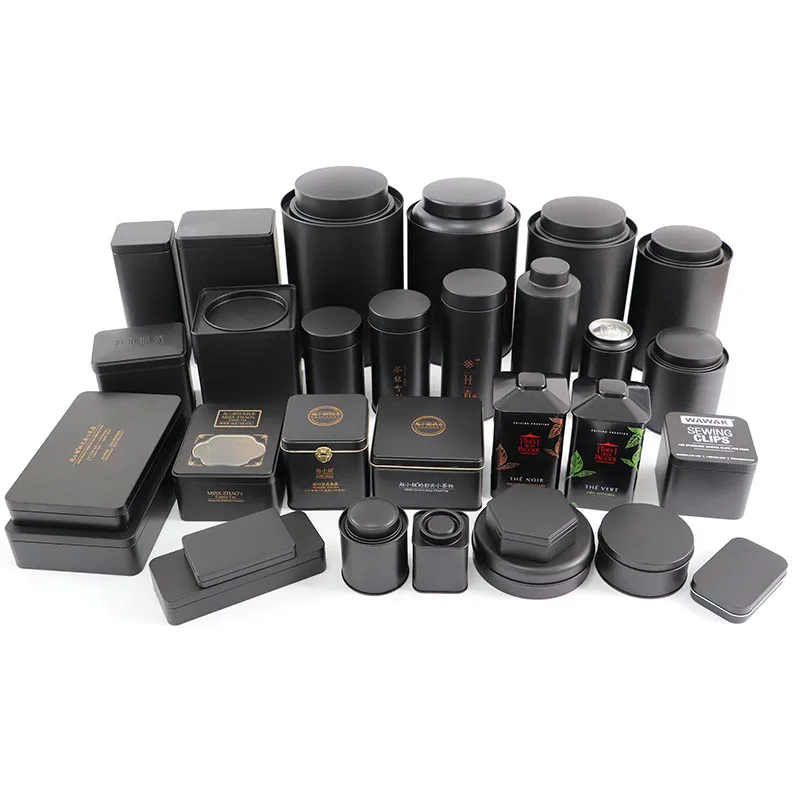
Decoration is where metal packaging outperforms many alternatives. Depending on your needs, you can combine:
- high-resolution CMYK artwork for photography-like brand visuals,
- spot colors for consistent brand identity,
- matte/gloss contrast to guide attention,
- emboss/deboss for tactile differentiation,
- metallic inks and varnishes to create depth and perceived value.
The commercial objective is clarity: your packaging should communicate product value in three seconds from the shelf, and metal’s print and finishing capabilities make that far easier to achieve.
Convenience features that improve customer satisfaction
Modern metal packaging can include features that directly reduce friction:
- easy-open lips or thumb notches,
- roll edges for safer handling,
- inner lids or seals for better aroma retention,
- partitions that keep items stable,
- window elements where product visibility is beneficial.
These features are not “nice-to-have” when you sell online. They reduce negative reviews caused by messy unboxing, damage, or a pack that feels hard to use.
Sustainability and Compliance: The Talking Points Buyers Trust
Recycling rates and the importance of credible definitions
When brands say “recyclable,” buyers increasingly ask: recyclable where, and recycled how often? Some industry reporting emphasizes “really recycled” metrics that reflect entry into recycling operations rather than only collection, and steel packaging has been reported around 82% really recycled in Europe using harmonized methods. RECYCLING magazine
For aluminium, credible sources show that recycling outcomes vary by geography. The Aluminum Association’s U.S. data and the International Aluminium Institute’s global datasets provide practical benchmarks for sustainability messaging. aluminum.org+1
Energy and emissions: why recycling metal is a strategic advantage
A sustainability narrative becomes far more persuasive when it connects recycling to energy and carbon impacts. The International Aluminium Institute reports that recycled aluminium requires dramatically less energy than primary production, with savings around the mid-90% range. International Aluminium Institute
For brands, this helps translate “recycling” from a vague claim into a concrete impact story. It also aligns well with corporate decarbonization goals, where Scope 3 packaging decisions are increasingly scrutinized.
Packaging’s role in reducing food loss and waste
Sustainability is not only about end-of-life. Packaging that extends shelf-life and reduces spoilage can reduce overall waste in the value chain, which can be a larger environmental lever than lightweighting alone. FAO publications explicitly note packaging’s role in keeping food fresh and extending shelf-life as part of reducing food loss and waste. Open Knowledge FAO+1
This is particularly relevant for premium food brands. If metal packaging prevents product deterioration, aroma loss, or moisture damage, it can reduce disposal and returns—creating environmental and financial wins at the same time.
Quality Management in Metal Packaging Production
What “quality” means in a metal packaging factory
Quality in metal packaging is not a single checkpoint. It is a system that starts with raw material selection and continues through cutting, forming, seaming, coating, printing, curing, and final inspection.
A reliable supplier should have consistent process control for thickness tolerances, lid fit, edge curl uniformity, and coating integrity. For high-volume programs, process stability is often more valuable than saving a fraction of a cent per unit.
Typical tests and controls that protect your brand
Depending on product type, a robust quality plan can include:
- dimensional checks for body and lid fit consistency across production runs,
- adhesion and abrasion checks for printed layers and varnishes,
- corrosion resistance checks aligned to the product’s environment,
- drop and vibration tests aligned to shipping routes and carton configurations.
These practices reduce the chance that a beautiful sample becomes an inconsistent mass production result. They also protect your brand when you scale into new markets and longer supply chains.
Documentation and market access
For regulated categories, documentation is part of delivery. In addition to commercial paperwork, buyers may request material declarations, coating specifications, and evidence that the packaging is appropriate for the intended use.
For food-contact packaging, credible reference frameworks from authorities such as FDA and EDQM help buyers structure compliance expectations. U.S. Food and Drug Administration+1
A Practical Procurement Checklist for Custom Metal Packaging
Define the use-case before you define the shape
The fastest way to control cost is to define function first. You should specify:
- what the product is (and whether it is oily, acidic, salty, fragrant, or volatile),
- how it will be filled (manual, semi-auto, high-speed line),
- whether the pack needs reseal performance,
- shipping environment (e-commerce parcel vs. pallet retail),
- target shelf life expectations and any storage conditions.
Once those constraints are clear, shape selection becomes easier and tooling risk drops.
Specify materials and finishes in a way manufacturers can execute
For a scalable metal packaging program, specs should include:
- material type (tinplate, aluminium, etc.) and thickness range,
- internal coating expectations (when relevant) and curing requirements,
- print method, color expectations, and varnish/finish requirements,
- emboss/deboss, hinge type, and closure details,
- packaging and pallet requirements for shipping.
A strong supplier will help you translate brand requirements into production-ready specs. This is where design-for-manufacturability prevents delays and cost surprises.
Plan sampling and scaling realistically
Sampling should validate three things: appearance, usability, and production feasibility. If you approve samples without confirming those elements, mass production often exposes preventable issues such as color drift, lid looseness, or scratch sensitivity.
For international programs, align on lead time and logistics early, and treat packaging as a critical-path item. Premium packs are often the last component brands want to compromise on, so procurement planning should reflect that reality.
Why Brands Choose MrTinBox for Custom Metal Packaging
One supplier for design, engineering, and production execution
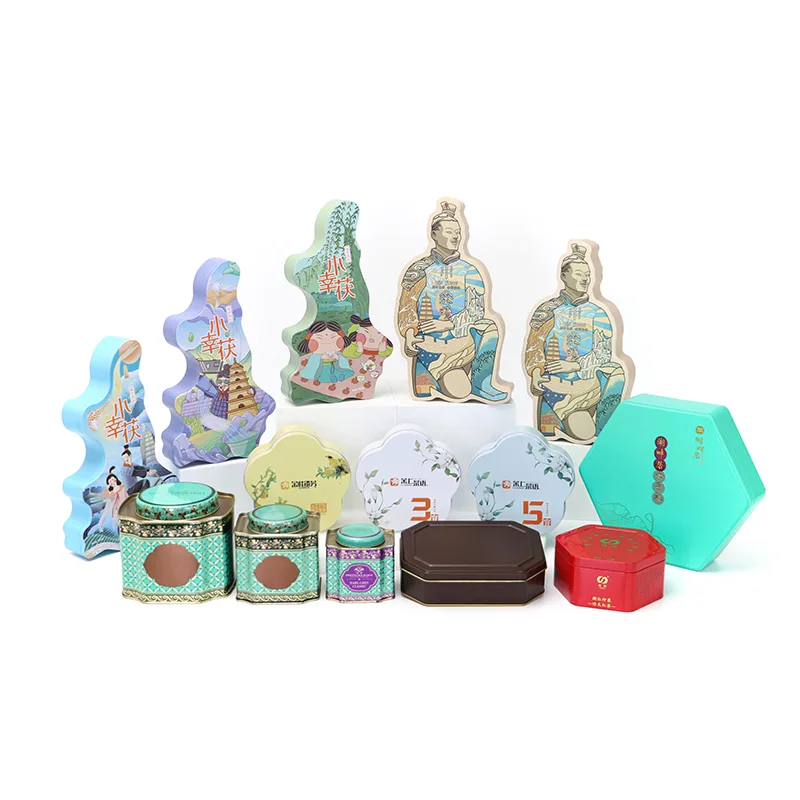
MrTinBox supports end-to-end metal packaging development: structural design, sampling, decoration optimization, and stable mass production. That reduces coordination friction, especially for brands that need multiple SKUs, seasonal updates, or short-run promotional packaging alongside core products.
Our approach is commercial as well as technical. We build packaging that sells, ships reliably, and fits the operational needs of food, beverage, and cosmetic businesses.
A “brand-first” approach to premium metal packaging
Great metal packaging is not only about manufacturing. It is about how the product will be perceived—on shelves, in influencer content, and in a customer’s hands.
We focus on the details that create premium cues: crisp edges, consistent closure feel, strong print quality, and finishes that remain attractive through transport and retail handling. That is how metal packaging becomes a profit lever rather than only a cost line.
Confidence for global markets
Whether you are launching a premium food tin, a beverage gift set, or a cosmetic collection, you need packaging that scales with predictable quality. With regulatory expectations evolving—such as BPA restrictions in food-contact materials in Europe—brands also benefit from suppliers who understand compliance context and can support documentation needs. European Food Safety Authority+1
Common Questions from Food, Beverage, and Cosmetic Brands
Is metal packaging “always” the most sustainable option?
No single packaging format wins in every scenario. However, metal packaging often has strong sustainability advantages because it is widely recycled and can retain value in recycling streams, and aluminium recycling offers large energy savings compared with primary production. International Aluminium Institute+1
The most credible approach is to match the packaging choice to the product’s protection needs and the market’s collection reality. When metal prevents spoilage, damage, or returns, it can deliver sustainability benefits beyond simple material comparisons. Open Knowledge FAO
What is the biggest mistake brands make with custom tins?
The most common mistake is approving a design that looks great but is not engineered for production stability. Small issues—like an overly tight lid tolerance, thin-wall deformation risk, or a finish that scratches easily—can create large-scale quality problems when volumes increase.
The solution is to treat sampling as engineering validation, not only a visual approval step. Good suppliers help you do that with clear specs, controlled processes, and realistic mass production recommendations.
How do we choose between tinplate and aluminium for our packaging?
Tinplate is often preferred for custom-shaped, highly decorated tins and boxes, particularly for gift-ready packaging and cosmetic/fine food presentation. Aluminium is frequently used where weight reduction, corrosion resistance, or compatibility with specific filling/dispensing systems is the priority.
The best choice depends on product chemistry, usage pattern, required closures, and your brand’s desired feel. A supplier should be able to guide that decision with clear trade-offs instead of generic claims.
Make Metal Packaging a Competitive Advantage
For food, beverage, and cosmetic brands, metal packaging is no longer just “traditional.” It is a modern tool for improving product protection, strengthening premium positioning, and supporting sustainability messaging with credible data. When the design is engineered for real-world production and logistics, metal packaging can reduce operational risk while increasing perceived value.
If you are developing a new product line or upgrading an existing one, MrTinBox can help you turn packaging into an asset—through thoughtful design, reliable manufacturing, and custom finishes that make your brand stand out.