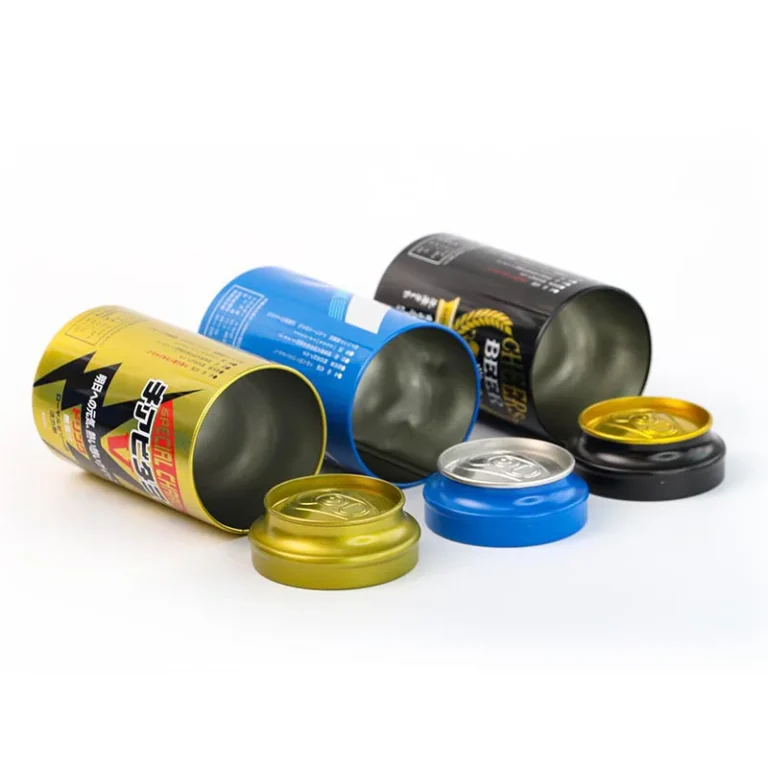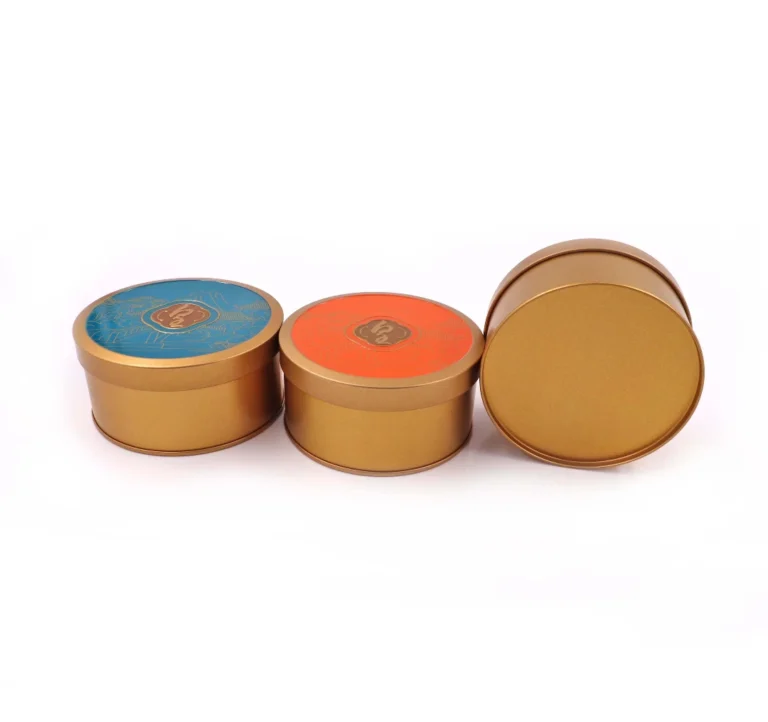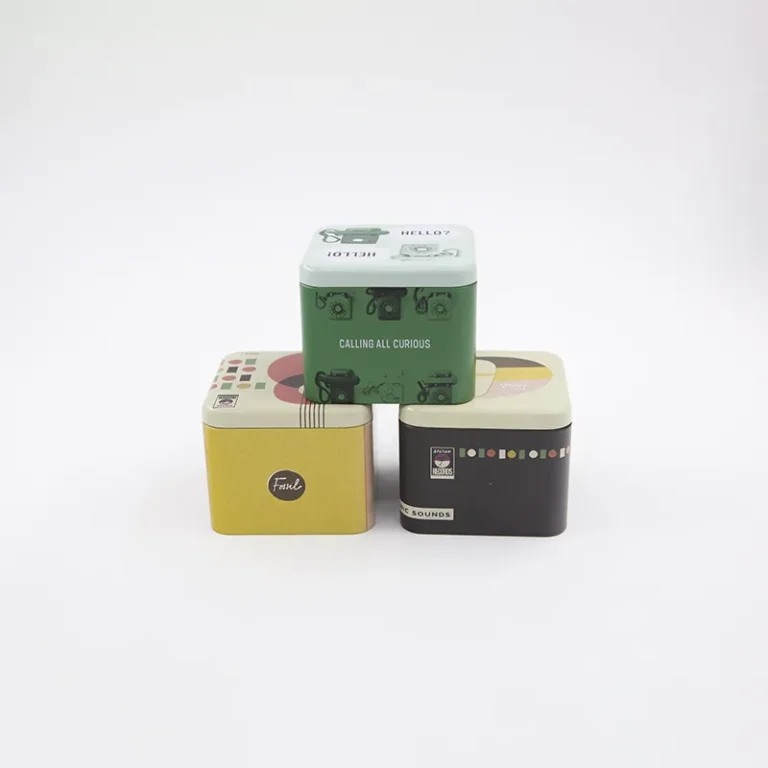



When you develop a Custom Tin Box for your brand, two questions always appear very early in the conversation:
- What’s the MOQ (Minimum Order Quantity)?
- How long is the lead time?
If you get these two things wrong, you may end up with stockouts, missed launch dates, or a warehouse full of tins your team can’t move. If you get them right, your packaging works in harmony with your marketing calendar, cash flow, and growth plans.
In this guide, we’ll walk you through how MOQ and lead time work for a Custom Tin Box project, what drives the numbers behind them, and how to plan your order so that you stay in control instead of being surprised by your supplier.
Table of Contents
1. Why MOQ and Lead Time Matter for Your Custom Tin Box
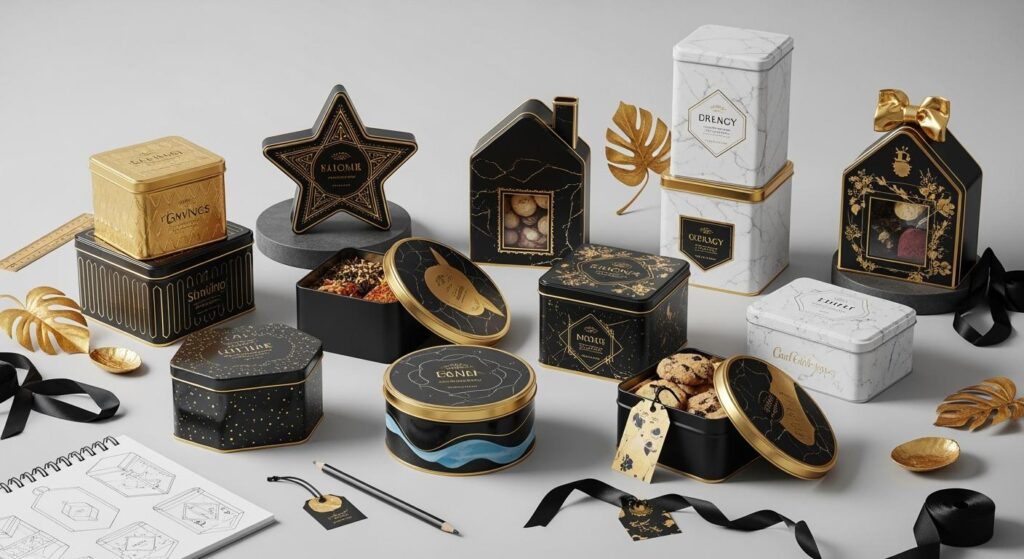
Understanding MOQ in Plain Language
MOQ (Minimum Order Quantity) is the smallest number of units a factory is willing to produce in one order. In packaging manufacturing, MOQ is designed to cover fixed setup costs, maintain production efficiency, and keep prices reasonable for both sides.NetSuite
For a Custom Tin Box, MOQ is not just an arbitrary number. It reflects how many tins the factory needs to run in a single batch to make the printing, stamping, coating, and labor costs economical. When you understand what’s behind MOQ, you can have a more professional discussion with your supplier and negotiate based on facts instead of guesswork.
What Lead Time Really Includes
Lead time is the total time from confirming your order (and artwork) to receiving your finished Custom Tin Box at your warehouse. Many buyers only think about “production days,” but real lead time also includes design confirmation, sample making, quality checks, and international shipping.
When you plan your launch schedule, you should think of lead time as a chain of steps, not a single number. Each link in that chain—artwork approval, tooling, printing, stamping, assembly, final QC, and logistics—adds days or weeks. If any step is delayed, your launch may be pushed back.
Why These Two Numbers Are Strategic, Not Just Technical
MOQ affects your cash flow, inventory level, and storage costs. Lead time affects your campaign dates, product launches, and the confidence of your distributors or retailers.
Brands that treat “MOQ and lead time” as strategic planning topics usually enjoy smoother launches and fewer emergencies. Instead of rushing a last-minute reorder, they schedule their Custom Tin Box orders like part of their marketing and supply-chain calendar.
2. Key Factors That Influence MOQ for a Custom Tin Box
Printing and Tinplate Sheet Utilization
A Custom Tin Box is typically made from tinplate sheets that are printed and then stamped into shape. To keep costs efficient, factories arrange your artwork on large metal sheets in the most efficient layout possible. The fewer sheets that are used, the lower the total cost.
If your order quantity is too low, the factory still has to buy full-size sheets, set up printing plates, calibrate the press, and run the machine. These fixed costs are spread across a small quantity, which makes the price per unit very high. MOQ ensures that the printing and sheet usage are economical.
Printing Colors, Special Inks, and Finishes
The more complex your printing, the higher your MOQ tends to be. Special Pantone colors, matte or gloss varnishes, metallic inks, and multi-pass printing all increase setup work.
When a design uses common color combinations and standard varnishes, MOQs can often be lower. But if you need a high-end effect for a luxury Custom Tin Box, your supplier may request a higher MOQ to offset the extra setup and calibration time required.
Tooling, Molds, and Custom Shapes
If your Custom Tin Box uses an existing stock shape, the tooling cost has effectively been paid for by previous projects. MOQs may therefore be lower, especially for simple round, square, or rectangular tins.
For brand-new shapes or special structures (such as curved lids, windows, hinges, or multi-part sets), the factory must invest in new tooling and molds. In these cases, the MOQ is usually higher so the tooling investment can be amortized over more pieces.
Surface Treatment, Embossing, and Accessories
Advanced options such as embossing/debossing, spot UV, foil stamping, or special coating systems also influence MOQ. These processes may require additional tooling and machine setups.
The same is true if your Custom Tin Box includes accessories such as plastic inserts, EVA foam, paperboard inlays, handles, or locks. Each extra component has its own minimum order quantity from upstream suppliers, which is then reflected in your tin MOQ.
Factory Capacity and Changeover Costs
Modern metal packaging factories run automated production lines that prefer longer, stable runs. Every time the line is stopped and changed to a new project, the factory incurs changeover losses.
To keep machine utilization high, factories typically set a MOQ that justifies stopping the current project, setting up your design, and fine-tuning the machines. If your order is extremely small, the changeover cost per unit becomes unreasonably high, which is why very low MOQs are the exception, not the rule.
3. How Lead Time Is Built Up in a Custom Tin Box Project
Stage 1: Design, Dieline, and Artwork Confirmation
Before any physical work starts, your packaging concept must be translated into a technical dieline and final print-ready artwork. This stage often includes:
- Choosing the box size, structure, and material thickness.
- Generating or adjusting the dieline so your design prints correctly.
- Reviewing 3D drawings or mockups for a new Custom Tin Box shape.
Depending on how quickly your team can confirm details, this step may take anywhere from a few days to a couple of weeks. Early, clear communication at this stage can save significant time later.
Stage 2: Sampling and Pre-production Proofs
Most serious buyers request physical samples before authorizing mass production. For Custom Tin Box projects, there are two main sample types:
- Plain samples to test size, structure, and fitting of your product.
- Printed samples to check colors, finishing, and brand presentation.
Sample lead time is often around 7–15 days, depending on whether new tooling is required and how complex the printing is. If you anticipate several rounds of design change, it’s wise to build extra time into your schedule.
Stage 3: Mass Production
Once samples are approved and the purchase order is confirmed, mass production begins. Production includes printing, coating, cutting, stamping, forming, assembly, and packing.
For standard shapes and stable artwork, mass production for a mid-size Custom Tin Box order often takes about 20–30 days. More complex structures, multi-part sets, or strict multi-stage inspection plans may extend the production lead time.
Stage 4: Quality Inspection and Packing
Quality control is not a single step; it is integrated throughout the process. However, there is always a final inspection before shipment. This includes checking printing quality, color consistency, structure, edge smoothness, lids and bodies matching, and packing details.
After QC, tins are packed into cartons and then onto pallets. The time required for final inspection and packing is usually included in the production lead time, but if you need 100% inspection or special testing (for food-contact, for example), this can add extra days.
Stage 5: Logistics and Delivery
International shipping can be as short as a few days by air or several weeks by sea, depending on your location and incoterms. You must consider:
- Vessel schedules or space availability.
- Customs clearance requirements.
- Internal transport from port to your warehouse.
If your launch date is fixed, it’s better to work backwards from your “on-shelf” date and add buffer time to cover potential delays in logistics.
4. Typical MOQ and Lead Time Ranges in the Tin Box Industry
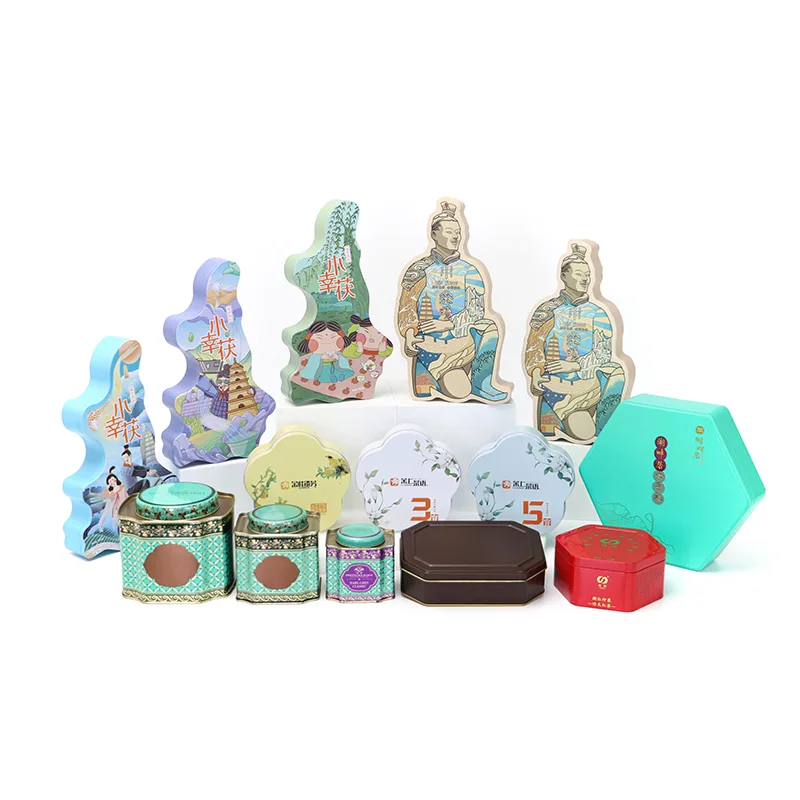
Standard vs. Custom Shapes
In the metal packaging industry, global demand for metal packaging has been growing steadily, driven by sustainability and brand premiumization. Recent market studies project the metal packaging sector to keep growing around 3–4% per year over the next decade.GlobeNewswire This stable growth also shapes how factories set their MOQs and capacity planning.
For standard shapes that use existing molds, MOQs for a Custom Tin Box are often in the range of a few thousand pieces per design. These MOQs allow the factory to optimize sheet usage and machine time.
If your project requires a unique shape with new tooling, MOQs are usually higher. The goal is to spread the one-time tooling investment and extra setup costs across a larger number of tins, so the total cost per unit remains acceptable for both sides.
How Order Quantity Impacts Unit Price
Unit price and MOQ are closely linked. At very low quantities, the unit price may be significantly higher because fixed costs are not fully absorbed. As quantity increases, the unit cost usually decreases and eventually stabilizes.
This is why serious buyers typically request price breaks at different quantities (for example, 3,000 / 5,000 / 10,000 pieces). When you see how prices change, you can choose an optimal order quantity that balances inventory, cash flow, and cost per unit.
Typical Lead Time Ranges
For many Custom Tin Box projects, a realistic overall lead time (from artwork confirmation to shipment) may look like this:
- 1–2 weeks: Dieline and artwork confirmation + sample preparation.
- 3–4 weeks: Mass production, QC, and packing.
- 3–6 weeks: Sea freight and customs (depending on destination).
This means you should plan at least 8–12 weeks before your desired in-market date, especially for a first order. For reorders with no changes, lead time is often shorter because the tooling, artwork, and process are already validated.
5. Planning MOQ and Lead Time Strategically
Start from Your Demand Forecast
Before you ask a supplier about MOQ and lead time, it’s important to estimate your own demand. Consider:
- How many units you expect to sell in the first 3–6 months.
- Your sales channels (online, retail, distributors, seasonal campaigns).
- Any marketing events or festivals that may cause demand spikes.
When you share this forecast with your Custom Tin Box supplier, they can propose an MOQ that fits both your sales plan and the factory’s production logic.
Balance Inventory Risk vs. Cost per Unit
Ordering a very large quantity gives you a lower unit cost, but higher inventory and cash-flow pressure. Ordering too little keeps inventory low, but your unit cost may be high and you may face stockouts.
A practical approach is to select an order quantity that covers your “base demand” plus a safety margin, rather than trying to chase the absolute lowest unit price. By aligning MOQ with realistic demand, you protect your brand from both overstock and supply interruptions.
Factor in Market Trends and Sustainability Requirements
Metal packaging, especially tinplate, is widely recognized as a sustainable solution because of its high recycling rates and robustness in circular-economy legislation. Recent industry data shows that steel packaging in Europe has achieved recycling rates above 80%, highlighting how attractive metal packaging is from a sustainability perspective.Tinplate
If you position your Custom Tin Box as a premium and eco-friendly choice, this can justify a slightly higher order quantity, especially for core SKUs that will stay in your portfolio for several years. A consistent, recyclable packaging format supports long-term brand identity and reduces redesign frequency.
Coordinate Packaging Lead Time with Product and Marketing
Your product, packaging, and marketing calendars should be synchronized. When you plan a product launch, think in parallel about:
- Product development and testing timeline.
- Artwork creation and approval timeline.
- Custom Tin Box lead time (including sampling and shipping).
- Campaign creative and media booking timeline.
By treating MOQ and lead time as part of your overall project timeline, you avoid last-minute compromises such as downgraded packaging quality or expensive air freight.
6. Quality, Compliance, and Why They Also Affect MOQ & Lead Time
Food-Contact and Safety Standards
If your Custom Tin Box is used for food, confectionery, tea, coffee, or biscuits, you must consider food-contact regulations. Steel and tinplate packaging for food are covered by strict standards in major markets such as the EU and the US, covering the base steel, coatings, lacquers, and migration limits.steelforpackagingeurope.eu
Using food-contact-approved inks, coatings, and lacquers can slightly increase cost and sometimes MOQ, because these materials may have their own minimum order requirements from upstream suppliers. Lead time may also extend if specific tests or documentation are required before shipment.
External references for further reading (you can add as external links on your website):
- EU steel for packaging food-contact standards overview (Steel for Packaging Europe). steelforpackagingeurope.eu
- Independent Can’s summary of food-contact-compliant tin packaging practices. independentcan.com
Sustainability and LCA (Life Cycle Assessment)
Many brands now include sustainability checkpoints in their packaging decisions. Worldsteel and other industry bodies publish LCA data for tinplate, showing its recyclability and environmental profile across the value chain.worldsteel.org
If your brand asks for specific certifications, LCA data, or third-party audits, your supplier may need extra time to prepare documents, confirm traceability, or adapt materials. This means you should discuss these requirements early, before you lock in your timeline.
Third-Party Testing and Audits
In some cases, especially for international FMCG brands, third-party audits or lab tests are mandatory. These may include:
- Migration tests for food-contact materials.
- Heavy metal and chemical-restriction testing.
- Social and factory audits for compliance.
Scheduling and completing these tests can add days or weeks to your lead time. When planning your Custom Tin Box order, confirm testing needs at the RFQ stage so that you can integrate them into the project schedule.
7. How to Work with Your Supplier to Optimize MOQ and Lead Time
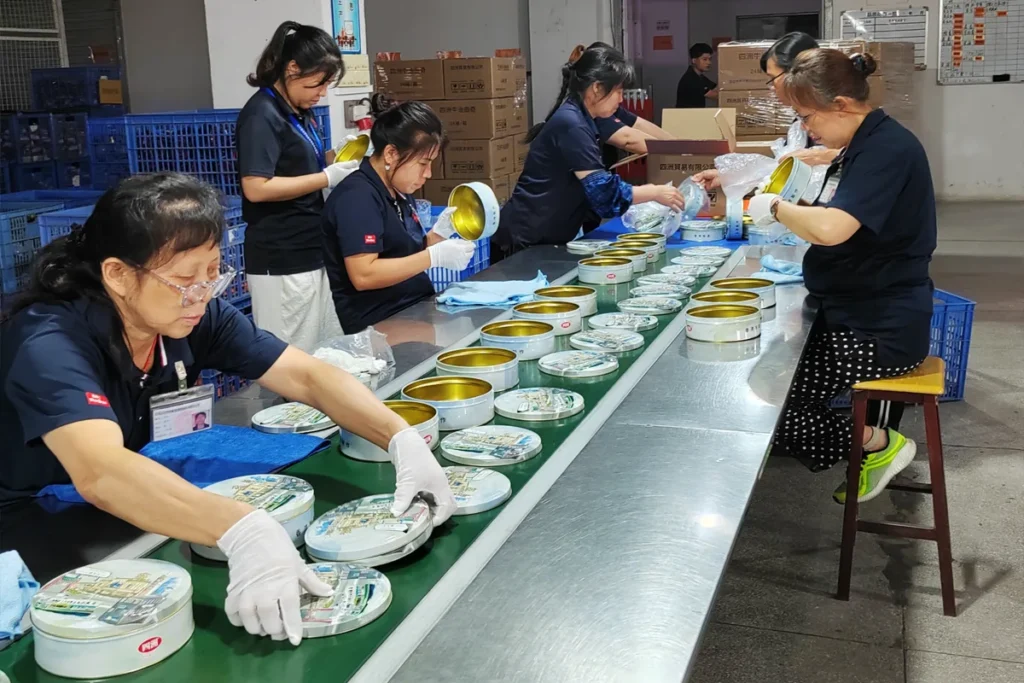
Share Complete Information Early
The more complete your initial brief, the better your supplier can optimize MOQ and lead time. A good RFQ for a Custom Tin Box should include:
- Intended use (food/non-food, single product or gift set).
- Target markets and any special regulations.
- Approximate annual volume and first-order estimate.
- Size, structure, and reference pictures or drawings.
- Desired finishes (matte, gloss, embossing, special colors).
With this information, a professional factory can propose realistic MOQs, offer different options (e.g., existing vs. new molds), and create a timeline that fits your launch window.
Consider Flexible Solutions for Smaller Brands
If you are a growing brand or testing a new product line, you may not be ready for a very large MOQ. In that case, you can discuss with your supplier options such as:
- Using existing stock shapes and standard tooling.
- Sharing components across multiple SKUs (same tin, different labels).
- Simplifying finishes for the first run to reduce complexity.
These strategies can help you reach lower or more flexible MOQs while still achieving a premium look and feel. Once the product is validated in the market, you can upgrade finishes or move to a unique shape in later orders.
Plan Reorders Before You Run Out
For successful products, the first order is only the beginning. To avoid stockouts, it’s best to:
- Monitor your sales weekly or monthly.
- Calculate when your inventory will reach a “reorder point” considering lead time.
- Confirm reorders early, especially before peak seasons like Christmas or major regional festivals.
By aligning your reorder schedule with the factory’s capacity planning, you’re more likely to get stable lead times and consistent quality across batches.
8. Example External Links You Can Use for Authority (On Your Website)
When publishing this article on mrtinbox.com, you can add outbound links to relevant, authoritative resources to strengthen information credibility and SEO. Here are some suitable examples to integrate naturally into the text:
- A recent metal packaging market analysis, showing steady global growth and strong demand for sustainable cans and tins (Future Market Insights / Globenewswire). GlobeNewswire
- A technical or market overview of global metal packaging from an independent research firm such as GMI Insights. Global Market Insights Inc.
- Tinplate or steel-for-packaging sustainability and recycling-rate data from organizations like APEAL or Steel for Packaging Europe. pt.tinboxeschina.com
- Official or industry-recognized guidelines for food-contact suitability of tinplate and coatings in the EU or US (Steel for Packaging Europe, Independent Can, or similar). steelforpackagingeurope.eu
- General educational resources explaining MOQ and how manufacturers set it, from supply-chain or inventory-management platforms. NetSuite
You can link these sources from phrases inside your content such as “global metal packaging market,” “recycling rate of steel packaging,” “food-contact regulations for tinplate,” or “what Minimum Order Quantity means in manufacturing.”
9. Practical Checklist Before You Confirm a Custom Tin Box Order
Before you send a PO, run through this quick checklist so your MOQ and lead time are aligned with your business goals:
- Demand & Forecast
Make sure you have a realistic sales estimate for the first 3–6 months and know how often you’ll reorder. This helps you choose an order quantity that balances unit cost and inventory risk. - Artwork & Structure Finalization
Confirm dieline, structure, and artwork internally before you ask for final samples. Reducing changes at the sampling stage keeps your project on schedule. - Regulations & Testing
Check whether your Custom Tin Box is for food, children’s products, or other regulated categories. If testing or certifications are needed, add this time into your lead-time plan from day one. - MOQ Options and Price Breaks
Request a few quantity levels and compare total cost, unit price, and storage impact. Don’t focus only on the lowest unit price—focus on the best balance for your brand. - Lead Time and Shipping Plan
Confirm production lead time, shipping method, and approximate transit time to your warehouse. Work backwards from your launch date and leave buffer for unexpected delays. - Reorder Strategy
Decide your reorder point and safety stock before the first order ships. This way, you have a clear plan instead of reacting in a panic when inventory drops.
10. Final Thoughts – Turning MOQ and Lead Time into Your Advantage
MOQ and lead time are not just numbers a factory sends you in a quotation. They are a reflection of how your Custom Tin Box project fits into industrial production realities, market trends, and regulatory frameworks.
By understanding what drives MOQ, how lead time is built, and how both connect to your sales forecasts and brand strategy, you can make smarter decisions and negotiate with confidence. Instead of seeing MOQ and lead time as obstacles, you can turn them into tools that improve your planning, protect your margins, and support smoother, more predictable product launches.
When you’re ready to discuss your own project, bring your forecast, timelines, and design ideas to the table. A professional Custom Tin Box partner will help you translate them into a clear MOQ and lead-time plan—so your beautiful metal packaging arrives exactly when your market needs it.
FAQ
What does MOQ mean for my custom tin box?
MOQ stands for Minimum Order Quantity. It’s the smallest number of tin boxes you can order at one time. This number helps manufacturers keep their costs low and ensure they can produce efficiently. The MOQ for a custom tin box can vary based on design complexity and production requirements. Understanding MOQ will help you plan your order better and avoid surprises.
How long will it take to get my custom tin boxes?
The lead time is the total time it takes from when you place your order to when the tin boxes arrive at your warehouse. This includes several steps: design approval, making samples, mass production, quality checks, and shipping. It can vary from 8 to 12 weeks depending on the specifics of your order. Always plan ahead!
Why does the quantity I order affect the price?
The price per tin box usually decreases as you order more. When you order a small quantity, manufacturers have to cover their setup costs over fewer boxes, making the price higher. By ordering a larger quantity, those costs get spread out, which lowers the price for each unit.
What factors influence the MOQ of my custom tin box?
Several factors affect MOQ, including the number of colors in your design, whether special techniques like embossing are used, and the type of shapes you choose. Complex designs often require higher MOQs to cover the increased setup and production costs.
What steps are involved in the lead time for custom tin boxes?
Lead time involves multiple steps. First, you need to finalize your design and artwork. Then, samples are made for approval. After that, mass production happens, followed by quality checks before shipping. Each step adds to the overall lead time, so clear communication is vital!
How can I plan better for my MOQ and lead time?
Start by forecasting your expected sales and aligning your order quantity with that demand. Know your sales channels and seasonal trends, and work closely with your supplier. This way, you can set a quantity that ensures good pricing while managing your inventory risk.
What should I do if I need a smaller quantity of tin boxes?
If you need a smaller quantity, discuss options with your supplier. They may offer solutions like using standard shapes or sharing components across different products to meet lower MOQs. This way, you can achieve a professional look without ordering too many boxes.
Are there any regulations I need to consider for custom tin boxes?
Yes! If your tin boxes will hold food or beverages, you must ensure they meet food-contact safety standards. This could affect your design choice, as some materials may require testing and could impact lead time.
How can I ensure my packaging will be ready on time?
To avoid delays, monitor your sales regularly and calculate when to reorder based on lead time. Planning reorders before you run out ensures that you’ll maintain stock availability, especially during peak seasons.
What should I check before confirming my custom tin box order?
Before you confirm your order, double-check your sales forecast, confirm artwork and design, ensure all safety and testing regulations are met, review MOQ options, confirm production lead times, and establish a reorder strategy. This thorough checklist will help keep your project on track!