

Developing a custom tin box is not just about choosing a nice shape and printing a logo. For many brands, the tin becomes a long-term touchpoint that customers keep on their desks, shelves, and kitchens for years. That means every detail—from metal thickness and hinge structure to coatings, printing, and logistics—directly affects your brand image, product safety, and total cost.
In this guide, we’ll walk you through the complete journey of a custom tin box project at an OEM factory like Mr. Tin Box: from the first idea, all the way to tooling, mass production, and global shipping. Whether you are a packaging buyer, marketing manager, or brand owner, this step-by-step overview will help you speak the same language as your tin box supplier and make better decisions.
Table of Contents
Key Takeaways
- Premium Durability and Appeal: Custom tin boxes offer unmatched durability, standing out from paper or plastic alternatives. Their robust design not only protects contents but also creates a premium feel that customers are inclined to keep and reuse, enhancing your brand presence.
- Sustainable Packaging Solutions: Tin packaging is one of the most recyclable materials available, with a recycling rate exceeding 80% in the EU. By choosing custom tin boxes, brands can align with sustainability goals while providing a protective and attractive packaging option.
- Tailored Design for Unique Branding: Each custom tin box can be crafted to fit your brand identity. With various shapes, sizes, and finishes like embossing or foil stamping, your tin not only serves as packaging but as a memorable brand ambassador that customers cherish.
- Comprehensive Support Throughout Production: From concept to mass production, our dedicated team at Mr. Tin Box guides you through every step. We ensure that your tin packaging meets all your functional requirements while reflecting your brand’s identity seamlessly.
- Rigorous Quality Assurance Standards: Every custom tin box undergoes strict quality checks to ensure compliance with food safety regulations and visual standards. This guarantees that your packaging not only looks great but is safe for consumers, enhancing your brand’s reputation.
- Flexible Production and Shipping Options: We offer adaptable minimum order quantities and shipping solutions to meet diverse project needs. Whether for limited editions or large-scale launches, our strategic planning ensures timely delivery and efficient supply chain management.
1. What a Custom Tin Box Can Do for Your Brand
1.1 Why choose metal tin packaging?
A custom tin box offers something that paper, plastic, or plain corrugated packaging cannot: a premium, durable object that customers are likely to keep and reuse. Steel and tinplate packaging is extremely robust, protects the contents from light and oxygen, and supports high-quality decorative finishes that make your brand stand out on the shelf.
From a sustainability perspective, steel packaging is one of the most recycled packaging materials in the world. In the European Union, recent data shows that more than 80% of steel packaging is “really recycled”, meaning it actually enters recycling operations rather than just being collected. Sustainability Online+1 This high recycling rate helps many brands meet their ESG and circular-economy targets while still using a rigid, protective pack.
1.2 Typical applications and box styles
Custom tin boxes are widely used across food & beverage, confectionery, tea and coffee, cosmetics, candles, tobacco, games, and collectible gift sets. In each segment, the box structure and coating system may be different, but the goal is the same: protect the product and deliver a memorable unboxing experience.
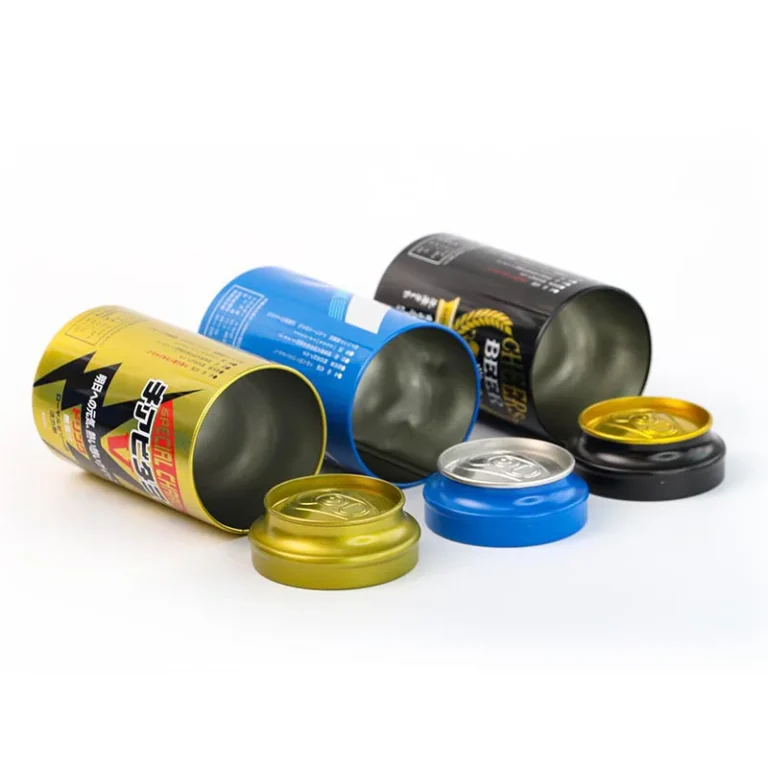
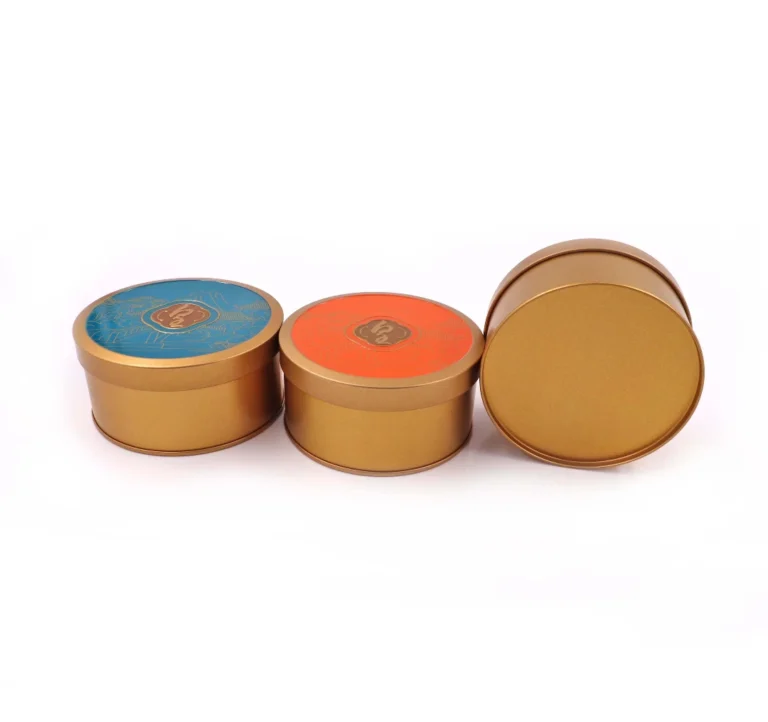
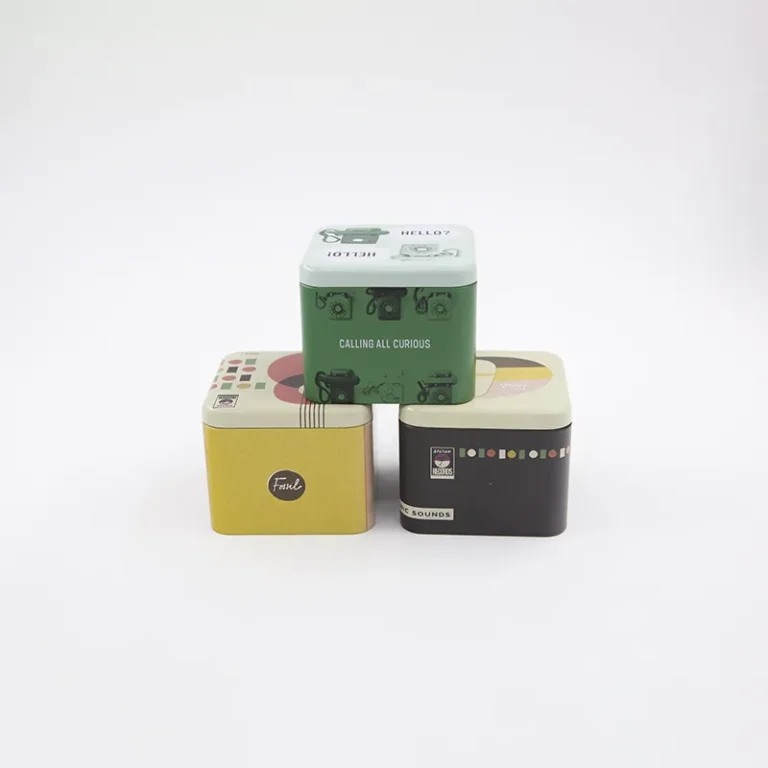
Common structures include slip-lid tins, hinged-lid tins, window tins with PET or glass inserts, round tea tins, rectangular lunchbox tins, and multi-compartment gift tins. A single factory can produce hundreds of existing tooling sizes, but for serious brands, a fully custom tin box—with its own unique footprint, height, and profile—becomes part of the brand identity and hard for competitors to copy.
2. Phase 1 – Concept and Brand Positioning
2.1 Defining the packaging brief
Every successful custom tin box project starts with a clear brief. This brief should cover what product will go inside, target markets, shelf price, expected annual volume, and any special requirements such as food contact, child-resistance, or tamper evidence.
At this early stage, you do not need final artwork, but you do need clarity on dimensions and product weight, whether the box must be air-tight, and whether the packaging will be used for direct food contact or only as secondary packaging. The more details you share with your tin box manufacturer, the easier it is for them to propose structures and cost levels that match your budget.
2.2 Translating your brand into a 3D tin box
Once the basic brief is clear, the next step is to translate your brand into three-dimensional metal. A custom tin box is like a mini billboard in your customer’s hand, so you need to think about visual hierarchy, touch, and sound.
Shape, opening style, and edge treatment all influence how the tin feels. A rounded corner with a smooth rolled edge feels friendly and safe, which works well for consumer goods and gifts. A sharp, clean edge with a tight-fitting slip lid can feel more technical or industrial. These small structural decisions combine with printing, embossing, and varnish finishes to create a unique brand language on the shelf.
2.3 Collecting reference samples and benchmarks
To make communication faster, we always recommend bringing or sending physical samples of tins you like. These do not have to be from your own industry. A tea tin, a cosmetic tin, or even a biscuit tin from another brand can serve as a reference for color, gloss level, embossing depth, or opening feel.
Your tin box supplier can then reverse-engineer what you like about these references and combine the best elements into a new, fully custom tin box. This reduces the number of iterations, shortens the development cycle, and helps both sides visualize the same goal from day one.
3. Phase 2 – Structural Design and 3D Engineering
3.1 Choosing base material and thickness
Most custom tin boxes for consumer products are made from electrolytic tinplate or electrolytic chromium/chromium-oxide coated steel (ECCS). These packaging steels are specifically developed for food and non-food packaging applications and offer excellent formability, strength, and corrosion resistance when combined with the correct internal and external coatings. pac.gr
The choice of metal thickness depends on tin size, required stacking strength, and cost targets. For small mint tins, thicknesses around 0.19–0.23 mm may be sufficient, while larger biscuit or gift tins may require 0.23–0.28 mm or more to feel solid and resist denting. Your engineering team and the factory’s tooling department will work together to find the ideal balance between rigidity, weight, and cost.
3.2 Designing the box structure and functionality
After material selection, the structural design focuses on how the tin will be formed and how the lid will engage with the base. The most common options are slip lids, hinged lids with curled knuckles, and plug-style lids with friction fit. Each has different implications for tooling complexity, sealing performance, and user experience.
For food products, you may need a double seam or an additional inner lid with a gasket or tear-off membrane to meet shelf-life targets. Non-food products such as cosmetics, candles, or gift sets often prioritize visual appearance and easy opening over hermetic sealing. A good structural design ensures that the tin opens smoothly, closes securely, and can be produced efficiently on high-speed lines.
3.3 Designing for manufacturability (DFM)
Even the most beautiful custom tin box can become a problem if it is not designed with manufacturability in mind. That is why design for manufacturability (DFM) is a key step in the engineering phase. Corners must allow enough radius for metal flow, panel areas must be checked for risk of oil canning, and embossing depth must be balanced against panel stiffness and printing registration.
At this stage, your tin supplier will also look at how many metal blanks are needed per box, how the print layout can optimize sheet usage, and whether any small design changes can reduce scrap and tooling costs. Small improvements, such as aligning height to an existing standard or adjusting corner radius, can significantly reduce your long-term cost per unit, especially at high volumes.
4. Phase 3 – Graphics, Printing, and Decoration
4.1 Color management and artwork preparation
Unlike paper, metal reflects light differently and requires specific pre-press adjustments. Artwork for a custom tin box is typically prepared in CMYK with spot Pantone colors where brand consistency is critical. Proper trapping, overprint settings, and white undercoat layers must be defined so the final color on tinplate matches your brand guidelines.
Professional tin printers use color-managed workflows and spectrophotometers to keep printing consistent from batch to batch. Global brands often specify tolerances in ΔE (Delta E) for critical colors to ensure that tins printed in different years still look “on brand”. By discussing color expectations early and approving press proofs, you avoid surprises when the first mass production run arrives. PMC
4.2 Special finishes: matte, gloss, embossing, and foil
Decoration is where a custom tin box really becomes premium. Common finishes include full-gloss, full-matte, and combinations such as matte background with spot-gloss logo. You can also add textures like crackle, sand, or linen to give the surface a unique tactile feel.
Embossing and debossing add depth, allowing logos, patterns, or product names to rise above the surface. Hot foil stamping or metallic inks create luxurious highlights that catch light on the shelf. When combined with smart structural design, these finishes can make your tin feel like a collectible object rather than just packaging, increasing perceived value and encouraging customers to keep and reuse it.
4.3 Regulatory information, barcodes, and multi-language panels
For products sold across multiple regions, regulatory and labeling requirements must be integrated into the artwork. Food products must comply with local regulations on ingredient lists, nutrition declarations, lot coding, and storage instructions. In the EU, all food-contact packaging must meet the general safety requirements of Regulation (EC) No 1935/2004, which ensures materials do not endanger human health or alter food composition and taste. Food Safety+1
In the US, the FDA provides guidance for food-contact substances (FCS) and packaging, including coatings, adhesives, and printing inks that may migrate into food. U.S. Food and Drug Administration+1 When you develop artwork, it is important to reserve space for barcodes, legal text, recycling symbols, and multi-language content, especially if you plan to sell in several markets with different legal requirements.
5. Phase 4 – Prototyping, Sampling, and Testing
5.1 White samples vs. printed samples
Before investing in full tooling and mass production, you will normally go through a sampling stage. The first step is often a “white sample” or “plain sample”, which is a fully formed tin without printing. This allows you to check size, proportions, lid fit, hinge action, and internal space with your actual products or dummies.
Once the structure is confirmed, the factory can produce printed samples—sometimes called pre-production samples or “PP samples”. These use the real print plates, coatings, and (in many cases) the same production line as mass production. They are your final opportunity to confirm color, registration, embossing alignment, and overall appearance before committing to bulk quantities.
5.2 Functional tests and transport simulations
For food and cosmetic tins, you may need to run internal tests to confirm that the chosen coating system is compatible with your formulation. Coatings and lacquers must protect the metal from corrosion and prevent unwanted migration into food. Reviews of metal packaging for food highlight the importance of appropriate internal coatings for acidic or salty products to avoid corrosion and maintain product quality. PMC+1
In parallel, you should test the packaging system (product plus tin plus carton) under realistic transport conditions. Many brands use ISTA 1A or similar test protocols to simulate drops, vibrations, and compression that occur in the supply chain. HQTS+1 A well-designed custom tin box, combined with appropriate inner packing, will protect your product and maintain a pristine appearance all the way to the retail shelf or end customer.
6. Phase 5 – Tooling, Pilot Run, and Mass Production
6.1 Tooling development and lead time
Once you sign off on structure and printed samples, the project moves into tooling. For a fully custom tin box, the factory will design and manufacture cutting dies, forming tools, embossing molds, and sometimes custom jigs for assembly. Tooling is usually made from hardened steel to withstand millions of strokes on high-speed presses.
Tooling development typically takes several weeks, depending on complexity and capacity. During this time, your supplier will finalize production layouts, confirm process flow, and prepare quality documents for mass production. Although tooling is a one-time investment, a well-engineered tool can run for years and support multiple reorders, giving you a long-term advantage in consistency and unit cost.
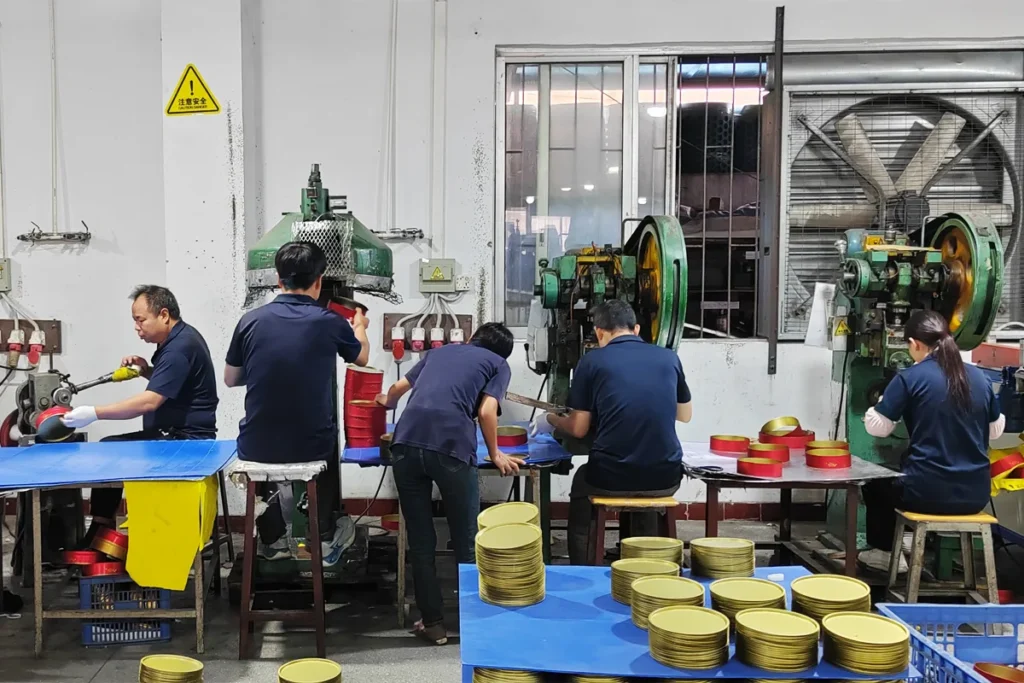
6.2 Automated stamping, forming, and assembly
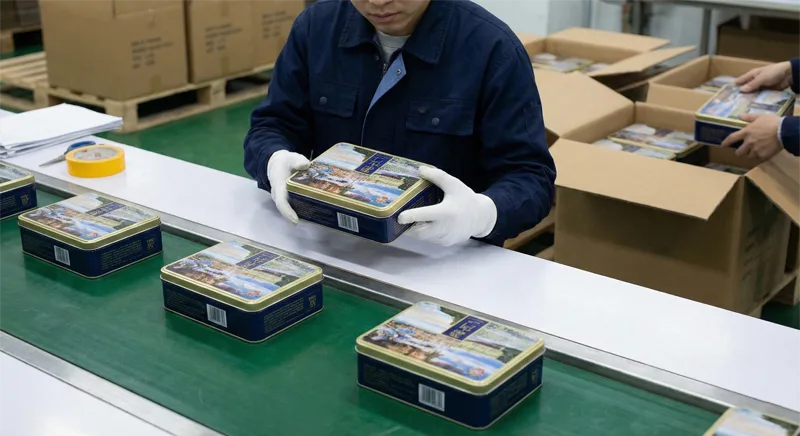
After tooling is ready, the factory runs a pilot batch to validate the process. Tinplate sheets are first printed and varnished, then cut into blanks, and finally stamped and formed into lids and bodies. Automated lines perform operations such as curling, flanging, seaming, and hinge assembly with high precision and speed.
During mass production, operators monitor key parameters such as press alignment, lubrication, and coating curing temperatures. Inline and offline inspections check dimensions, burr formation, scratch levels, and lid fitting. For projects with windows, handles, or accessories (like spoons or inner trays), additional assembly steps are integrated into the process, always aiming to maintain high efficiency and consistent quality.
6.3 Quality assurance and food-contact compliance
Quality control is not only about visual appearance. For tins used with food or cosmetics, compliance with food-contact regulations must be documented. In the EU, this means demonstrating conformity with the general safety requirements of Regulation (EC) No 1935/2004, including declaration of compliance (DoC) and supporting migration test results where applicable. Legislation.gov.uk+1
In the US and other markets, your supplier should be familiar with relevant FDA and local requirements for coatings, inks, and adhesives. Combined with internal QA systems—such as incoming material control, in-process inspections, and final audits—this ensures each batch of custom tin boxes meets both your brand standards and legal obligations in target markets.
7. Phase 6 – Packing, Logistics, and Supply Chain Planning
7.1 Inner packing, cartons, and palletization
A beautiful custom tin box still needs smart packing to arrive in perfect condition. Factories normally pack tins nested or stacked, with paper sleeves, polybags, or cardboard separators to prevent scratching. The exact method depends on the surface finish: matte varnish and dark solids may show scuffs more easily than full-gloss metallic designs.
Carton design must balance protection, weight, and cost. Heavier tins require stronger cartons and careful palletization to avoid collapse during transport. By optimizing the number of tins per carton and cartons per pallet, your supplier can reduce freight cost per unit and improve container utilization, especially for sea shipments.
7.2 Planning lead times and reorder cycles
Developing a custom tin box from zero typically takes longer than using standard stock packaging. You must account for design, sampling, tooling, pilot runs, and then full production. Once everything is set up, repeat orders become much faster, but tinplate availability, printing schedules, and shipping times still influence total lead time.
For global brands, we recommend creating a rolling forecast and safety stock plan that aligns with your sales seasons. For example, if you need Christmas gift tins in stores by October, tooling and first production should be finalized months in advance. Good planning with your tin supplier avoids last-minute air freight costs and ensures you never run out of packaging during key campaigns.
8. How Mr. Tin Box Supports Your Custom Tin Box Project
8.1 One-stop engineering and design support
At Mr. Tin Box, we specialize in taking your idea and turning it into a production-ready custom tin box. Our engineers work directly with your packaging and marketing teams to refine dimensions, structure, and decoration from the very first sketch.
We can start from a simple hand-drawn sketch, a 3D file, or even an existing tin you want to improve. From there, we propose technical drawings, 3D mock-ups, and costed options so you can compare different sizes, structures, and finishes before committing. This collaborative approach helps you make confident decisions and reduces the risk of last-minute changes.
8.2 Compliance, testing, and documentation
For food, cosmetics, and other sensitive applications, our team can coordinate necessary material certificates, food-contact declarations, and third-party testing where required. We work with coating and ink suppliers who are familiar with EU and US regulations on food-contact materials, and we can support you in preparing documentation for your internal QA or external audits. Ministère des Finances+1
We also help organize packaging performance tests—such as drop and vibration testing based on ISTA procedures—for clients who need to validate their entire packaging system for e-commerce or global distribution. This ensures that your custom tin box not only looks premium but also survives real-world logistics. metropack.eu+1
8.3 Flexible MOQs and global shipping
Different projects require different quantities. Whether you are testing a new limited edition or rolling out a long-term global SKU, we can recommend suitable minimum order quantities (MOQs) and production plans that match your budget.
With experience shipping to North America, Europe, Asia-Pacific, and other regions, we can coordinate export packing, documentation, and container loading so your custom tin boxes arrive on time and in spec. For long-term partnerships, we can also discuss warehouse solutions, phased deliveries, or call-off orders to support your supply-chain strategy.
9. Practical Timeline and Buyer’s Checklist
9.1 Typical development timeline
While every project is unique, most custom tin box developments follow a similar timeline once the brief is clear:
- Concept & structural proposal – 1–2 weeks for initial drawings and quotations.
- Sampling phase – 2–4 weeks for white samples and printed pre-production samples.
- Tooling & pilot run – 3–6 weeks depending on complexity and factory capacity.
- Mass production & shipping – 4–8 weeks including printing, forming, packing, and ocean freight, depending on destination.
In total, you should plan several months from first idea to finished goods arriving at your warehouse, especially for new product launches and seasonal campaigns. Once tooling and processes are stable, reorders can be scheduled more tightly.
9.2 Quick checklist for your next custom tin box project
To summarize the journey from concept to mass production, here is a quick mental checklist you can follow when speaking with your supplier:
- Do we have a clear brief (product, markets, volumes, budget, and timing)?
- Have we defined target dimensions and functional requirements (food contact, sealing, stacking, etc.)?
- Did we align on structural design, material thickness, and decoration options?
- Have we reviewed and approved white samples and printed samples?
- Are tooling, QA standards, and compliance documentation confirmed?
- Is our logistics and reorder plan aligned with sales forecasts and launch dates?
Using this checklist at each milestone will keep your project on track and make cooperation with your tin box manufacturer smoother and more transparent.
Conclusion – Turn Your Next Custom Tin Box into a Long-Term Brand Asset
A custom tin box is more than just a container. Done correctly, it becomes a durable brand asset that customers keep on their shelves, desks, and kitchens long after they have consumed the product inside. By understanding each step—from concept and engineering to printing, testing, and mass production—you can make smarter decisions, control costs, and avoid last-minute surprises.
At Mr. Tin Box, we combine practical factory experience with design-driven thinking to guide you through this entire journey. If you are planning a new product launch, upgrading existing packaging, or exploring a collectible gift series, our team is ready to help you develop a custom tin box that truly reflects your brand and performs in the real world.
When you are ready, share your ideas, dimensions, or reference samples with us—and let’s turn your next custom tin box project into a success story from concept to mass production.
FAQ
What is a custom tin box?
A custom tin box is a special packaging solution made of metal, designed to hold and protect products. Unlike regular boxes, custom tin boxes are durable and can be reused by customers, which makes them a long-lasting part of your brand. They can come in various shapes and sizes, often decorated with your logo or unique designs to stand out in stores.
Why should I choose a tin box for my products?
Tin boxes offer a premium look and feel that plastic or cardboard cannot provide. They are strong and can keep your products safe from damage. Additionally, many people love to reuse these boxes because they look good on display. Also, tin can be recycled easily, which is great for the environment!
How can I create my own design for a tin box?
To design your own tin box, start by thinking about the shape and size you need. Then, you will work with a manufacturer who will help turn your ideas into reality. They will assist in creating drawings and samples based on your specifications. It’s essential to provide as much detail as possible about what you want.
What steps are involved in making a custom tin box?
The process starts with planning and defining what your tin box will hold. Next, the design phase takes place, where the box’s structure and appearance are created. After that, prototypes are made for testing. Once everything is approved, mass production begins, followed by packing and shipping.
How long does it take to make a custom tin box?
Creating a custom tin box can take several months. Typically, the process includes concept design (1-2 weeks), sampling (2-4 weeks), tooling and pilot runs (3-6 weeks), and finally, mass production and shipping (4-8 weeks). So, from start to finish, it can take 4 to 6 months.
What is the difference between a white sample and a printed sample?
A white sample is a plain version of the tin box without any printing. It’s used to check the size and structure. A printed sample, on the other hand, includes the final artwork and decorations, so you can see how the finished product will look. This step is crucial before making a large order.
Is my design safe for food products?
Yes, but you need to ensure your materials and coatings meet safety regulations for food contact. When creating a tin box for food, it’s essential to follow local laws about food packaging to keep everything safe for consumers.
How much product can I order at once?
The amount you can order, known as the minimum order quantity (MOQ), depends on your project. Smaller test runs are often possible, but large orders typically give you a lower price per unit. Your manufacturer can help determine the best option for your needs.
How do I ensure quality in my custom tin box?
Quality can be ensured by working closely with your tin box supplier. They should perform different tests throughout the production process, including checking the appearance of the boxes and ensuring they meet all safety requirements. Regular inspections help catch any issues.
What if I need my tin boxes to arrive quickly?
If you need your tin boxes urgently, it’s best to plan ahead as custom orders take time. Communicate your timeline clearly with your supplier so they can prioritize your order and find ways to meet your deadlines, such as adjusting scheduling.