

When you source a Custom Metal Tin Box, price is never just “price per piece.” The real cost is shaped by materials, structure, decoration, compliance, production efficiency, and logistics—plus the small decisions that quietly inflate budgets over time. In this guide, you’ll learn how to read a quote like a packaging engineer, so you can control cost without sacrificing brand quality.
Table of Contents
Why Cost Visibility Matters in Custom Metal Tin Box Sourcing

Total Cost of Ownership Is Bigger Than Unit Price
A Custom Metal Tin Box can look “cheap” on paper and still become expensive after you account for revisions, slow approvals, rework, and freight surprises. The best sourcing decisions compare total cost of ownership, including tooling amortization, sampling, QC, and shipping, not just the unit cost.
Another overlooked part of ownership cost is repeatability. If the first order is inconsistent, you pay again in customer complaints, returns, or repack work—even if the initial quote looked attractive.
The Hidden Cost of “Lowest Quote Wins”
A low quote often assumes simplified specs, thinner material, fewer finishing steps, or looser tolerances that may not match what your product actually needs. If those gaps are discovered late, the “savings” can evaporate through change orders, rush fees, and missed launch dates.
A better approach is to request a cost breakdown by driver (material, tooling, printing, finishing, packing, QC, freight). Transparent suppliers can explain what moves the number and how to optimize it.
Material Choices and Price Drivers
Tinplate, Aluminum, and Specialty Metals
Most Custom Metal Tin Box projects use tinplate (electrolytic tin-coated steel) because it balances stiffness, formability, printability, and cost. Aluminum can reduce weight and improve corrosion resistance, but it may change forming behavior, dent resistance, and finishing options. Specialty options like stainless steel can look premium but typically raise both material and forming costs.
Material market volatility matters too. If you want a pricing reference for broader metal trends, you can compare public commodity snapshots like the World Bank Commodity Markets (“Pink Sheet”) to understand why quotes may shift over time.
Thickness, Temper, and Yield Loss
Material thickness is a direct cost driver, but it also affects tooling and scrap rate. Thicker sheets can improve rigidity and perceived quality, yet they may increase press load, slow production, and raise wear on tooling. Softer or harder tempers influence formability; if the temper is wrong for your box depth, defect rates rise and your real cost per good unit increases.
Yield loss is often invisible in quotes. Complex shapes, large lids, and wide flanges can create more scrap, which suppliers price into the final unit cost even if it’s not shown as a separate line item.
Coatings, Lacquers, and Food-Safe Requirements
If your tin packaging touches food or is used for confectionery, tea, coffee, or supplements, interior coatings may be required. Options like protective lacquers or BPA-NI systems can increase cost, but they help prevent corrosion, odor transfer, and product interaction. When discussing food-contact needs, it’s smart to reference recognized frameworks such as the U.S. FDA’s overview of Food Contact Substances (FCS) and the EU framework regulation EC 1935/2004 so specifications are aligned from day one.
Shape, Structure, and Tooling Costs
Standard Sizes vs Fully Custom Geometry
If you can use an existing size or a near-standard footprint, you may reduce (or avoid) new tooling investment. Fully custom sizes and unique profiles typically require new dies, fixtures, and forming setups, which increases both upfront cost and sampling time.
Even small dimensional changes can trigger tooling changes. A 2–3 mm adjustment might look minor in design, but it can require modifying cutting dies, curling tools, or lid-fit tooling.
What Tooling Cost Actually Covers
Tooling cost is not just “a mold.” It often includes cutting dies, forming dies, curling tools, embossing tools, hinge jigs, and inspection gauges. Better tooling improves consistency and reduces defect rates, which lowers cost over repeated production runs.
Ask whether tooling is dedicated or shared. Dedicated tooling supports stable repeat orders, while shared tooling can limit customization and introduce variability if multiple projects compete for the same setup.
Complexity Multipliers: Hinges, Latches, Windows, and Multi-Part Builds
A simple slip-lid tin is usually cheaper than a hinged tin because hinges and latches add parts, assembly steps, and alignment control. If you add a clear window, you introduce extra materials (PET/PVC alternatives), bonding steps, and cosmetic risk (scratches, glue marks). Multi-part constructions can look premium, but they typically increase labor and reject rate if tolerances are tight.
The best cost control strategy is purposeful complexity. Every added feature should earn its keep in brand story, unboxing experience, or functional value.
Printing, Decoration, and Surface Finishing

Artwork Printing: Method and Coverage
Printing cost depends on method (often offset printing for volume, sometimes digital for short runs), number of colors, and coverage. Heavy ink coverage can require additional drying control and protective topcoats, which adds time and cost. If your design is minimal, you may be able to reduce cost by limiting full-coverage backgrounds or simplifying special effects.
Color management also affects revision cycles. If you need strict color matching, defining references like Pantone can speed approvals, but it may require extra proofing steps to hit brand accuracy.
Premium Effects: Embossing, Debossing, Foil, Spot UV
Embossing/debossing requires additional tooling and alignment, especially when registered to printed artwork. Foil stamping and spot UV create luxury impact but add process steps and higher rejection risk if dust, oil, or micro-scratches appear. These effects are often worth it for high-end confectionery brands, but they should be planned early so the structure and artwork support stable registration.
A practical way to control cost is to focus premium effects on the “hero” surfaces. For example, a lid-only foil logo often delivers most of the luxury impact without paying for full-body effects.
Protective Finishes That Reduce Damage Costs
Varnishes and clear coats protect against abrasion during shipping and handling. A slightly higher finishing cost can reduce real-world losses from scuffed tins, which is especially important for e-commerce or retail displays. If your tins ship long distances, a durable topcoat plus smart packing can be a cheaper solution than replacing damaged units.
Inserts, Liners, and Packaging Components
Foam, EVA, Flocked Trays, and Custom Inserts
Inserts can become a major cost driver because they add materials, cutting, and assembly. EVA or flocked trays look premium and protect fragile confectionery, but they increase unit cost and may increase box dimensions, which can raise freight. If your product is stable and not fragile, simpler paperboard partitions can cut costs while still creating a neat presentation.
The key is fit precision. A poorly fit insert causes movement, noise, and damage, which hurts your brand even if the tin itself is perfect.
Sleeves, Labels, and Secondary Packaging
Many brands add an outer sleeve or belly band for seasonal campaigns. This can be more cost-effective than redesigning the tin artwork each time, because you keep the tin stable and change only paper components. However, extra packaging increases packing time and can affect carton count per pallet, which impacts shipping.
If you’re targeting retail shelves, barcodes, warnings, and multilingual labels can also become cost and schedule factors. Plan your compliance text early so it doesn’t delay printing.
Retail-Ready Packing and Display Considerations
Retail-ready packaging (RRP) and display cartons can be a hidden cost driver. They require stronger cartons, consistent orientation, and sometimes inner dividers to keep tins aligned and clean-looking. If your products go through multiple touchpoints (factory → warehouse → retailer), investing in better transit packaging can reduce total landed cost.
Quality, Compliance, and Testing Costs
Food Contact, REACH, and Brand-Risk Protection
If your Custom Metal Tin Box is used for food, you may need migration testing or compliance documentation depending on the destination market. The EU’s core framework regulation EC 1935/2004 is often referenced for materials intended to contact food, and the U.S. FDA provides guidance around Food Contact Substances. Even when testing is not legally required for your exact use case, many premium brands request documentation to reduce risk.
Compliance is not only a legal topic; it’s also a brand trust topic. A single quality incident can cost far more than the testing that would have prevented it.
AQL, Inspection Levels, and What You’re Really Paying For
Quality inspection cost depends on sampling level, defect definitions, and inspection points. If your product is premium, you may choose stricter cosmetic standards for scratches, dents, and print alignment. That increases inspection time and may raise rejection rates, but it prevents expensive downstream failures in retail and e-commerce.
Clear QC agreements reduce disputes. A supplier that follows established quality systems such as ISO 9001 is often better positioned to maintain stable outcomes across repeat orders.
Lab Testing, Coating Validation, and Durability Checks
Testing can include coating adhesion, corrosion resistance, odor checks, drop tests, and rub resistance for printed surfaces. These costs can be managed by testing the right things at the right time: validate materials and coatings early, then focus later checks on process stability and batch consistency. When a supplier has strong process controls, you can often reduce repeated testing frequency over time.
MOQ, Batch Size, and Production Efficiency
Why Bigger Runs Lower Unit Cost
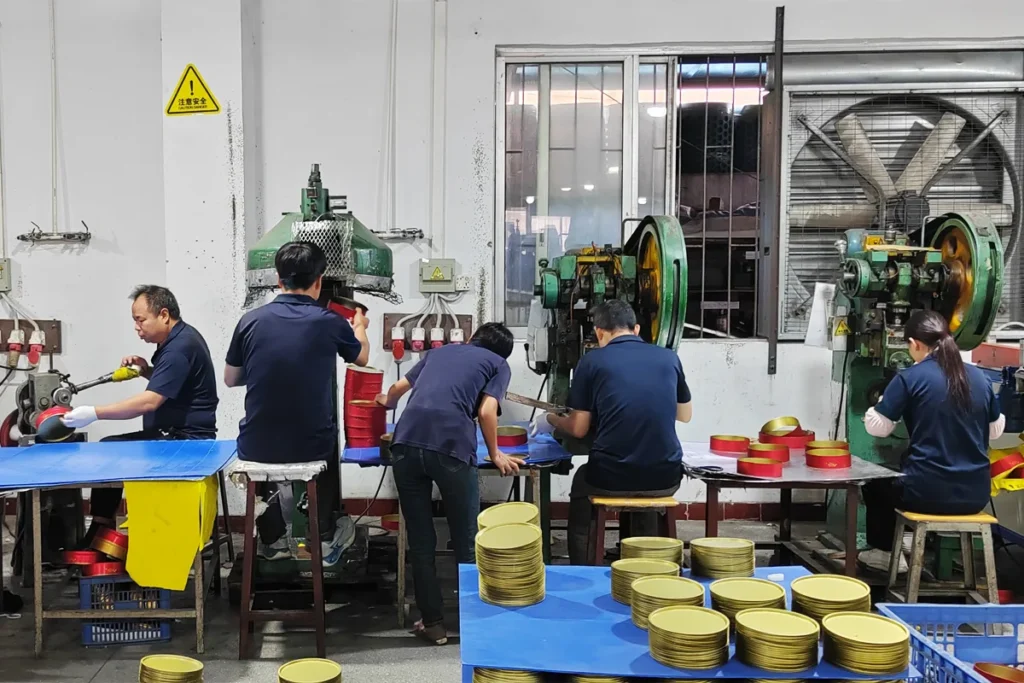
Custom tins involve setup: printing plates (or equivalent preparation), press setup, forming alignment, and packing configuration. Larger quantities spread these setup costs over more units, reducing the unit price. If you order too close to the minimum, you often pay a “setup penalty” in unit price.
That said, ordering too much creates inventory cost. The best MOQ decision balances unit cost reduction against storage, cash flow, and forecast risk.
Multi-SKU Programs and Shared Setup
If you need several designs in the same size and structure, you may be able to share tooling and production setup while changing only artwork. That can reduce per-SKU cost compared to making each SKU fully unique. Coordinated production planning can also reduce lead time because the factory runs similar jobs back-to-back.
A strong supplier will propose a program approach. Instead of quoting each SKU in isolation, they’ll explain how to bundle to reduce total cost.
Scrap Rate and Efficiency as Silent Cost Drivers
Even with the same design, different factories may have different yields. Better process control reduces dents, scratches, oil marks, and print defects, which lowers scrap and rework. A quote that looks higher may actually be cheaper when you calculate “good units received” and the cost of fixing problems.
Lead Time, Sampling, and Change Orders
Sampling Phases and Their Cost Impact
Sampling can include a structure prototype, a decorated pre-production sample, and a final golden sample. Each round adds labor, materials, and time, and frequent revisions create cost creep. You can control this by finalizing dielines, structure, and artwork requirements before asking for the decorated sample stage.
Good sampling is not wasted money. It’s insurance that prevents a large batch from going wrong.
Artwork Revisions, Color Proofing, and Approval Delays
Every approval cycle costs money because it ties up capacity and pushes schedules. If your internal team takes weeks to confirm a color, the factory may need to reschedule production, and you may pay more for expedited re-entry. Clear timelines and a single decision-maker reduce both cost and stress.
If color consistency is critical, define the standard early. References like Pantone can help align expectations, but you should still approve physical samples under controlled lighting.
Rush Fees and Expedited Production
Rush production is rarely just a “small surcharge.” It often means overtime labor, line change disruptions, and higher defect risk due to speed pressure. If you’re forecasting seasonal confectionery campaigns, planning earlier is usually the cheapest cost-saving move available.
When rush is unavoidable, negotiate scope: expedite only the critical SKU or only a partial quantity to meet launch, then ship the rest on normal schedule.
Shipping, Duties, and Logistics
Freight Mode, Carton Optimization, and Dimensional Weight
Metal tins are durable but not weightless. Freight cost depends on carton size, gross weight, pallet pattern, and whether your tins include inserts that increase volume. Optimizing packing (without damaging goods) can reduce shipping costs significantly, especially for air freight.
Ask your supplier for carton specs and pallet plans early. With those numbers, you can estimate landed cost more accurately before you commit.
Incoterms and “Who Pays for What”
Cost comparisons are meaningless unless you compare the same Incoterm. Many buyers use FOB, CIF, or DDP without fully aligning on what each includes. For a clear overview, refer to the International Chamber of Commerce’s official Incoterms® resources so your team and your supplier speak the same cost language.
Misaligned Incoterms create surprise bills. The cheapest unit price can become the most expensive landed cost if the shipping terms are unclear.
Duties, HS Codes, and Compliance Documentation
Duties depend on HS codes, origin rules, and destination policy. Your supplier should provide export packing lists, commercial invoices, and material declarations when needed. If your project includes special coatings or plastics (like windows), documentation may become more complex, which can affect customs clearance time and brokerage costs.
A smooth customs process reduces hidden costs like storage charges, demurrage, and delayed deliveries. Good documentation is often the cheapest way to avoid expensive logistics problems.
How to Compare Quotes for a Custom Metal Tin Box
What a Professional Quote Should Include
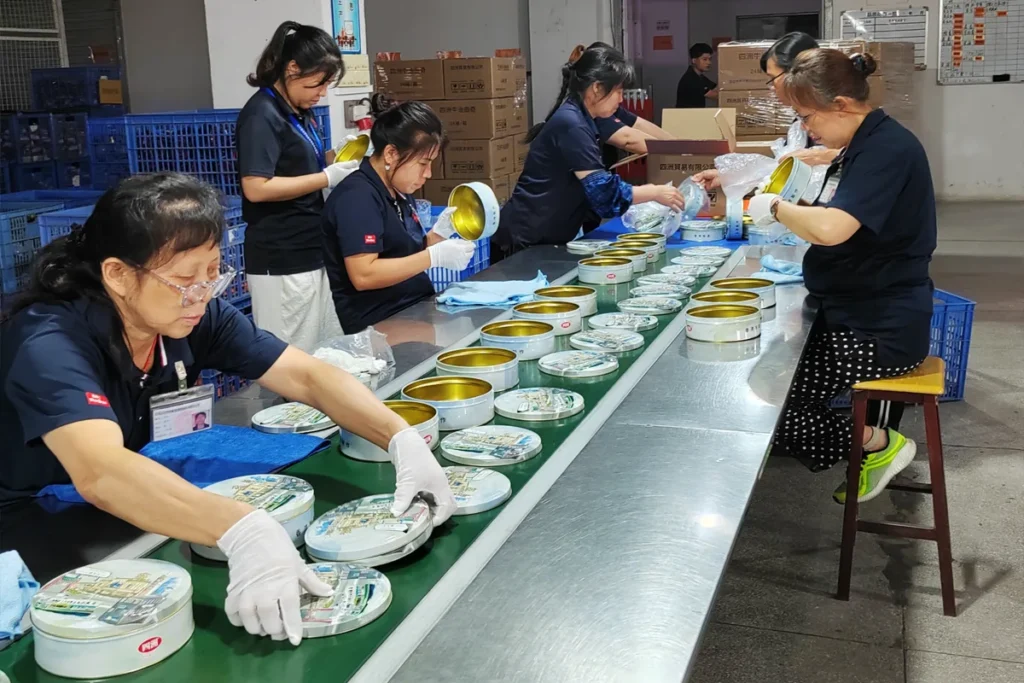
A reliable quote should clearly define material type and thickness, size and tolerance range, structure details, printing scope, finishing processes, packing method, and quality standard. It should also separate tooling cost from unit cost and clarify whether tooling is one-time, refundable, or usable for future runs.
You should also insist on a defined sample plan. Without sampling milestones, cost and timeline can drift with every revision.
Common Red Flags That Inflate Cost Later
If a quote is vague about coating type, print method, or packing details, expect change orders. If the supplier avoids discussing defect standards, alignment tolerance, or how they handle rework, the low price may be hiding quality risk. A factory that cannot explain cost drivers clearly may not control them well during production.
Another red flag is “too fast” sampling with no engineering discussion. Fast samples can be helpful, but only if they reflect the true production process and real finishing steps.
Practical Ways to Reduce Cost Without Killing Quality
Simplify structure where you can and concentrate premium effects where they create maximum brand impact. Align your artwork early to avoid revision loops, and consider a program approach for multiple SKUs so tooling and setup are shared. Choose packaging that protects tins properly, because damage replacement is one of the most expensive “hidden line items” in the real cost of a Custom Metal Tin Box.
Above all, treat cost optimization as collaboration. A capable factory can propose smarter structure, better packing, and process tweaks that lower total cost while maintaining premium appearance.
Final Takeaway: Turning Cost Drivers Into Better Value
Sourcing a Custom Metal Tin Box is a balance of engineering, branding, and operational reality. When you understand the true cost drivers—materials, tooling, decoration, compliance, MOQ, sampling, and logistics—you can build a sourcing plan that protects both your budget and your brand.
If you want predictable pricing and stable quality, the best next step is a detailed spec discussion plus a transparent cost breakdown. When your supplier treats cost as an engineered outcome—not a guess—you get fewer surprises and a better product launch.
FAQ
What factors influence the cost of a custom metal tin box?
The cost of sourcing a custom metal tin box is determined by various factors such as the materials used, the design and structure of the box, the decoration options, production efficiency, and logistics costs. It’s important to look beyond just the unit price and consider the total cost of ownership, which includes factors like sampling, quality control, and shipping.
Why is it important to understand the total cost of ownership?
Understanding the total cost of ownership means looking at all expenses involved in producing and delivering the tin box. This includes not just the price per unit but also costs related to potential revisions, shipping, and quality checks. By considering these factors, you can make better decisions that help control costs while ensuring your product’s quality does not suffer.
How can I control costs without sacrificing quality?
You can manage costs by simplifying the design of your tin box and focusing premium effects on key areas that matter. For example, pick essential features that enhance the customer’s experience without complicating the overall design. Additionally, discussing your needs thoroughly with suppliers can help them propose cost-saving ideas without compromising quality.
What’s the difference between standard and custom tin sizes?
Standard tin sizes may be more affordable as they don’t require new tooling, while custom sizes usually lead to higher costs because of additional developments needed. If you can use a standard size, you can save money, but if you need something unique for your brand, a custom design might be necessary despite the extra costs.
How does printing affect the overall cost?
Printing contributes to the total cost based on the method used (like offset or digital), the number of colors, and whether full coverage is required. Please note that complex designs with lots of colors can take longer and cost more, so simplifying your artwork can help reduce those printing costs.
What are some hidden costs when sourcing a custom tin box?
Hidden costs can include shipping fees, compliance testing, and any export duties that might arise. Additional expenses also come from needing to make changes or rush orders, so it’s important to have clear communication with your supplier to identify and mitigate these potential costs.
Why is quality inspection important for custom tins?
Quality inspection ensures that the final product meets your standards and reduces the chances of defects that could lead to customer complaints or returns. By planning for extensive quality checks upfront, you can avoid larger costs later on, like replacing damaged goods or addressing consumer issues.
What should I include in a quote for custom metal tins?
A comprehensive quote should detail the type and thickness of the material, sizes, tolerances, and any decoration or printing requirements. It should also break down costs for tooling separately, specify whether the tooling can be reused, and include a clear sample plan to avoid potential delays and additional costs.
How can I ensure timely delivery of my custom tins?
To ensure timely delivery, plan your orders well in advance and communicate clearly with your supplier about your needs. Avoid last-minute changes, as they may cause delays. Establishing clear timelines for approvals and samples will also help maintain a smooth process and meet your deadlines.
What are Incoterms and why are they important?
Incoterms are internationally recognized terms used in shipping that clarify who is responsible for various parts of the shipping process, including costs, risks, and responsibilities. Knowing the right Incoterms helps you understand your total costs and avoid unexpected expenses during shipping and customs clearance.