
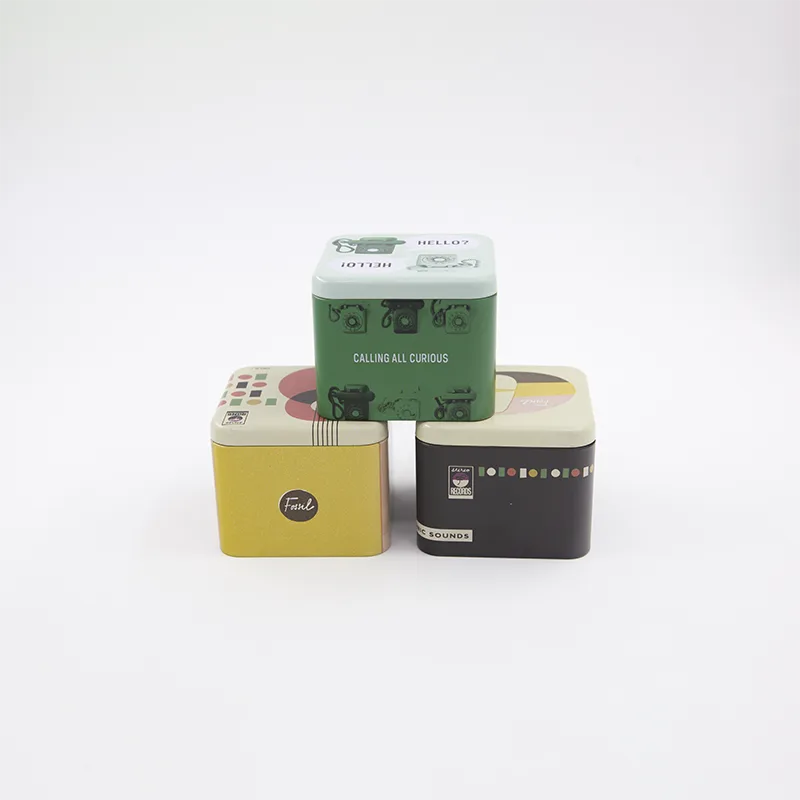
Choosing a factory metal packaging partner is not the same as choosing a commodity supplier. The factory you select will directly influence your product safety, shelf impact, lead times, defect rate, and—most importantly—how confidently your brand can scale.
This guide is written for brand owners and importers who need a repeatable way to evaluate a metal packaging partner for food, beverage, and cosmetic applications, as well as premium gift and promotional tins. It is intentionally practical: what to ask, what to verify, what to test, and what the red flags look like.
Table of Contents
Start With a Clear Definition of “Right” for Your Factory Metal Packaging Project
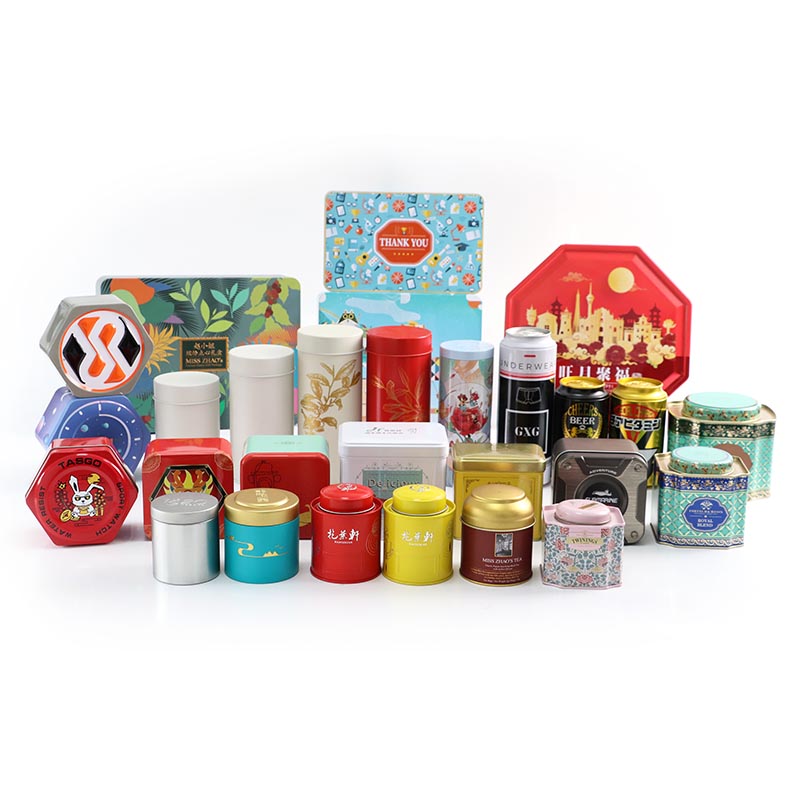
Before you compare factories, you need to define your own target. Otherwise, you will end up comparing quotes that are not truly comparable, and you may accidentally select a factory that is “cheap” only because it is building something different.
Clarify the end-use and compliance expectations
If your metal packaging touches food, beverages, supplements, or cosmetics, your baseline requirements should include food-contact compliance, coating suitability, and traceability. In the EU, the general safety and inertness principles for food contact materials are anchored in the framework Regulation (EC) No 1935/2004, and your packaging must be designed to comply with those principles. Food Safety+1
In the U.S., food-contact substances used in packaging typically need authorization, and FDA materials rules commonly relate to indirect food additives and food contact notifications. A factory that cannot speak clearly about these concepts is not ready for regulated metal packaging programs. U.S. Food and Drug Administration+1
Specify the format, structure, and user experience
“Metal packaging” includes many very different products: tinplate boxes, embossed decorative tins, aluminum containers, closures, and multi-component assemblies. Your RFQ should describe the structure in plain language (and drawings), including opening style, hinges, child-resistance (if applicable), and how the package will be handled by the consumer.
If you want a premium unboxing experience, your spec must also define tactile details: emboss depth, deboss sharpness, edge rolling, lid feel, and how tightly parts fit after repeated opening. Those details depend more on tooling, press control, and assembly discipline than on material thickness alone.
Define volumes, SKU complexity, and the timeline reality
A factory can look excellent for a 5,000-piece decorative tin and struggle badly at 500,000 units/month with multiple SKUs. Your selection criteria should match your scale plan, not only your launch plan.
Write down your expected annual volume, forecast variability, the number of SKUs and changeovers, and whether you need staggered shipments. These factors determine whether the “right” factory is a flexible specialty metal packaging factory or a high-throughput standardized producer.
Evaluate Manufacturing Capability Beyond “We Can Make It”
Many factories will say “yes” to almost everything. Your job is to confirm that their “yes” includes the correct equipment, process controls, and experienced operators.
Verify forming processes and tooling ownership
The core of many metal packaging products is forming: stamping, drawing, curling, seaming, beading, and edge rolling. Ask the factory to explain—in their own words—how they will form your structure and what the critical tolerances are.
Then ask who owns the tooling, where it is stored, and how it is maintained. If tooling ownership is unclear, you risk being locked in even if quality is unstable. A professional factory will have a documented tooling lifecycle plan, including preventive maintenance and wear criteria.
Confirm decoration capability and color control methods
Printing and decoration are where many metal packaging projects fail in the market, even if the box “functions.” You should verify:
- How color is matched (Pantone workflow, proofing method, and tolerances).
- Whether they use offset printing, digital printing, or hybrid workflows.
- How they control varnish, matte/gloss levels, and abrasion resistance.
Color consistency across multiple production runs is a process discipline problem, not a “one-time proof” problem. Ask for evidence: production samples from different months using the same artwork and ask them to explain what changed and what stayed controlled.
Inspect coating, lining, and chemical management processes
For food and cosmetic metal packaging, coatings and lacquers are not optional details. They influence corrosion resistance, odor neutrality, migration risk, and product compatibility.
A capable factory should be able to describe how coating materials are selected, how curing is controlled, how coating thickness is verified, and how chemical storage is managed. If they cannot explain the basics, you will spend your own time debugging issues after the first shipment.
Treat Quality Systems as Operational Proof, Not a Logo on a Certificate
Many factories hold certificates. Fewer factories operate a disciplined system every day. Your evaluation should focus on behavior and evidence.
Use ISO 9001 as a baseline—but verify how it’s implemented
ISO 9001 is widely used as a quality management framework, and it defines how an organization should maintain and improve its QMS. ISO
However, you should treat ISO 9001 as an entry ticket, not a final decision factor. Ask the factory to show a real corrective action record: a recent defect, root cause analysis, containment action, and prevention action. A “perfect factory” with no issues on paper is usually a factory that does not document honestly.
Demand traceability that matches your risk level
For regulated or high-value metal packaging, you should confirm traceability at least across:
- Material batch (tinplate/aluminum/coatings).
- Printing batch (inks/varnishes).
- Production lot (press line, shift, and inspection checkpoints).
- Packing and shipment records.
Traceability is what allows a factory to respond quickly if a customer complaint appears. Without it, your only tool is “rework everything,” which is expensive and slow.
Confirm the inspection plan and the acceptance criteria
Ask how they define critical-to-quality (CTQ) features for your metal packaging product. Then ask which checkpoints exist in the process: incoming inspection, in-process checks, final inspection, and pre-shipment inspection.
If they use AQL sampling, ask what AQL they use for critical defects versus minor cosmetic defects, and whether they can align with your brand standard. A factory that cannot articulate inspection logic is relying on luck.
Validate Food-Contact and Regulatory Compliance Early
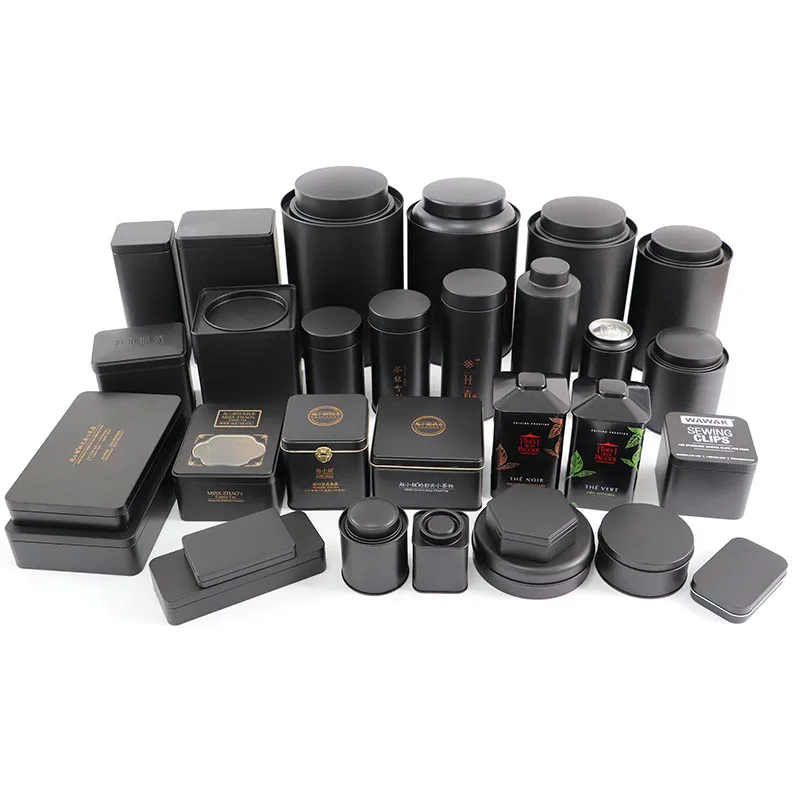
Compliance cannot be “added later.” It must be designed into materials selection, coatings, and process controls.
Understand the EU baseline and the factory’s compliance documentation
The European Commission’s food contact materials framework explains that Regulation (EC) No 1935/2004 sets general safety principles for all food contact materials. Food Safety
A capable metal packaging factory should be able to provide supporting declarations, test reports where appropriate, and an explanation of how they evaluate safety and suitability for the intended contact conditions (temperature, time, and food type). If they cannot speak about intended-use conditions, they are not managing compliance correctly.
Understand the U.S. baseline and how materials are authorized
FDA guidance for consumers highlights that food contact substances that are food additives must be authorized before marketing in the U.S., often via a food contact notification process. U.S. Food and Drug Administration
You do not need to become a regulatory specialist to select a factory, but you do need to confirm that the factory understands the compliance pathway and can support documentation requests. For many projects, this is the difference between a smooth import and a delayed launch.
Ask the right compatibility questions
For metal packaging that touches product, compatibility testing is practical risk control. You should discuss:
- Corrosion resistance (especially with acidic, salty, or oily foods).
- Odor transfer and taste neutrality.
- Coating performance under heat (hot-fill, retort, or warm storage conditions).
A factory that proactively asks these questions is usually a factory that has seen failures before and has learned how to prevent them.
Audit Against Recognized Packaging Standards When Applicable
If you are supplying large retailers, food brands, or regulated categories, third-party certification may be a requirement—not a preference.
Consider BRCGS Packaging Materials for packaging supply chains
BRCGS Packaging Materials is widely used as a benchmark for packaging manufacturing systems, and it is recognized by GFSI. BRCGS+1
If your metal packaging program sits inside a food supply chain that expects GFSI-benchmarked schemes, a factory familiar with BRCGS requirements will typically have stronger hygiene controls, documentation discipline, and risk assessment routines than a factory without structured audits.
Verify how “audited” the factory actually is
Some factories claim audits but only for a single workshop area or a limited product line. You should confirm:
- Which site address is audited.
- Which scope is covered (metal packaging product type).
- Whether the audit is current and whether nonconformities were closed.
A credible factory will share the audit scope and explain how their daily management system supports audit expectations, rather than treating audits as marketing.
Evaluate Sustainability and Responsibility as Supply Chain Risk Controls
Sustainability is not just brand storytelling. For global buyers, it is increasingly part of supplier approval, customer requirements, and long-term risk management.
Use ISO 14001 as evidence of environmental management maturity
ISO 14001 provides a recognized framework for environmental management systems and continuous improvement in environmental performance. ISO
For metal packaging, environmental management is relevant because production involves inks, coatings, metal scrap handling, wastewater control (where applicable), and energy usage. A factory with a functioning ISO 14001 system is more likely to manage these risks predictably.
Understand real recycling dynamics of metals (and don’t oversimplify)
Steel packaging is often described as highly recyclable, and industry sources note that steel cans are among the most recycled food and beverage containers in many regions. WorldAutoSteel
Aluminum is also highly recyclable, and the International Aluminium Institute estimates that roughly three quarters of all aluminum ever produced remains in use today due to recycling and long service life. International Aluminium Institute+1
At the same time, recycling performance is not automatic. For example, U.S. aluminum beverage can recycling outcomes have been reported as materially below long-term averages in recent KPI reporting, reinforcing that infrastructure and collection systems matter. Aluminum Association+1
Check social compliance expectations for global brands
If you sell into global retail, you may need social audits. SMETA is a widely used audit methodology and is positioned by Sedex as an on-site assessment against ETI Base Code, ILO Conventions, and local law. Sedex
Some programs also reference standards like SA8000 for social accountability and worker treatment systems. SAI
You do not need every certificate, but you should match your factory’s social compliance maturity to your customers’ expectations. A factory that cannot support basic responsible sourcing requirements can become a hidden growth ceiling.
Assess Engineering Support and DFM: The Fastest Path to Lower Cost and Better Quality

The best metal packaging factories do not only produce. They help you simplify structure, reduce risk, and stabilize production.
Evaluate their ability to translate a brand idea into a manufacturable structure
If you have only a concept rendering, you need a factory with packaging engineering capability: converting artwork and concept into dielines, forming logic, tolerance planning, and realistic assembly steps.
Ask to see prior examples where the factory improved a design for manufacturability (DFM) and explain what changed. If their “engineering” is only copying a prior mold, you will not get meaningful support when you want something new.
Confirm prototyping speed and sampling discipline
Sampling is where schedule risk lives. A professional factory will define a sampling path such as:
- Pre-production sample (material and structure confirmation).
- Color proof / digital proof (art direction alignment).
- Golden sample (final approved reference).
- Pilot run sample (process stability confirmation).
Each stage should have clear acceptance criteria, and the factory should treat the golden sample as a controlled reference for production, not as a one-time approval artifact.
Ask how they control variation in assembly-heavy metal packaging
Premium tins often include EVA foam, PET trays, paper inserts, magnets, windows, and multi-piece assemblies. Assembly-heavy products fail when small variations stack up.
Ask the factory how they prevent tolerance stacking issues, how they train assembly operators, and what their rework process is. If their answer is “we will be careful,” that is not a process.
Compare Quotes Using Total Cost of Ownership, Not Unit Price
A low unit price can hide expensive realities: slow sampling, unstable quality, high defect rates, weak packaging, and inconsistent lead times.
Break the quote into understandable components
A clean quote for metal packaging should separate:
- Tooling (and whether it is refundable or amortized).
- Material and coating assumptions.
- Printing method and color count assumptions.
- Packing method (inner polybag, cartons, pallets).
- Incoterms and shipping assumptions.
If a quote is a single number with no structure, you cannot manage risk. It also suggests the factory is not used to professional procurement workflows.
Verify MOQ logic and how they handle mixed-SKU production
Some factories offer low MOQ but cannot hold color consistency across multiple small runs. Others require high MOQ but deliver exceptional stability.
The “right” decision depends on your launch strategy and cash flow. Ask whether the factory can consolidate multiple SKUs in one container, how they handle changeovers, and how they control cross-contamination (especially for food-contact metal packaging with different coatings or inks).
Align payment terms with risk and performance milestones
Payment terms are not just financial. They are project control tools. Common risk-reducing approaches include tying part of payment to pre-shipment inspection pass, or using staged payments aligned with sampling approvals.
A reliable factory will discuss these topics rationally and will not treat every request as distrust. The goal is to create a working system where both sides win when quality is stable.
Test Communication, Transparency, and Project Management Discipline
In cross-border metal packaging supply chains, communication quality often predicts product quality.
Evaluate responsiveness with technical questions, not only sales questions
Send a short technical checklist and observe the response quality. For example:
- What tinplate/aluminum grade do you propose and why?
- What coating is recommended for this product type and filling condition?
- What are the key tolerances that affect lid fit and sealing behavior?
- How do you prevent scratches during packing?
A factory that answers clearly (or asks clarifying questions) is signaling engineering engagement. A factory that gives vague marketing statements is signaling future delays.
Confirm production visibility and change control
When artwork changes or structure changes, you need formal change control. Ask how they manage revision numbers for artwork, dielines, and tooling.
Also ask whether they can provide production photos, in-process inspection records, and shipment packing lists in a consistent format. These details feel administrative until the first problem happens, and then they become essential.
Ask for a realistic lead-time model
A strong factory will break lead time into phases: tooling, sampling, material procurement, printing plate preparation (if applicable), production, assembly, packing, and QC.
If a factory promises extremely fast lead times without explaining how they do it, you should assume the timeline will slip later. In metal packaging, realism beats optimism.
Reduce Long-Term Risk: Capacity, Continuity, and IP Protection
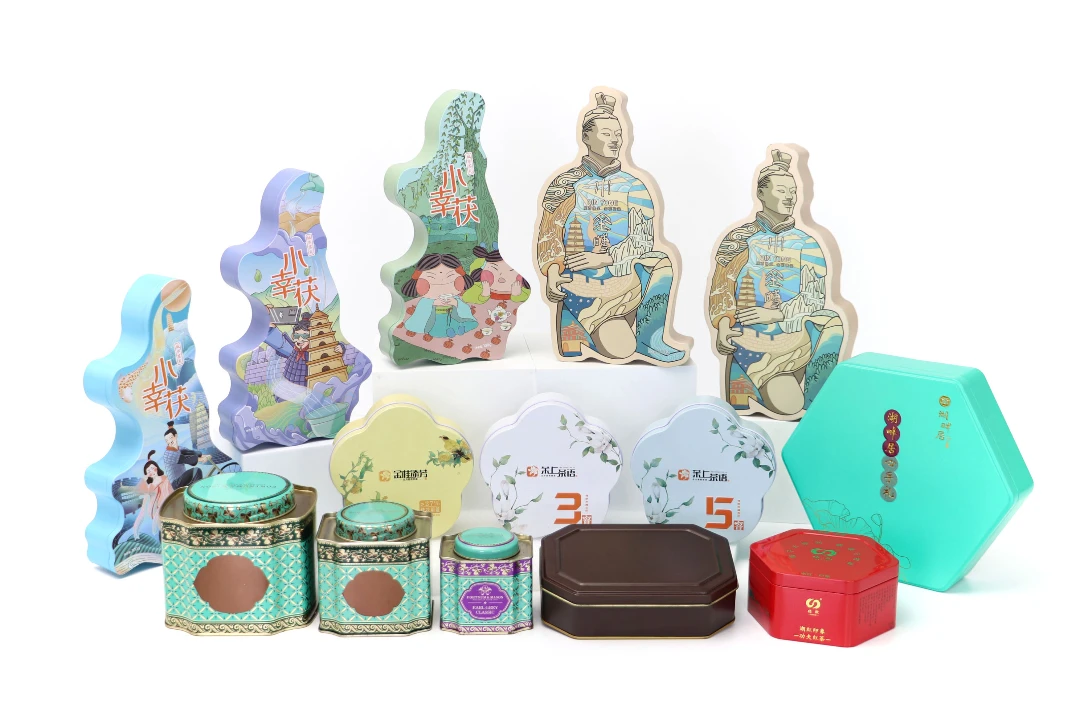
A factory can deliver one good shipment and still be the wrong partner long term. Your selection process should test resilience.
Confirm capacity planning and peak-season behavior
Ask what their peak seasons are and how they allocate capacity among customers. Also ask whether they can support surge volume and what happens if demand doubles.
A factory that cannot explain capacity planning usually relies on overtime and last-minute decisions. That is where defects grow.
Ensure backup plans for materials and critical processes
If your metal packaging depends on a specific lacquer, a specific tinplate thickness, or a specific printing method, ask whether they have qualified alternatives and how they validate substitutions.
This is not pessimism. It is supply chain professionalism. Factories that can manage substitution with control are safer partners when the market shifts.
Address IP and exclusivity carefully (and in writing)
If you are developing a signature tin shape or brand-defining structure, you should clarify who owns the tooling, whether the design is exclusive, and how files are controlled.
A trustworthy factory will not be offended by professional IP questions. They will treat it as standard commercial practice, because it is.
A Practical Factory Selection Scorecard for Metal Packaging Buyers
To make this actionable, use a simple weighted scorecard. You can rate each factory from 1–5 on the categories below, then compare the total.
Product fit and capability (structure + decoration)
Rate how well the factory’s equipment, tooling approach, and decoration capability match your product. Include evidence from samples and process explanations, not only brochures.
A factory that has produced similar metal packaging successfully is usually lower risk than a factory that is “excited to try.” Innovation is possible, but you should price and schedule it as development work.
Quality system maturity and documentation
Rate their QMS behavior: traceability, corrective actions, inspection logic, and willingness to share real records. Use ISO 9001 as baseline context, but score based on operational proof. ISO
If they can show real, recent examples of problem-solving, you are likely to get a partner who improves over time.
Compliance readiness (food-contact, chemical, and audit support)
Rate their understanding of EU and U.S. compliance concepts and their ability to support documentation requests. This is especially critical for food and beverage metal packaging programs. Food Safety+1
If your customers require packaging audits, include whether they align with recognized packaging standards like BRCGS Packaging Materials and whether their audit scope matches your product line. BRCGS
Delivery reliability and communication quality
Rate responsiveness, clarity, timeline realism, and how well they manage revisions and approvals. These are leading indicators of whether your project will feel stable or chaotic.
If communication is weak during quoting, it will not improve when production is under pressure.
How MrTinBox Supports Global Buyers Selecting Metal Packaging Factories
At MrTinBox (www.mrtinbox.com), we work with global brands that need dependable metal packaging for food, beverage, cosmetics, and premium gifting. Our approach is built around three practical commitments.
We align your design with manufacturability and brand impact
We focus on translating brand ideas into stable production outcomes. That means design-for-manufacture guidance, sampling discipline, and clear golden sample control so your production matches what you approved.
We also help you balance decoration, structure, and cost so you do not overpay for features the consumer will never notice, while protecting the details that make your brand feel premium.
We treat quality and traceability as part of the product
Metal packaging is judged by how it looks and feels, but it must also ship consistently across batches. We emphasize traceability, defined inspection checkpoints, and a clear approach to corrective actions when issues occur.
This is the difference between “a good first shipment” and a factory partnership you can scale with confidence.
We support compliance-minded packaging programs
When your packaging requires food-contact awareness or audit readiness, you need a partner who treats compliance as a design input, not a last-minute paperwork exercise. We align projects with the documentation and testing expectations common in global trade, including the reality that EU and U.S. rules operate differently. Food Safety+1
Next Step: Get a Factory-Comparable RFQ That Protects Your Timeline
If you want, you can send us your target packaging type (photos or sketches are fine), approximate size, annual volume estimate, and decoration requirements. We will help you convert that into a factory-comparable RFQ package—so you can evaluate metal packaging factories on evidence, not promises.
When you select the right metal packaging factory, you are not only purchasing a container. You are purchasing predictability, brand consistency, and the ability to scale without unpleasant surprises.