In competitive consumer markets, metal packaging is one of the few packaging choices that improves two outcomes at once: it helps products stay fresher for longer, and it makes the brand look and feel more premium in the customer’s hands. That combination is why metal tins, cans, and metal-hybrid structures remain a go-to solution for food, beverage, personal care, gift sets, and premium lifestyle products—even as packaging trends change quickly.
This article explains (in plain language) how metal packaging extends shelf life through real barrier performance and reliable sealing, and how it builds brand value through tactile cues, surface decoration, and sustainability signals that customers increasingly recognize.
Table of Contents
Shelf life is not a guess—it is a controllable system
Shelf life depends on what gets in and what stays out
When products lose quality, the cause is usually predictable: oxygen drives oxidation and stale flavors, light triggers color and nutrient changes, and moisture ruins texture or causes clumping. Packaging cannot “fix” a weak formulation, but it can remove the most common external triggers that shorten shelf life. A key role of packaging is to prevent light, moisture, oxygen, and microorganisms from damaging product quality over time. PMC
With metal packaging, the material itself is a strong starting point because metals can create a near-complete barrier when designed and sealed correctly. That is fundamentally different from many polymer packages, where shelf life relies heavily on film thickness, coatings, and how quickly gases or water vapor permeate the structure.
“Shelf-stable” has a technical meaning
In regulated food categories, “shelf-stable” is closely tied to commercial sterility and hermetic sealing, not marketing language. Codex defines canned food as commercially sterile food in hermetically sealed containers. FAOHome In U.S. regulation, a hermetically sealed container is designed to be secure against the entry of microorganisms and maintain commercial sterility after processing. eCFR
Metal cans and properly engineered tins are widely used because they are compatible with these requirements and with proven thermal processes (such as retort), which is a major reason they support long shelf life in real distribution conditions.
How metal packaging blocks oxygen, light, and moisture better
Oxygen control: protecting flavor, color, and actives
Oxygen is responsible for many “quality drift” problems: rancidity in fats, aroma loss in coffee and tea, and discoloration in sensitive ingredients. Metal packaging helps because it can form a continuous barrier that reduces oxygen ingress dramatically compared with many common packaging plastics (which always have some permeability). A technical review on metal packaging highlights the packaging role in preventing oxygen and other deteriorating factors from impacting shelf life. PMC
In practical terms, this is why premium coffee, matcha, confectionery, nutraceutical powders, and high-value dry goods often shift toward tins or composite structures that include metal layers.
Light control: preventing photo-degradation
Light—especially UV and high-energy visible wavelengths—can break down pigments, vitamins, fragrances, and some plant-based compounds. Metal is naturally opaque, so metal packaging can remove light exposure as a shelf-life variable instead of trying to “manage” it with tinted plastics or secondary cartons.
For brands, this matters because it makes product performance more consistent across retail environments. Shelf lighting, window exposure, and long-distance shipping stop being quality risks when the primary pack is a strong light barrier.
Moisture and aroma control: texture and “first-open” experience
Moisture ingress is what turns crunchy products soft, causes powders to cake, and reduces the “fresh-open” aroma that customers expect. Metal structures and metal layers are widely used as barrier components in high-performance packaging systems, including certain flexible laminations (for example, where aluminum foil acts as a barrier layer). U.S. Food and Drug Administration
This is one reason metal packaging is common in premium gift sets: it protects the sensory experience so the product still feels “new” at the moment of opening—days or months after purchase.
Hermetic sealing is the shelf-life advantage most brands underestimate
What “hermetic” really means in food and sensitive products
A hermetic container is not just “tight.” It is designed to prevent microorganism entry and maintain sterility after processing. eCFR+1 This concept is central to why many canned products can be distributed and stored at room temperature for extended periods without spoilage, assuming correct processing and intact seams/closures.
When brands move from flexible packs to metal cans or metal tins with engineered closures, they are often buying process certainty. That certainty reduces customer complaints, returns, and quality variation between lots.
Retort and shelf-stable storage: proven industrial reality
Retort processing and commercial sterilization are established methods that allow packaged foods to be stored at room temperature for long periods in hermetically sealed containers. PMC+1 For many categories, quality guidance commonly references multi-year windows (often around 2–5 years for best quality depending on product type and storage), which is a practical benchmark many buyers already understand.
From a brand perspective, long shelf life reduces risk in global distribution. It also supports slower-moving premium SKUs that still need to arrive in perfect condition.
Longer shelf life reduces waste and strengthens the supply chain

Food waste is a massive global cost—and packaging is part of the solution
Food waste is not a small problem at the margins; global estimates show a substantial portion of food is lost or wasted, creating economic loss and environmental impact. FAO has long highlighted the scale of global food losses and waste. FAOHome UNEP’s Food Waste Index reporting provides additional global measurement and encourages action aligned with SDG 12.3. UNEP – UN Environment Programme+1
Metal packaging supports shelf life in a way that can reduce downstream waste in retail and households—especially for products that otherwise spoil quickly or degrade in quality before consumption.
Shelf life also reduces operational friction
Beyond sustainability messaging, longer shelf life improves day-to-day operations:
- It reduces write-offs from expired inventory. It also lowers the need for frequent markdown cycles that train customers to wait for discounts.
- It improves resilience for export, where port delays and customs holds are real-world variables. It also helps brands maintain quality even when last-mile delivery is slow.
In many categories, the true ROI of metal packaging is not only the packaging itself, but the reduction in hidden costs across the supply chain.
Metal packaging communicates “premium” before the customer reads a word
Customers decide fast, and packaging does heavy lifting
In physical retail, the packaging is often the first brand touchpoint. Survey research has found that many consumers say packaging design influences purchase decisions, and that packaging materials also play a role in that influence. Ipsos
That matters because metal packaging is immediately legible as “more valuable.” The weight, cool touch, and solid sound of a tin create a perception of quality that thin plastics struggle to match, even with excellent graphic design.
Tactile cues increase trust
Premium brands compete on trust: “Is this product authentic?” “Is it protected?” “Will it perform?” Metal helps answer those questions without extra claims. A rigid metal body resists crushing, protects corners, and signals durability—especially important for gifts, cosmetics, confectionery, candles, and collector-style products.
For many buyers, the package itself becomes part of the product value, not just a container.
Decoration and finishes: brand value you can see and feel
Metal gives you a high-definition canvas
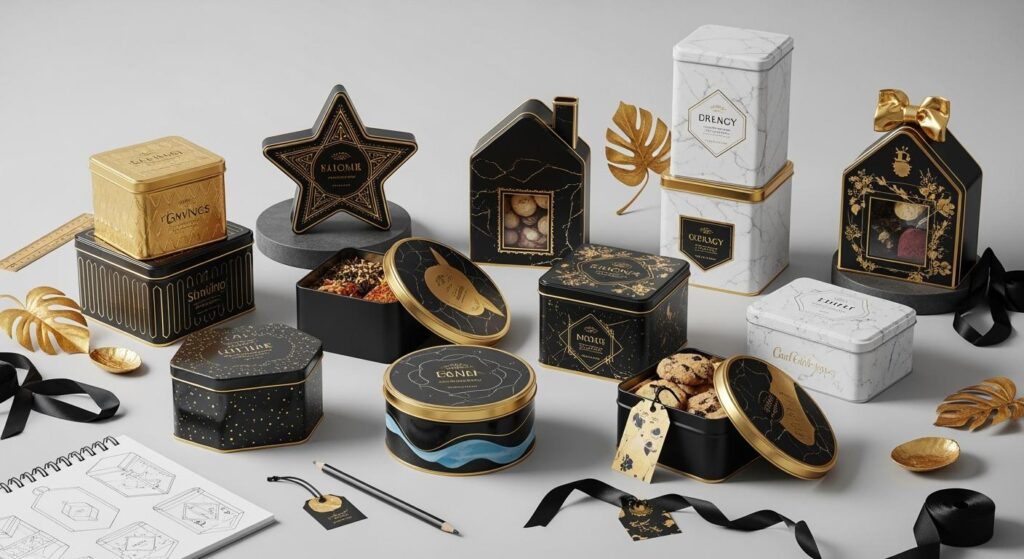
A major advantage of metal packaging is the ability to combine barrier performance with standout appearance. High-quality tins can support precise printing and premium finishes that hold up in transit and storage better than many paper-based decorative packs.
Common premium options include:
- Embossing / debossing for tactile logos and patterns. These features add “touch memory,” which strengthens recall.
- Spot gloss, matte varnish, soft-touch feel, and metallic effects. These finishes help brands create contrast and visual hierarchy without clutter.
The unboxing becomes a repeatable experience
Brands often focus on the first sale, but metal tins are also excellent for repeat value. Customers reuse tins for storage, gifting, or display, which extends brand exposure far beyond the purchase moment. That ongoing visibility is one reason metal packaging performs well for seasonal collections and limited editions.
When the package stays in the customer’s home, the brand stays there too.
Engineering details that protect quality (and protect your reputation)

Material selection: tinplate vs aluminum and why it matters
Not all metal packages perform the same. Tinplate and aluminum each have strengths depending on product, decoration, and structure.
- Tinplate is widely used for formed tins and many food cans due to strength and forming behavior. It supports deep drawing, stamping, and complex shapes.
- Aluminum is lightweight and widely recycled; it’s also used in cans, closures, and barrier layers in laminates. Public industry data highlights the energy advantage of recycled aluminum compared with primary production. International Aluminium Institute+1
Selecting the correct metal is part of shelf-life design, not only cost design.
Coatings and linings: keeping product and metal compatible
For many foods and personal care products, internal coatings prevent corrosion and protect product taste/odor stability. Regulation and market expectations also evolve, so brands need compliant systems.
For example, the EU adopted a ban on BPA in food contact materials in December 2024, with the legal framework set out in Regulation (EU) 2024/3190 and related Commission communications. Food Safety+1 In the U.S., FDA information describes specific regulatory actions related to BPA-based epoxy resins in certain food contact applications. U.S. Food and Drug Administration
The takeaway is practical: metal packaging can support long shelf life, but only when the lining/coating system matches the product chemistry and target market requirements.
Closures and seams: where shelf life is won or lost
For tins and cans, the closure is not a small detail—it is the quality gate. Double seams, gaskets, and lid fits determine whether the package remains airtight and tamper-resistant across shipping vibration, temperature cycles, and customer handling.
This is why professional metal packaging suppliers invest heavily in closure engineering and inspection standards. A premium decoration means little if the closure does not protect the product.
Sustainability: metal packaging aligns with circular-economy expectations
Recycling performance is a real market signal
Sustainability claims must be credible, and metal has a strong story when measured properly. Eurostat reports EU progress toward packaging recycling targets and provides transparent statistics on recycling rates. European Commission For steel packaging specifically, industry reporting has highlighted high EU recycling rates (using standardized methodology). steelforpackagingeurope.eu+1
For aluminum beverage cans, industry and trade reporting show both strong global performance and uneven regional outcomes (for example, U.S. recycling rates versus global averages), which brands should consider when making market-specific claims. aluminum.org+1
Energy and emissions: why “recycled content” matters
Recycling is not only about landfill reduction; it is also about energy and emissions. The International Aluminium Institute and the Aluminum Association describe that recycled aluminum saves about 95% of the energy compared with primary production, which is a major lever for lower lifecycle impact. International Aluminium Institute+1 Worldsteel highlights the role of scrap and notes that steel can be recycled repeatedly without loss of quality, and provides quantified resource and emissions benefits associated with scrap use. worldsteel.org+1
For premium brands, this enables a stronger sustainability narrative when paired with transparent labeling and responsible sourcing.
Brand value is also about what buyers are willing to pay for
Consumers increasingly reward sustainable packaging
Willingness to pay is not uniform across categories, but consumer research indicates that some segments will pay more for sustainable packaging—especially when the packaging looks and feels premium and “reusable,” not disposable. McKinsey’s global consumer research discusses willingness-to-pay dynamics for sustainable packaging and how it varies by geography and segment. McKinsey & Company
In other words, metal packaging can add brand value not only through appearance, but also through a sustainability signal that customers recognize and trust.
Premium does not mean “expensive”—it means “worth it”
For many products, the packaging cost increase is small relative to the lifetime value of a loyal customer. If metal packaging reduces quality complaints, improves first impressions, and strengthens repeat purchase intent, then it becomes a profit lever rather than an expense line.
This is especially true in high-margin categories like cosmetics gift sets, confectionery, limited editions, and branded merchandise.
Where metal packaging performs best across product categories
Food and beverage: protection and compliance
Metal packaging is a strong match for:
- Coffee, tea, cocoa, and powdered beverages that degrade with oxygen and moisture exposure. Metal helps preserve aroma and texture.
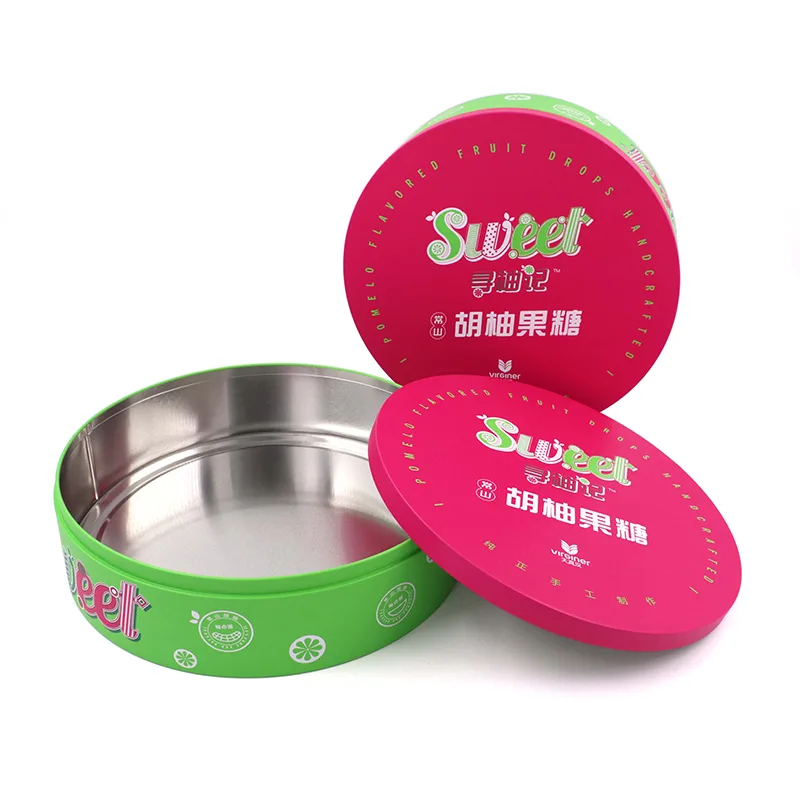
- Confectionery and baked snacks where crispness and odor protection matter. Metal reduces moisture ingress and protects shape during shipping.
- Shelf-stable meals, sauces, and proteins where hermetic sealing and thermal processing are key. Regulatory frameworks and guidance focus on these principles for shelf-stable safety. U.S. Food and Drug Administration+1
Personal care and lifestyle products: premium feel and reuse
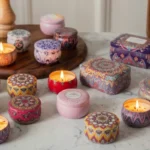
Tins are widely used for balms, solid perfumes, candles, grooming kits, and gift bundles because the package can become a reusable object. That “keepsake” effect is a direct brand-value multiplier.
Promotional and seasonal: differentiation at the point of sale
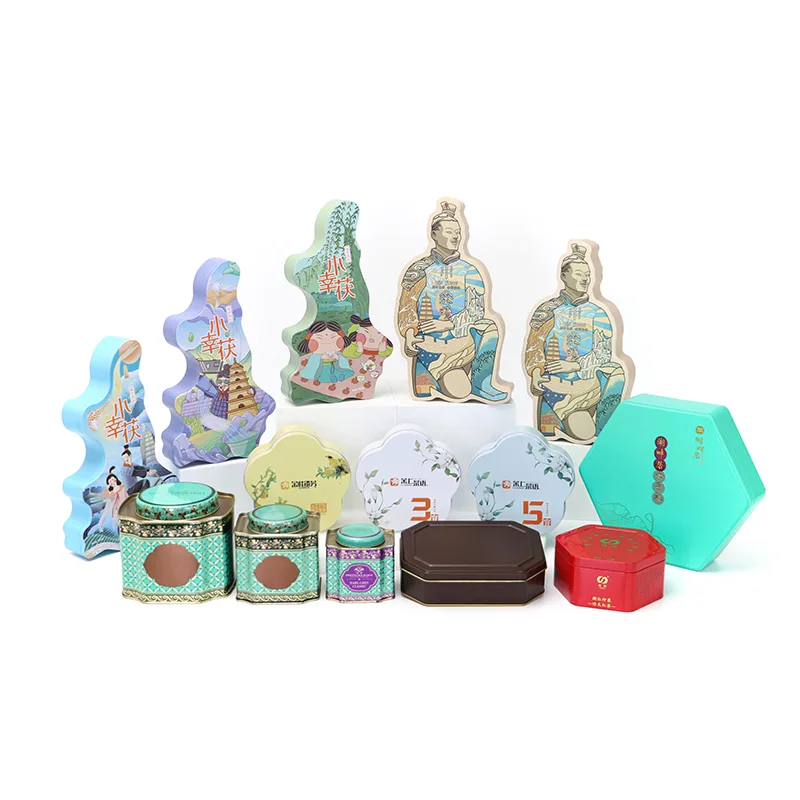
When brands need instant shelf impact—holiday launches, collaborations, anniversary editions—metal packaging provides both visual differentiation and a collectible feel. It is also easier to create consistent premium presentation across different retailers because the primary pack is rigid and stable.
How to choose the right metal packaging for your brand
Start with the product’s real sensitivity
Before choosing a shape or finish, define what you must protect:
- Is oxygen the primary enemy (aroma loss, rancidity, oxidation)?
- Is light the primary enemy (color fade, active degradation)?
- Is moisture the primary enemy (caking, softness, texture loss)?
This simple checklist determines whether you need a fully metal structure, a metal tin with engineered closure, or a hybrid design with a metal barrier layer.
Align structure, decoration, and manufacturing early
Premium branding fails when design and manufacturing are separated. For example, embossing depth, corner radii, hinge structures, and lid fit tolerances all interact. The best outcomes happen when the packaging factory and the brand align on structure and decoration from the beginning—prototype early, validate closure performance, and then finalize artwork and finishes.
That workflow reduces rework, shortens development time, and protects the launch schedule.
Make claims you can defend
If you market sustainability or shelf-life improvements, ensure your claims match the market and the evidence. Recycling rates and regulatory requirements vary by region, and credible sources should guide your language. European Commission+2aluminum.org+2
This is not only about compliance—it is about long-term trust.
Why MrTinBox focuses on metal packaging that sells and protects
A metal tin should do more than “look nice.” The best metal packaging is engineered to protect product quality, survive real logistics, and elevate the brand experience in a way customers feel immediately.
At MrTinBox, the practical goal is simple: help brands choose and customize metal packaging that improves shelf life performance and increases perceived value—through the right structure, the right closure, and the right decoration strategy for the category. When those elements align, metal packaging becomes a growth tool, not just a container.
If you are planning a new SKU, a premium upgrade, or a seasonal collection, the fastest path is to start with product sensitivity and brand positioning, then select a metal packaging structure that makes both outcomes stronger: longer shelf life and higher brand value.