

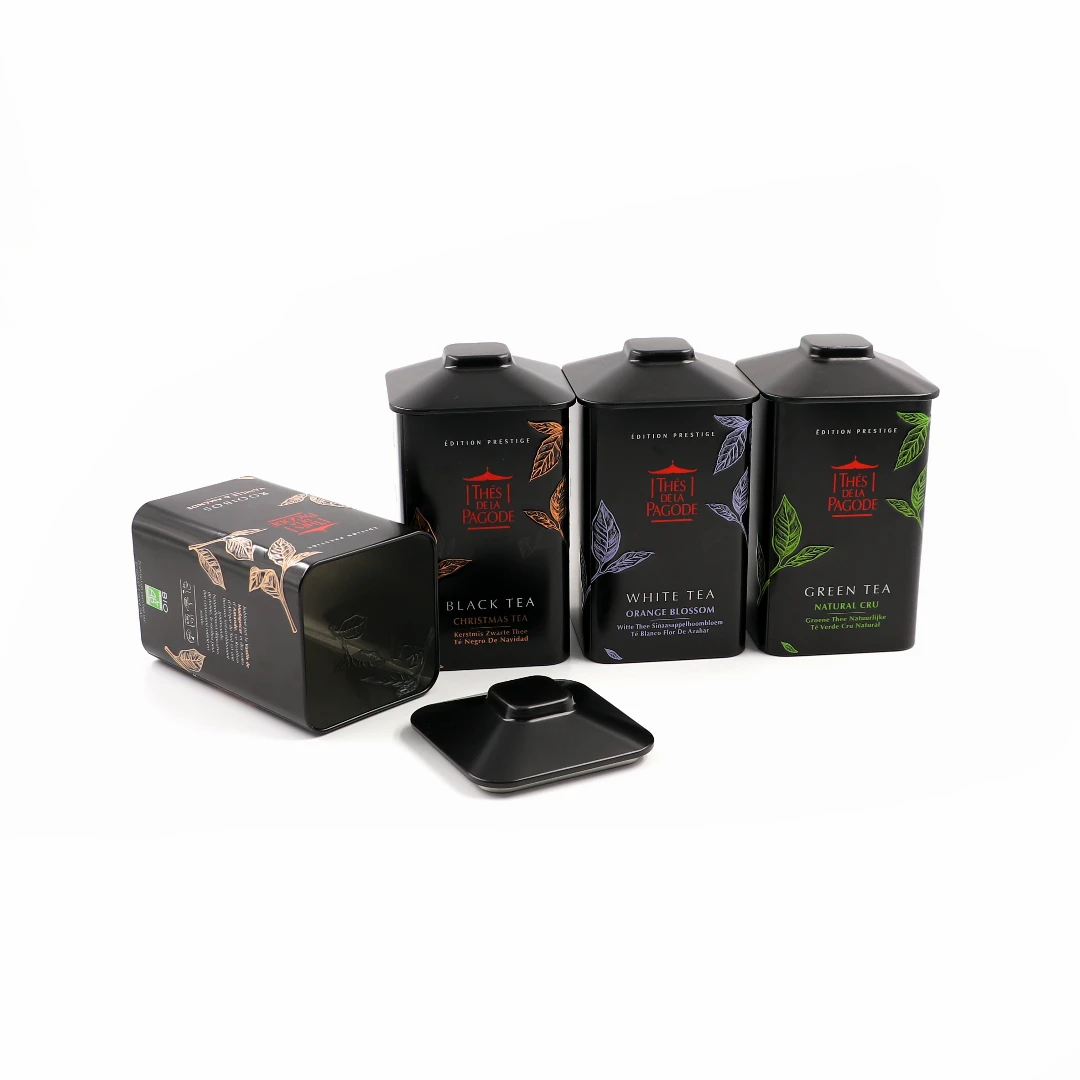

Coffee and tea are sensory products. The moment roasted beans or delicate tea leaves meet oxygen, moisture, heat, and light, their aroma starts drifting away. That’s why brands that care about repeat purchases increasingly choose an airtight metal tin box with lid as their “last line of defense” on the shelf and in the customer’s kitchen—protecting freshness while looking premium in photos, gift sets, and unboxing videos.
At MrTinBox (mrtinbox.com), we design and manufacture custom metal tin box with lid packaging for coffee and tea brands worldwide. This guide explains what “airtight” really means, how lid structures affect freshness, which materials and coatings are safest, and how to build a tin that sells—without overcomplicating the engineering.
Table of Contents
Why Coffee and Tea Need an Airtight Metal Tin Box with Lid
Coffee freshness is a race against oxygen
Roasted coffee is highly sensitive to oxygen exposure, and oxidation is one of the biggest drivers of staling. Industry literature and professional coffee organizations consistently point to oxygen availability as a key factor affecting shelf life and flavor changes over time. Specialty Coffee Association+1
When you choose a well-designed metal tin box with lid, you’re reducing oxygen exchange and slowing down that “flat, papery” taste customers complain about after a bag sits open for days.
Tea is vulnerable to moisture, light, and odor absorption
Tea leaves and herbal blends can quickly pick up moisture and surrounding odors, which dulls aroma and can cause quality deterioration. Storage guidance often stresses keeping tea in a cool, dry place and away from heat and direct sun. o-cha.net+1
A properly sealed airtight metal tin box with lid also blocks light and helps prevent “kitchen smell contamination” (spices, detergents, perfumes) that ruins delicate teas.
Premium packaging changes buying behavior
A tin is not just a container. It’s a perceived-value upgrade: reusable, giftable, and display-friendly. For many brands, a custom tin lifts the product into a higher price tier while improving customer retention because the tin becomes part of the daily ritual.
What “Airtight” Really Means for a Metal Tin Box with Lid
“Airtight” is a performance target, not a single lid style
In packaging, “airtight” can mean different things depending on the product and distribution time. Some brands want a strong everyday seal for home use, while others want a near-hermetic seal for longer shelf life. Coffee and tea often sit in warehouses, on retail shelves, and in customer kitchens—so your airtight goal should match the journey.
Why not all tins are equally sealing
A simple slip lid may be “tight-fitting,” but it may not be truly airtight at a technical level. To improve sealing, you typically need one or more of the following: a gasket/liner, a precision fit, a screw structure, or a secondary sealing method (like shrink bands for tamper evidence). Good design is about choosing the right combination without making the tin hard to open.
Coffee degassing matters
Fresh coffee releases CO₂ after roasting. Many coffee bags use one-way valves for that reason. A tin can still work beautifully, but the correct approach depends on whether you pack beans right after roasting or after a controlled rest, and whether you use an inner bag. Professional coffee sources discuss freshness, gas, and oxygen control as part of preserving quality. Specialty Coffee Association
Lid Styles That Make a Metal Tin Box with Lid “Airtight” for Coffee and Tea
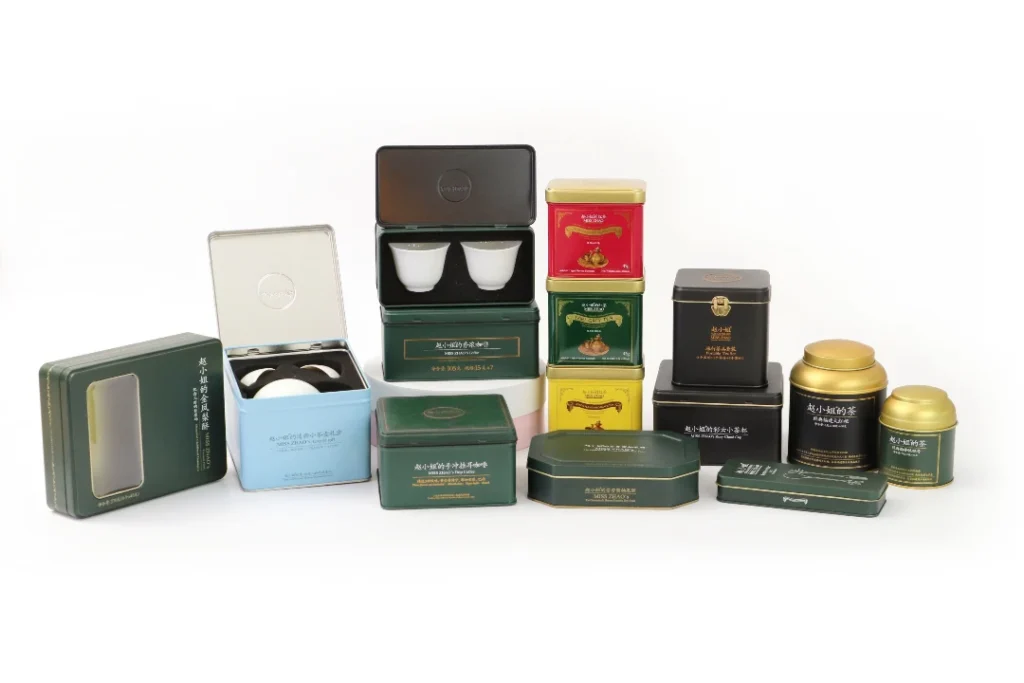
Press-fit lid with food-grade liner
A press-fit (friction) lid is popular because it’s simple, fast, and cost-effective. Add a food-grade liner (foam or silicone-style gasket) and you can dramatically improve the everyday seal. This is often the best balance for tea tins and many coffee gift tins.
Screw lid for strong repeatable sealing
Screw lids provide consistent closure force and are easier to standardize in mass production. For customers who open and close the tin multiple times a day, screw lids reduce seal variability and help maintain a stable internal environment.
Hinged lid with inner plug or gasket
Hinged tins look premium and are convenient for gifting. If you want “airtight-like” performance, we typically design an inner plug lid (or a gasketed closure) so the hinge is about usability while the inner seal is about protection.
Clamp-style or latch-style sealing for specialty programs
For premium tea programs or artisanal coffee storage sets, clamp/latch structures can create a satisfying tactile “seal moment.” They can also support thicker gaskets, improving sealing—though they add cost and require tighter tolerance control.
Tinplate vs Aluminum: Choosing the Right Metal for Coffee and Tea Tins
Tinplate is the classic choice for food tins
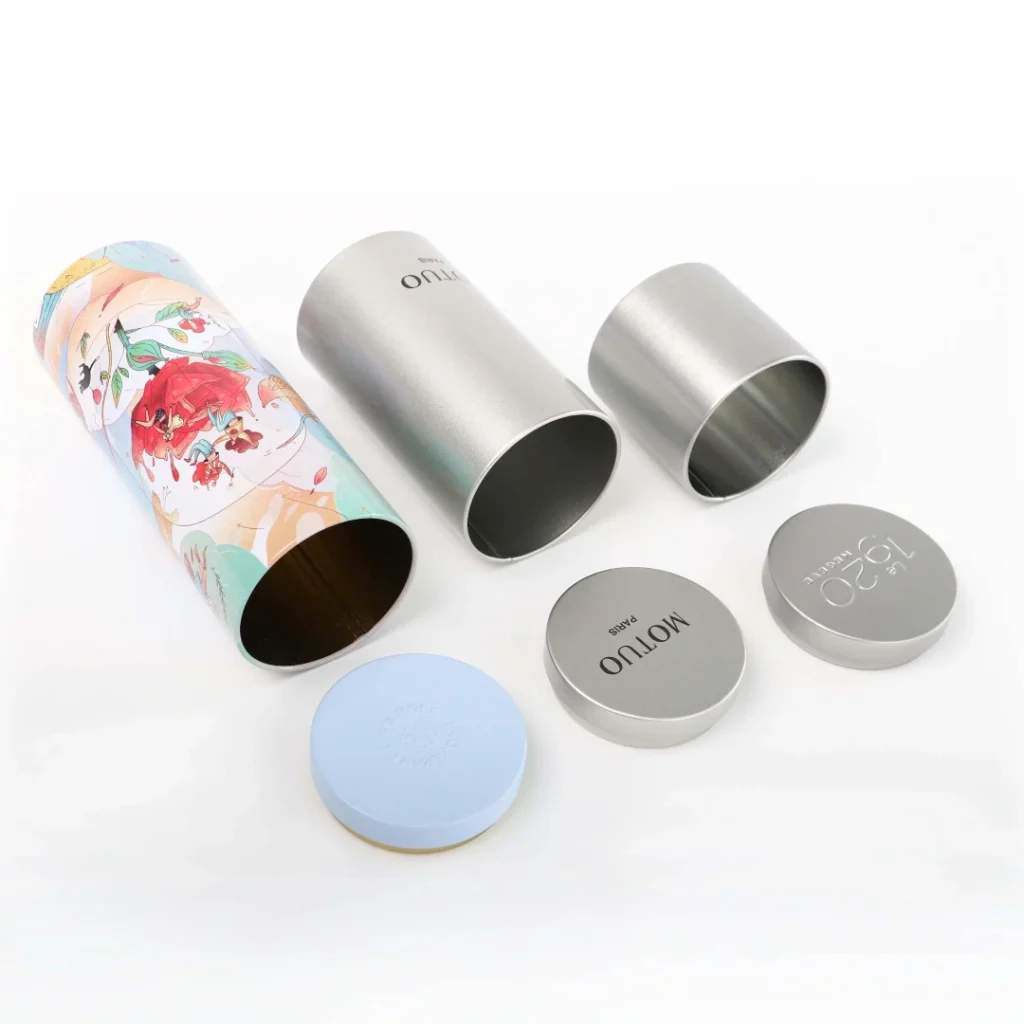
Tinplate (tin-coated steel) is widely used in packaging applications. Industry references describe tinplate’s typical processing form, thickness ranges, and widespread use in packaging. World Steel Association
For coffee and tea, tinplate offers strong rigidity, excellent print/finish compatibility, and a familiar premium feel.
Aluminum is lightweight and corrosion-resistant for certain products
Aluminum is common in packaging, but real-world performance still depends on the product, the coating system, and the environment. Some discussions note aluminum’s suitability for food contact with appropriate considerations for corrosion and use conditions. desjardin.fr
If your brand is focused on lightweight shipping, sleek modern aesthetics, or certain lid structures, aluminum can be an excellent option.
The practical decision comes down to: product + lifestyle + branding
Coffee brands often prioritize rigidity, premium printing, and reuse. Tea brands often prioritize aroma protection and light blocking. Both can be achieved with either metal if the structure and coating are engineered correctly, so we treat “material” as part of a full packaging system—not a single checkbox.
Food-Safe Coatings and Liners for an Airtight Metal Tin Box with Lid
Why coatings matter
Coffee and tea are aroma-sensitive. Even if the metal is safe, you still need the correct internal coating to prevent metallic odor, corrosion risk, or flavor interaction. Coatings used on metal substrates for food-contact applications are governed by compliance requirements and good manufacturing practices.
U.S. and EU compliance frameworks you should know
In the U.S., coatings and components used for food-contact surfaces are commonly referenced under FDA-related frameworks, including parts of 21 CFR that address coatings used in food contact. eCFR
In the EU, the overarching framework for materials intended to contact food is Regulation (EC) No 1935/2004, which sets general safety principles for food contact materials. EUR-Lex+1
Good Manufacturing Practice is part of “food-grade”
Beyond material selection, process control matters. The EU also has a GMP regulation for materials and articles intended to contact food, which emphasizes controlled manufacturing, processing, and distribution. EUR-Lex+1
For buyers, this means you should evaluate not only the tin design, but also whether the supplier’s quality system can consistently reproduce the same safe result at scale.
How an Airtight Metal Tin Box with Lid Protects Aroma Better Than Many Alternatives
Strong barrier against light
Unlike clear jars, a metal tin blocks light completely. That matters for both coffee oils and delicate teas, because light accelerates quality loss and aroma fading. Many coffee storage guides highlight that the “enemies” include air and light—so opaque, airtight storage is a practical upgrade. NCA – About Coffee+1
Low odor transfer and strong “container neutrality”
Tea can easily absorb nearby smells, and coffee can pick up cabinet odors too. Many storage recommendations advise keeping products in containers that prevent odor exposure and stay in cool, dry, dark environments. The Herb Society of America Blog+1
A well-coated metal tin with a proper liner helps keep the container “neutral,” so customers taste the product—not the packaging.
Better everyday ritual = better customer loyalty
When customers have a dedicated tin on the counter, they open it more carefully, close it more consistently, and treat the product as premium. That behavioral change can protect freshness as much as the engineering does, because good packaging encourages good habits.
Designing True Freshness: “Tin + Inner Pack” Systems for Coffee and Tea
Why many coffee brands use an inner bag inside the tin
For roasted coffee, the best freshness systems often combine an inner high-barrier bag (sometimes with a one-way valve) plus the outer tin for light blocking, reuse, and branding. Coffee freshness articles discuss oxygen control and storage conditions as critical variables, and the tin becomes a durable protective shell for the inner pack. Specialty Coffee Association+1
This approach is also ideal for e-commerce because the inner pack reduces oxygen exposure during repeated openings.
Tea sachets, loose leaf, and multi-flavor gift sets
Tea tins often benefit from compartment designs or multiple small tins inside a gift box. Smaller containers reduce headspace (less air inside after opening) and help customers finish a tea while it’s still at peak aroma.
Optional add-ons: desiccant or oxygen absorbers
Some brands add food-safe desiccants (for moisture control) or oxygen absorbers (for longer shelf stability), especially for export programs. We help you choose add-ons that match your regulatory market and your product sensitivity, without turning the packaging into something confusing for consumers.
Custom Sizes and Shapes for Coffee and Tea: What Sells and What Ships Well
Match the tin to your real fill weight
Coffee is commonly sold in 100g, 250g, and 500g-style packs (varies by market), while tea ranges from small 50–100g tins to larger “refill” tins. Choosing a tin by “looks” alone often leads to too much headspace or inefficient shipping cartons, so we size your metal tin box with lid to your fill weight and your packing method.
Shapes that improve shelf presence
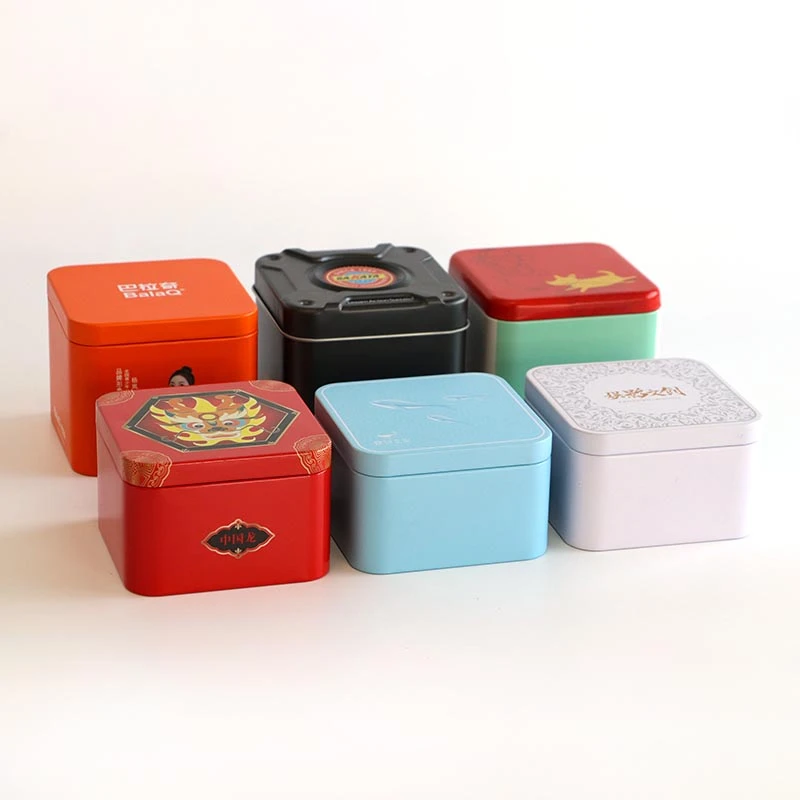
Round tins feel classic and giftable. Square and rectangular tins often maximize shelf efficiency and reduce wasted space in cartons, which can lower shipping cost per unit. When your product is destined for subscription boxes or bundles, rectangular tins are usually easier to pack tightly.
Stackability and stability matter in retail
A stable base, consistent outer dimensions, and anti-slip surface finishing reduce shelf mess and improve planogram compliance. That may sound minor, but it directly impacts retail acceptance and reduces damage claims.
Branding Options That Make Your Metal Tin Box with Lid Look Expensive
Printing that stays crisp
Tin packaging supports high-quality CMYK printing, plus spot colors for brand accuracy. With the right surface preparation, you can achieve vivid graphics that hold up to handling, shipping, and long-term reuse.
Finishes that signal “premium” instantly
Matte varnish, gloss highlights, soft-touch effects, and metallic inks can all elevate the perceived value. Embossing and debossing are especially powerful on coffee and tea tins because customers touch the packaging repeatedly—so tactile branding becomes part of the experience.
Special structures for gifting
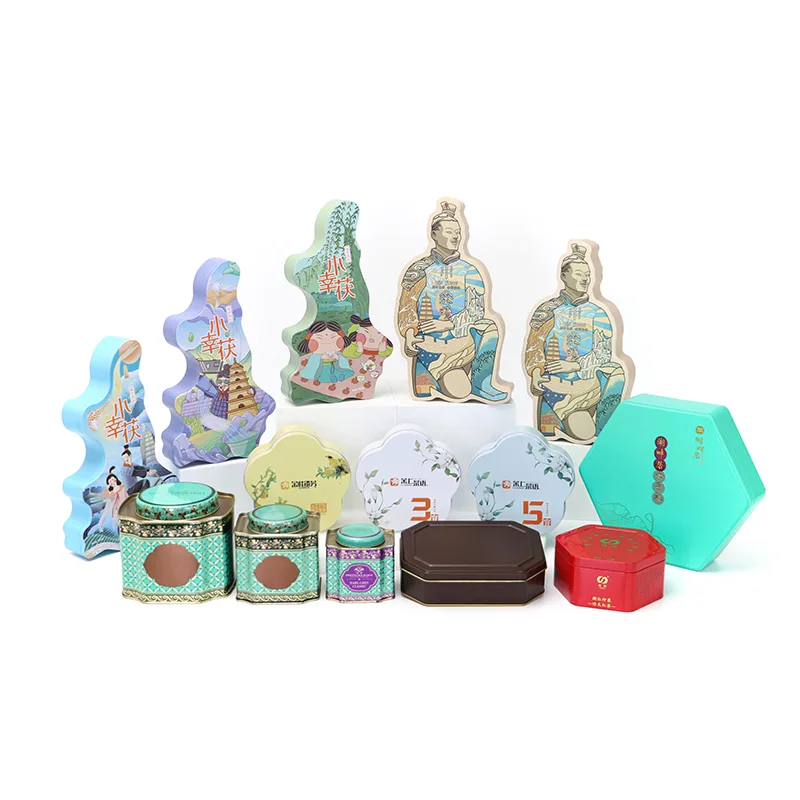
If your strategy includes holiday sets or limited editions, we can design window lids, nested tins, multi-layer gift packs, and rigid outer cartons. The key is keeping the airtight metal tin box with lid functional while making the gift presentation feel “special enough to keep.”
Quality Testing and Compliance Checks We Use for Airtight Coffee and Tea Tins

Seal and fit consistency checks
Airtight performance depends on repeatability. In production, we focus on dimensional tolerance control, lid fit verification, and liner compression consistency, because that’s what keeps sealing stable across large quantities.
Coating safety and process controls
Food contact compliance is not only about “using a safe coating,” but also applying it correctly and consistently. Regulatory frameworks in the EU emphasize that food contact materials must not transfer harmful substances and must meet safety principles. EUR-Lex+1
We align manufacturing controls to reduce the risk of odor issues, coating defects, and corrosion problems that appear months later in warehouses.
Documentation support for import and buyer audits
Many buyers want a clear compliance package aligned with their destination market (U.S. / EU). We support typical documentation needs and quality records, especially for brands entering retail chains or regulated distribution channels.
Sustainability: Why an Airtight Metal Tin Box with Lid Supports Reuse and Recycling
Reuse is the first sustainability win
A tin is durable. Customers reuse it for refills, storage, and countertop organization, which reduces single-use packaging waste and extends the life of the container. For coffee and tea brands, this also helps create a “refill culture,” which can be an extra revenue stream.
Metal recycling is mature and circular
Steel packaging is widely recycled, and industry sources highlight steel’s recyclability and strong recycling performance in many regions.
Tinplate data and lifecycle information are also available from steel industry sustainability resources, reinforcing metal’s role in established recycling ecosystems. World Steel Association
Sustainable branding that customers can feel
Sustainability messaging is strongest when the product “behaves sustainably.” A reusable tin is visible proof. When customers keep the tin on their counter for months, your brand stays in their life longer than any ad impression.
From Idea to Shipment: How MrTinBox Builds Your Custom Airtight Metal Tin Box with Lid
Step 1: Define your freshness target and use scenario
We start by clarifying whether you want daily reseal performance, long shelf-life storage performance, or a “tin + inner bag” system. Coffee, tea, and herbal blends behave differently, so the packaging should match the product’s sensitivity and your selling channel.
Step 2: Choose lid structure, liner, and material system
We recommend the most suitable lid type (press-fit, screw, hinged, latch) and match it with the appropriate liner/coating. This is where we design for both “consumer feel” and “sealing performance,” because a tin that’s hard to open will get complaints—even if it seals well.
Step 3: Prototype and confirm branding
Sampling lets you test graphics, color, finishing, and opening/closing experience. For coffee brands, it’s also a chance to test how the tin fits your inner bag and your filling line, so production runs smoothly later.
Step 4: Mass production with quality checkpoints
We run structured QC checkpoints to verify fit, appearance, coating integrity, and packing safety. When you scale from 1 sample to tens of thousands of tins, consistency is what protects your brand reputation.
Step 5: Export-ready packing for global delivery
We optimize carton packing and palletization to reduce damage and lower freight cost. For e-commerce brands, we can also design retail-ready mailer solutions so the tin arrives looking like a gift—not like industrial cargo.
Common Questions About Airtight Metal Tin Boxes with Lids for Coffee and Tea
Is a “tin with lid” always airtight?
Not automatically. A basic slip lid can be tight, but airtight performance improves significantly with a gasket/liner, tighter tolerances, or a screw/latch system. We’ll recommend a structure that matches your freshness goal and your budget.
Will an airtight tin really keep coffee fresh longer?
It helps, especially by reducing oxygen exposure and blocking light, which are widely recognized factors in coffee staling and storage guidance. Specialty Coffee Association+1
However, coffee freshness also depends on roast date, grind level, and how often the tin is opened, so many brands use an inner bag inside the tin for best results.
Does tea need the same seal strength as coffee?
Tea typically benefits most from moisture and odor protection and avoiding heat/light, so a good everyday seal is often enough. Storage guidance commonly emphasizes cool, dry, dark conditions and airtight containment to protect quality. o-cha.net+1
If you sell very aromatic teas or long-shelf-life gift sets, upgrading the lid and liner can be worth it.
Can you make the tin look luxury without making it fragile?
Yes. Embossing, matte/gloss contrast, metallic effects, and high-quality printing can look premium while remaining durable. The trick is selecting finishes that survive real shipping and handling, especially for e-commerce.
Ready to Build Your Airtight Metal Tin Box with Lid?
If you’re planning a coffee or tea packaging upgrade, an airtight metal tin box with lid can do three jobs at once: protect freshness, elevate brand value, and create a reusable “brand object” customers keep. MrTinBox can help you choose the right lid structure, liner, coating, size, and finish—then turn it into consistent mass production that ships globally.
Tell us your product type (coffee beans, ground coffee, loose leaf tea, sachets), your fill weight, and your target market (U.S./EU/other). We’ll propose a custom metal tin box with lid solution designed for real-world freshness and real-world selling.


